Sickness absence
Articles on absence due to sickness.
12 recommendations to get more people in vulnerable groups into working life
The need to increase labour market participation among vulnerable groups in the Nordics has long been high on the Nordic Council of Ministers’ agenda. A new report points to flexibility, individually tailored support and cooperation with employers as the key to success. NAV employees in Trondheim are already on the ball.
Menopause initiative saves millions in sick leave costs for Swedish municipality
The traditional phase which sooner or later affects nearly half of the Nordic workforce has long been viewed as a women’s issue. New initiatives are about to change that.
The joys of WFH versus the pressure of always answering emails
More than half of Norwegian employees have the opportunity to work from home, any time of day or night. But at what price? AFI researchers are looking at how the increased use of home offices impacts the work-life balance.
Cash benefit reform to fight child poverty in Denmark
The safety net for Denmark’s poorest – cash benefits – should be completely reformed, argues a government commission. It proposes support for leisure activities for children in poor families and the opportunity for people to do some work without losing access to cash benefits.
The changing nature of cooperation
Nordic labour markets have seen major and at times dramatic changes at the start of 2019. In Sweden 4,500 employment service workers have been made redundant, in Finland sick leave levels are rising and Denmark now has two rather than three trade union confederations.
Vabba or vobba, that is the question
In Sweden, February is often known as Vabruary, because that is the month most parents chose to vabba, a Swedish term for taking time off to look after sick children. Now it is becoming more common to stay at home with sick children while also working, This is known as vobba, and is proving somewhat controversial.
Sick leave being scrutinised again
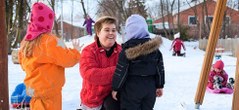
When unemployment falls sick leave levels rise, says Finnish researcher Jenni Blomgren. As a result, authorities are looking for ways to get more people into work. But how to do this is no easy task. 17 years of an inclusive workplace agrement in Norway shows as much. And not only adults fall ill (picture above). In Sweden, February is the top month for both "vabba" and "vobba".
Lack of positive expectations an obstacle when young people with psychological problems seek work
“I was furious over the way I was treated in school when I told the teachers that I was mentally ill. The entire school system reacted by completely removing any demands on me. Any expectations of me achieving anything at all, and succeeding with anything, completely disappeared,” says Adrian Lorentsson.
More sick leave among ‘double-shift’ women than men
When a woman has her second child while holding down an equally demanding job as the father, she is at twice the risk of going off sick compared to her husband, according to a new report on sick leave among women, presented in Sweden on 5 November.
Iceland: Banking staff face health problems after crash
The health of banking staff has deteriorated since the 2008 Icelandic banking crash. Those who lost their jobs and found new ones are doing better than those who stayed in their original jobs. The number of bank workers visiting health clinics doubled between 2008 and 2012.
OECD: Norway trumps sick leave costs of all industrial countries
Norway’s unemployment is low and employment is high. But the costs related to sick leave and early retirement are double that of the OECD country average based on GDP according to the OECD Economic Survey of Norway.
Norwegian tripartite agreement on sick leave
Norway's government and the social partners have reached a new agreement aimed at reducing sick leave. The agreement covers the next four years and prolongs the 2001 Inclusive Workplace Agreement.
"Myths muddle debate on sick leave"
Björn Johnson is fighting what he calls the myth of Sweden's high levels of sick leave. The Malmo University researcher has just published 'The Fight Over Sick Leave', a book exploring why and when sick leave became defined as a social problem.
The Nordic region tightens sick leave rules
One of the pillars of Nordic welfare systems is the right to sickness pay. But should employees enjoy the same pay whether or not they are at work? Who decides how long a person can be off sick? What kind of contact should the worker maintain with the employer? These questions are fuelling a heated debate in several Nordic countries. We take a closer look at new measures and rules being tightened.
Focus on ill health means less absence
If you at an early stage enter a dialogue with workers who are ill, you reduce the level of sick leave. That's the experience in the Høje-Taastrup municipality west of Copenhagen.
Sick leave in Finland: municipalities on the right track
Many Finish municipalities have managed to turn the trend of ever increasing levels of sick leave. As the country's largest municipal employer, the City of Helsinki is developing ways of helping people on long-term sick leave to get back to work.
The constant hunt for ways to limit sick leave
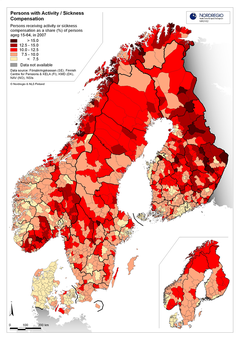
Levels of sick leave vary a lot between the different Nordic countries, yet it seems it gets harder and harder to qualify for sickness benefit - whether the level of sick leave rises or falls. There is no agreement among researchers on what really lies behind these variations, nor on what policies actually work.
New rules for long-term sick leave in Sweden
Swedish job centres face busy times as 16,000 people on long-term sick leave are transferred from the Swedish Social Insurance Agency to the Public Employment Service. From now on they should be offered individual help and advise to help them re-join working life. The move has been met with fierce criticism, forcing the government to back down on several points.
No easy way to lower sick leave
In Norway the co-operation between the government, the unions and the employers is usually very close. But September saw an unprecedented quarrel among the three parties about who should pick up the bill for the rising cost of sick leave.
Swedes at the top
In the ongoing debate, Swedes tend to be portrayed as suffering from illness most often, compared to the rest of Europe. “That’s totally wrong!” says Paula Liukkonen, Senior Lecturer of Business Management, who has carried out extensive research on personnel policy and working environment.
Document Actions
 Follow us on Facebook