Mette Frederiksen has returned as Denmark’s Prime Minister leading a coalition known as the “four-leaf clover government”.
Read this article in Norwegian on Arbeidsliv i Norden
It took 69 days of negotiations before Denmark got a new government after elections earlier this year.
It is a four-party coalition made up of the Social Democrats, SF (the Socialist People’s Party), the Social Liberal Party and the Moderates.
From employment to tax and back to employment
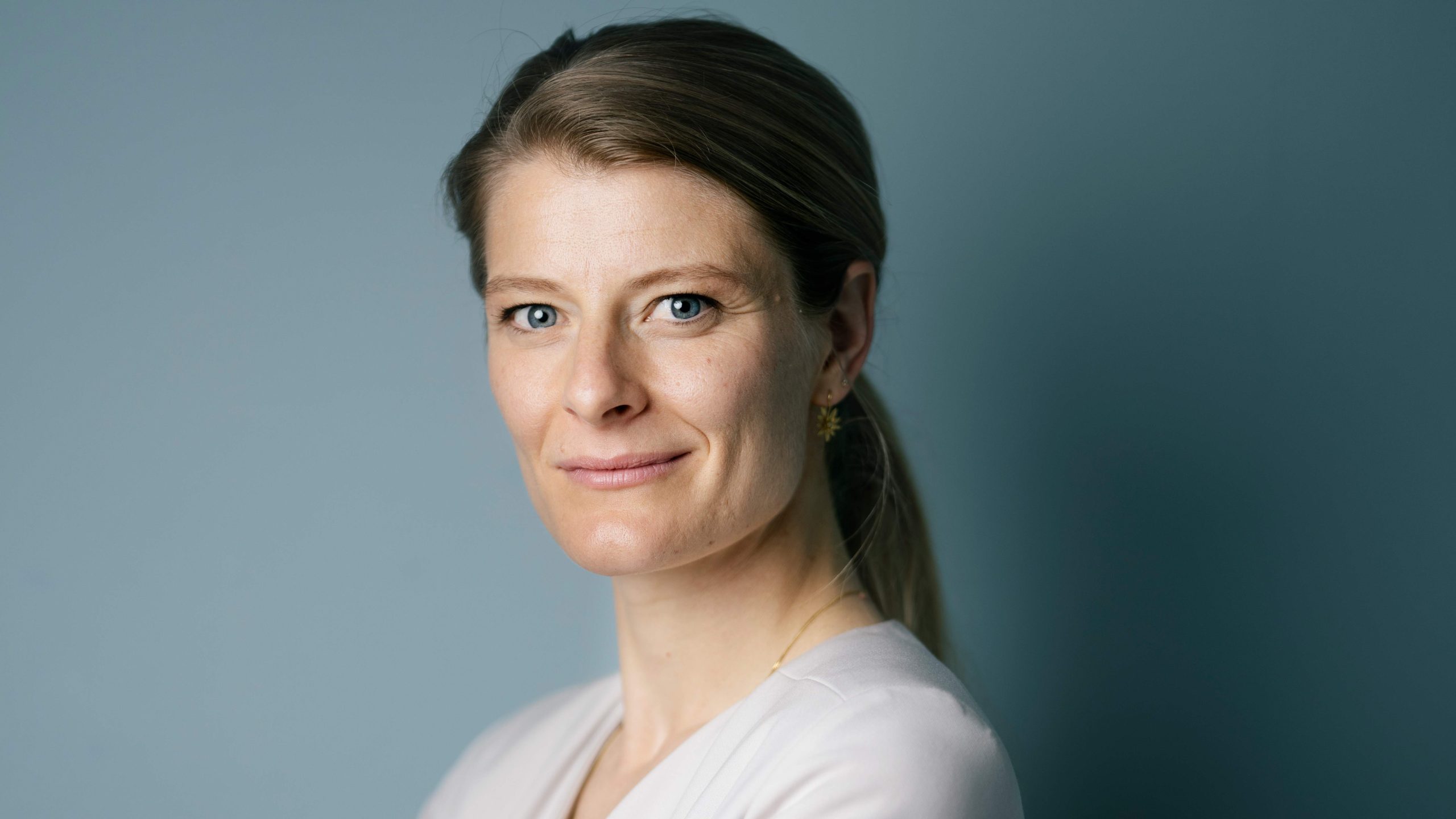
And there is a return for Ane Halsboe-Jørgensen as Minister for Employment. This time, she will also be Minister for Gender Equality in Mette Frederiksen’s third government.
Ane Halsboe-Jørgensen also held the employment post between September 2022 and 23 September 2025. She became Minister of Taxation after a reshuffle, a post she held until the election.
She was Minster of Higher Education and Science in Mette Frederiksen’s first government, before taking the post as Minister of Culture and Ecclesiastical Affairs. She has been an MP since 2011.
Well received
The social partners have expectations to the new government.
Henning Overgaard, President of the United Federation of Danish Workers (3F), believes the government will deliver a strong labour market policy.
“The four government parties have really listened to 3F in a range of concrete political issues. The new government will make up for many years of policies that have increased inequality, and that is a very positive thing,” says Henning Overgaard.
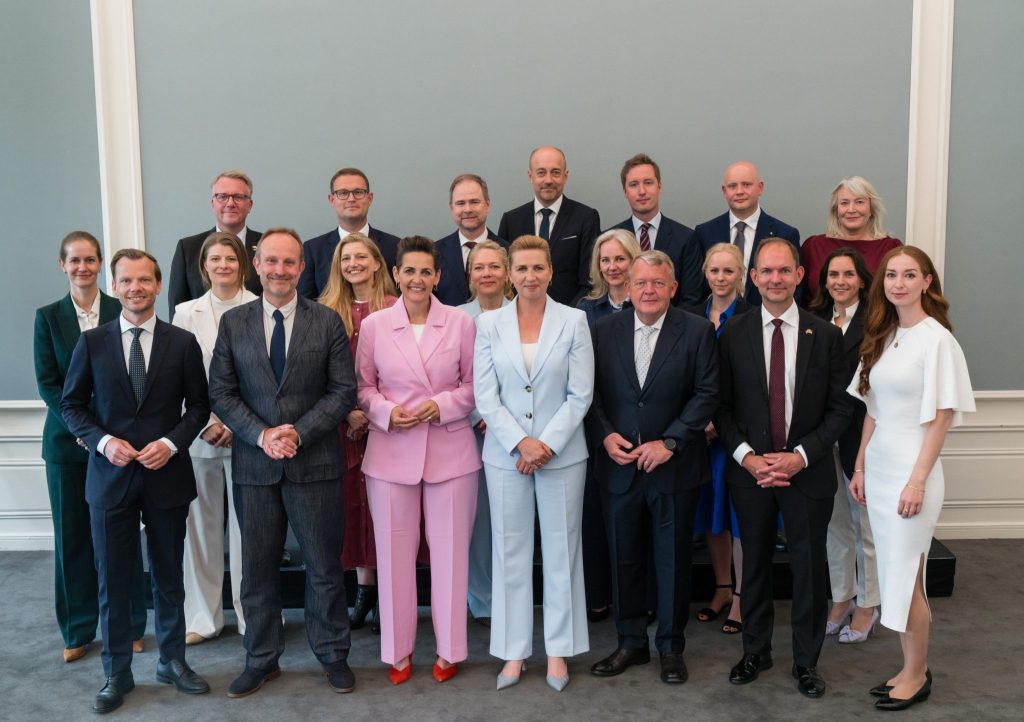
According to the Confederation of Danish Industry, the appointment of a minister for growth and a minister for competitiveness places additional emphasis on securing the conditions for the business sector.
The Confederation’s CEO Lars Sandahl points out that the list of 21 ministers also includes Minister for Business and Competitiveness Martin Lidegaard and Minister for Taxation and Growth Jakob Engel-Schmidt (M).
Sandahl believes this may help future-proof Denmark in a turbulent time, where issues such as competitiveness, growth, digitalisation, defence, and energy are not separate agendas.
Separate chapter on Nordic cooperation
The government declaration of the “four-leaf clover government” pays special attention to the Nordic cooperation. It says:
“Economically and militarily, the Nordic region is a significant actor. This Nordic cooperation has become markedly stronger in recent years, and the government will work to develop it further.
“This applies in particular to strengthened cooperation on defence, the expansion of renewable energy, future technologies, critical raw materials and the strategic coordination of investments.”