Nordic culture exercise its resilience on fortress island of Suomenlinna

On the Suomenlinna island outside Helsinki, Nordic artists, culture workers and institutions meet as resources dwindle and working conditions get harder. Despite budget cuts, cooperation is growing, as is a shared conviction that culture is not a luxury but part of the Nordic region’s resilience. Suomenlinna’s role as a fortress is relevant again.

Anna Schroderus and Esko Kurvinen are glass artists, and run Glas Studio Hytti.

The Nordic Labour Journal are invited to join the culture workers one morning in May as they gather for a networking meeting. Here are resident artists, representatives from Nordic Culture Point (NKK) and the Finnish Camp School Association, which is based on Suomenlinna.

Read this article in Swedish on Arbeidsliv i Norden

Other important players are the Helsinki International Artist Programme and the Suomenlinna Governing Board which has managed the buildings and infrastructure since the transition from military to civilian administration. 

Enthusiastic cooperation with Nordic diversity

The network meeting will coordinate upcoming events and build new forms of collaboration. 

The number of activities on Suomenlinna explode in summer with jazz festivals, Baltic Sea weeks with environmental themes, sailing ship parades, seasonal celebrations and open studios – and nearly one million tourists.

Reaching audiences on the mainland outside of high season is one of the key challenges. Foreign tourists come anyway, but how do you tempt young people in the Helsinki region? As one artist puts it: There’s more to do on Suomenlinna than sitting around drinking beer.

Nordic Culture Point (NKK)

Nordic Culture Point (NKK) functions as a central Nordic cultural meeting place, tasked with strengthening Nordic linguistic and cultural presence in Finland and the rest of the Nordic region.

Has an operational budget of nearly €1.5 million.

Highlights the role of art and culture as a prerequisite for sustainable development, and is an arena for cultural exchanges that contribute to artistic development and networks, and thereby to Nordic competitiveness. 

The Nordic cooperation is promoted with a clear Nordic profile, benefit the Nordics and provide added value.

The institution acts as the secretariat of the Nordic Council of Ministers’ funding programmes, allocating around €9 million.

Also promotes Nordic cultural cooperation in the Nordics and internationally.

Its diverse and inclusive activities aim to improve trust, integration, togetherness and language understanding in the Nordic region.

The institution focuses on green and social sustainability.

High demand for support

Nordic Culture Point’s premises are in a former garrison building at Suomenlinna, renovated and filled with Finnish design.

This is where several of the Nordic Council of Ministers’ funding programmes for the Nordic and Baltic regions are being administered.

As the Nordic countries’ own culture budgets are facing cuts, this work becomes increasingly important. You can see it right now in Finland, says Anki Hellberg-Sågfors, cultural developer at NKK.

Independent culture workers are facing tougher working conditions and there is a high demand for support. Less than 20 per cent of applications to the culture and arts programme can be approved.

Art and books – and a lot of support

The Nordic Culture Point’s activities are currently concentrated on Suomenlinna, where all of NKK’s around 20 staff work. Their permanent offices in the Nordic Investment Bank in Helsinki are being renovated. 

That is where the Nordic library is situated, with collection and exhibit spaces better suited to attracting the public. It will re-open in the autumn.

The Nordic cultural programmes offer support for culture, art, young people, civil society and mobility in the Nordic and Baltic regions.

The Nordic funding schemes represent an important channel for supporting Nordic cooperation in the arts and culture. 

The culture and arts programme is the biggest one, Volt and Norden 0-30 are aimed at young people’s cultural projects and language programmes. Demos supports Nordic civil society collaboration.

The Nordic-Baltic mobility programme for culture offers three types of funding: mobility grants, residency grants and network grants. Then there is the Nordic exchange scheme NORUT, previously known as the civil servant exchange programme.  

Anki Hellberg-Sågfors is responsible for NKK’s own Nordic residency for artists, B28. The resident artists get support for accommodation, networking and a weekly €700 grant. They are expected to present their work in progress to the public during their stay.

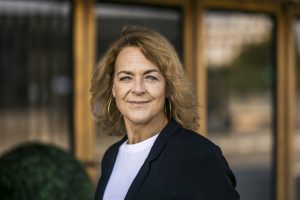
Anki Hellberg-Sågfors knows how important networks and producers are for the Nordic projects.

“You might think that all artists want to stay for as long as possible, but they have different needs. Those who really want to work in piece, apply for residency on Suomenlinna during the dark winter months.

“An artist focused on engaging with the audience might choose a summer month when interaction is considerably higher.”

Creative around death

In May and June, Rakel Andrésdóttir is the Nordic artist in residence. She works with hand-drawn animation and involves children on Suomenlinna in a project about death.

This is theme she treats in a playful but respectful way. She has also worked with children in Iceland and during a residency in Estonia.

“There are probably cultural differences, but death is after all common and necessary for all. Children are so creative, but religious ideas might also emerge – and of course there are impulses from American TV entertainment,” says Rakel.

Rakel Andrésdóttir, a resident artist from Iceland, will be creating stop-motion animation on Suomenlinna.

She is planning several events during her Suomenlinna residency, but when we meet her, she has just arrived and is super positive. She has had time to sit on the beaches and look at the sea. It is like being at home in Iceland, she says. It feels rural and very calm.

Delayed take off

The residency grant gives Rakel Andrésdóttir the chance to develop her storytelling across geographical and linguistic barriers, using new techniques. 

She studied at the Icelandic University of the arts and participated in the graduation exhibition “Ready for take off” during the COVID year of 2020.

“It was a strange time to finish my studies, without any clear sense of a ‘take off’. There were no jobs, everything was closed because of the pandemic. We students exhibited in each other’s houses. It was a strange time,” says Rakel.

Later, she studied animation in Czechia and has worked with animation and documentaries for Icelandic television and in various freelance jobs. She enjoys it a lot more than having a steady job. She has also received some working grants. 

Not aiming for commercial success, but…

Building on the difficult COVID years, she feels she has been lucky finding a mix of work she enjoys and some artistic activity which has also gained her some international recognition.

Rakel’s collaboration with children begin with a bee. Then the children can develop the story in any way they want.

Rakel Andrésdóttir paints some pictures that can be hung on a wall but sells these mostly to friends. She does not expect to become a commercially successful artist, and there are few Icelanders who can make a living only from art.

Nordic beginning turned international

Sharing localities with NKK is HIAP, the Helsinki International Artist Programme, founded in 1998. HIAP now runs the guest ateliers that NKK set up as far back as 1978.

The two institutions were meant to continue the legacy of artistic mobility and intercultural dialogue in the region. But Nordic exhibition activities have declined and the arts magazine Siksi has closed down.

The idea was for artists from all the Nordic countries to work at the same time in the five guest studios. Later, things took a more international turn with longer residencies also for fleeing artists – including from Ukraine. This has also influenced the direction of the organisation’s work.

Dismantled borders, or…

Today’s geopolitical turmoil has made the residency even more important. Travel grants and networking support have clearly not become obsolete. Even though it is easier to keep in touch online, artists want to see the world with their own eyes.

“It’s completely different to meet in person and work together, which also strengthens trust. For the Nordics, with so much water between us, this is important. 

“We cannot give up on Nordic cooperation just because it feels complicated, distant or expensive,” says Anki Hellberg-Sågfors. 

Finnish glass-making tradition on Suomenlinna

Esko Kurvinen and Anna Schroderus run a glass workshop that draws a lot of visitors on Suomenlinna.

It gets hot very quickly despite them keeping all the door open. The workshop also attracts tourists, especially families with children who can stay to watch with fascination as the glass objects are being formed.

Esko Kurvinen and Anna Schroderus are working on a large commission creating lamps for a restaurant on Suomenlinna. The collaboration runs smoothly; they have been working together for a long time.

Tourists provide a small additional income, but fragile glass objects are not what they want to take home with them.

Esko and Anna are not really keen on calling themselves “independent artists”. They run a business, after all. They combine glass production, training and trade to make ends meet.

Having to juggle multiple roles

Both trained at the University of Art and Design in Helsinki, studying industrial design and glass art. They have built on their studies abroad, including at Orrefors in Sweden with a Nordplus scholarship.

Anna had envisioned more artistic creativity and design work, making “more beautiful everyday objects” in line with the classic Swedish design ideal. 

Today, however, juggling multiple roles has become a necessity, as traditional glassworks have disappeared, along with the opportunity to experiment while receiving a monthly salary. 

Now, they have to do everything themselves, including marketing, bookkeeping and sweeping the floors.

Esko left a well-paid consultancy job to create his own job and reduce stress.

Important to exhibit

Glass art has become important on Suomenlinna. Handmade glass is now part of UNESCO’s list of intangible cultural heritage. 

Esko Kurvinen and Anna Schroderus are headlining in their own major glass exhibition on Suomenlinna later this summer. 

Exhibitions provide visibility, also with those who award grants and funding. The two have considered applying for a residency grant abroad. This is difficult, however, as glassblowing requires heavy equipment.

Historic Suomenlinna provides continuity

Esko and Anna no longer live on Suomenlinna but enjoy the intimate environment and the fact that other artists can afford to live there. Continuity is also important.

“All the houses are listed, so we can be sure no entrepreneur will arrive to demolish the house where the glass workshop is in order to build a hotel or self-storage units.”

Suomenlinna presents logistical challenges for the transport of goods and visitors, especially in winter when ferries operate on a reduced schedule.

The Nordic region is increasingly focusing on security and resilience. On Suomenlinna, there is a desire to focus on cultural diplomacy and culture as an important part of society’s critical infrastructure. 

Gitte Grønfeld Wille, the director of Nordic Culture Point, NKK, puts it this way:

“Art and culture is often where we meet. Culture creates communities and a sense of belonging. We see resilience and robustness as a mental muscle that must be exercised and maintained.

“You don’t do that in your armchair at home, but in encounters with other people. Art and culture are a counterbalance to division in society and an important investment in building society.”

It also creates a population that can process new information as critically thinking individuals.

No Nordic lifeline, but important right now

It seems clear that Nordic cultural cooperation and grants cannot save artist in need. But the support provides stability. 

Residency programmes can mean better working conditions and improved visibility for Nordic artists, including towards decision-makers, says Anki Hellberg-Sågfors.

“It’s incredibly important that everyone in society now supports artistic work, because it is really under threats due to all the cuts. Many are leaving this field to join other occupations, because difficult working conditions make it far too hard,” says Anki Hellberg-Sågfors.

In the Nordics, and in particular in Finland, there is a heavy dependence on project-based funding.

It takes a lot of effort to complete all the necessary applications, but no-one wants to pay for that work, even though it is essential. 

In Finland, the Swedish-language producer training programme has also been axed, and that is a cultural policy disaster, believes Anki.

“If you don’t have producers who can administer, apply for funding, manage, report, evaluate and create the right conditions for the artists, the artists themselves have to start doing it again.

“And that’s not what they should be experts at. It should be the artistic work.”