Labour Market
Startups and Moomin beat Lenin in the industrial city of Tampere
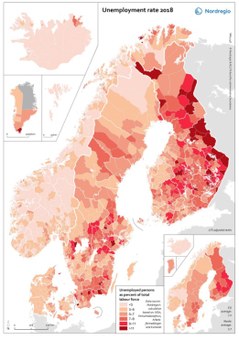
Tampere – Finland's Manchester – was a thriving industrial city. Now it is fighting unemployment and is investing in tourism and startups. But the industrial heritage lives on, as seen at the Finnish Labour Museum Werstas. Yet most popular of all is perhaps the Moomin Museum.
Finland’s new Minister of Employment faces tough choices
Finland has changed its Minister of Employment mid-term. Matias Marttinen replaces Arto Satonen as head of the Ministry of Economic Affairs and Employment. Both represent the National Coalition Party.
When language and regulations create obstacles in the Nordics
Nordic freedom of movement is an ideal we like to highlight. Nevertheless, commuters and businesses face practical obstacles every day. Now, new measures are being implemented to remove them, while the Øresund Bridge celebrates 25 years as a symbol of one common region between two countries.
Swedish Sofia is a nurse in Norway – wants simplified rules
Swedish Sofia Krogh is happy in her job in Indre Østfold municipality in Norway. The pay and pension scheme are good, and her colleagues are nice. Nevertheless, the nurse has considered leaving her job in her neighbouring country several times. The paperwork is demotivating.
The Border Service: It should be easy to get it right
For nearly 30 years, Grensetjänsten Norge–Sverige in Morokulien has provided help for people and businesses crossing the border. Their motto: “It should be easy to get it right”.
More active border obstacle role for Nordic cooperation ministers
A new six-year programme aims to strengthen the work for freedom of movement in the Nordic region. The goal is to remove more border obstacles, strengthen mobility and secure clearer political ownership when working to improve free movement.
A "Laval 2.0" case underway before the Swedish Labour Court?
Can Swedish trade unions take industrial action against foreign companies to make them pay occupational pensions for their posted workers? That is the question in a new case before the Swedish Labour Court, which bears similarities to the notorious Laval case that had far-reaching consequences for the Nordic countries.
Nordic municipalities hunting for solutions
What happens when the local school is in danger of closing down? When the municipality lacks people to fill vacancies in the health and social care sector? These are the challenges facing Nordic municipalities. How do we solve them?
Little, strong Utsira – life in Norway’s smallest municipality
When a young Julie Faldt Faurholt moved from Denmark’s smallest municipality – the island of Læsø – she was determined she would never live in such a small place again. But the island she lives on now is far smaller. With 217 people, Utsira is Norway’s smallest municipality.
Rich in iron ore, poor in inhabitants
In Pajala in Northern Sweden, the local authority is grateful for the mine but also struggles to maintain and recruit workers.
Municipal Denmark to unite freedom and control
“Setting free” is the topic of the day in Danish municipal and national politics. It is seen as a possible key to delivering welfare services to citizens despite fewer resources and labour shortages. Helsingør municipality has had good experiences, but the upcoming local elections could throw a spanner in the works.
Finland's April elections a test for local power structure
Finland holds municipal elections in April. At the same time, there are council elections in 21 so-called wellbeing services counties. After the healthcare reform, they will be responsible for social and healthcare services. But interest in running as a candidate and in voting seems to be falling. Perhaps due to a worsening economy and reduced municipal powers. Or because elections have become too frequent.
Municipal Nordics face common challenges
Municipalities across the Nordic region are under pressure from ageing populations, labour shortages and rising costs. The challenge is to deliver quality services in line with residents' growing expectations, according to the Nordic municipal organisations.
The salmon millions keeping a small Norwegian island society alive
Millions of kroner from the fish farming sector contribute to the community and activities in Frøya – from carnival and language cafés to the downpayment of municipal debts. But with most eggs in one basket, the municipality is vulnerable.
Who will look after Sweden’s growing elderly population as birth rates fall?
Between 2013 and 2023, the number of people in Sweden aged 25 to 60 rose by 455,000. By 2033, that number is expected to grow by a further 13,000 people. There is a similar development in the rest of the Nordics and the EU, which for many municipalities means severe labour shortages.
12 recommendations to get more people in vulnerable groups into working life
The need to increase labour market participation among vulnerable groups in the Nordics has long been high on the Nordic Council of Ministers’ agenda. A new report points to flexibility, individually tailored support and cooperation with employers as the key to success. NAV employees in Trondheim are already on the ball.
Sweden: Gender gap widens in education, economically and politically
Women are significantly more represented in higher education, especially in rural areas - a trend that is repeated in all Nordic countries. It has given many women a better life with higher employment levels and wages. However, the development also shows that men are falling behind.
Nordic maritime sector sets sail towards greater gender equality
Men still dominate the maritime industry. In certain onboard professions, women are almost absent. Creating a secure working environment for everyone, regardless of gender, is crucial to make the industry more equal, argue the initiators of the Nordic REDO Lookout project.
Equality under pressure – how the Nordics are fighting back
More than 50 years after the cooperation on gender equality began, the Nordics are doubling down on the promise to ensure that the region will continue to lead the way in the fight for equality and inclusion.
The Nordics lag behind in the fight against economic crime
Economic crime is a threat to the Nordic welfare societies, warned this year’s conference on the black economy. The fight against creative and innovative criminals needs more resources and better legislation, the trade union movement argues.
Document Actions
 Follow us on Facebook