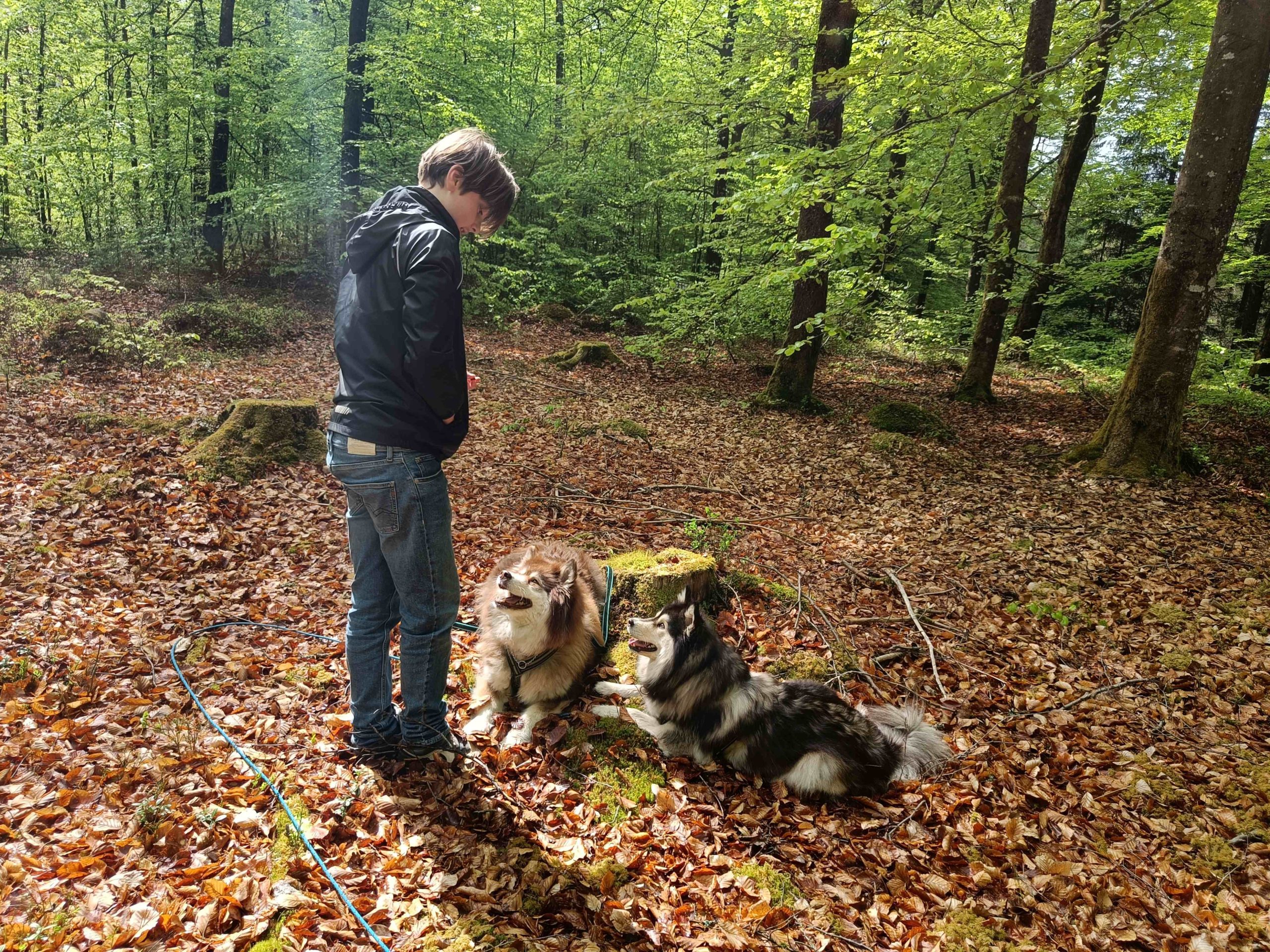
The 15-year-old boy is lying down. He wants to be left alone. When the Finnish Lapphund Jappii starts nudging him with its nose, the ice is broken. The teenager gets up and gets involved in an activity at the Närvaroteam (the attendance team) in Hyltebruk.
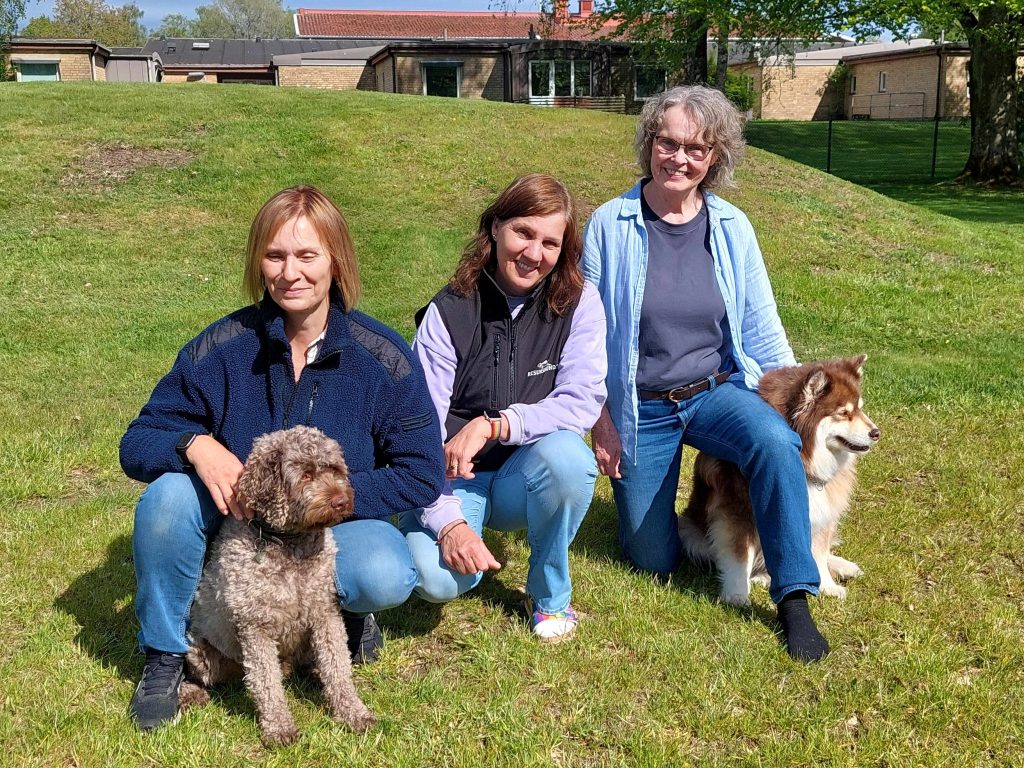
“Here with us, the dog is a resource and support that motivates students to come here. As soon as they walk in the door, they are greeted by a happy dog. A dog can also be a friend in situations that can feel difficult,” says Britt Bengtsson.
She is one of three educators who welcome the Nordic Labour Journal to the team’s premises in Hyltebruk in Halland county.
Read this article in Swedish on Arbeidsliv i Norden
Hylte municipality’s Närvaroteam is for children and young people aged 10 to 16 who are struggling with school attendance. Like primary or kindergarten teachers, the staff here have training in pedagogics.
They are also support dog handlers, after having trained with Jenny Wibäck who runs a one-person companyin Lyckagård, which is also in Halland.
Headhunted by a kennel
“I don’t know where my love for dogs comes from, but after having wanted a dog for a long time, I got a keeshond when I was nine and started training it.
“This became my big hobby and as a teenager I started volunteering in the competition and training activities of the working dog club in Halmstad,” says Jenny Wibäck.
During a summer break from upper secondary school, she was headhunted by a kennel to work at a camp for collies.
“That’s around the time I started to believe I could work with and coach competitive dog handlers in dog sports.”
When Jenny Wibäck started studying at Halmstad University College, she set up a sole trader business to be able to work as a training coach alongside her studies.
Her master’s degree focused on pedagogy and disability studies.
“Many who did disability studies had a more personal connection to the subject. My angle was dogs, and how my interest in them could be a resource for health and wellbeing.
“That combination of knowledge and the educational aspect later became an important platform for creating my concept for support dog handlers.”
Jenny Wibäck also took some individual courses in business administration. Her aim, however, was never to work as an economist but to gain useful knowledge to be able to manage her own company’s accounting, she explains.
Even though she had the desire and motivation, Jenny Wibäck’s aim was not to work with dogs full-time.
“I was worried I would lose interest if it became a job. So I have always been open to working with something else. When I was a student, I also worked in a store and enjoyed that.”
Hard work and self-discipline
But returning to work in a shop or anywhere else never became an option. Her business has been profitable, although turnover has varied from one year to the next.
“Sometimes, working for yourself is being glorified and many believe you can train your own dogs during working hours when you run a dog business.
“That’s not the way it works. How would that pay? On the contrary, you have to enjoy the work because nothing comes for free,” says Jenny Wibäck, who feels being self-employed with multiple clients outweighs the drawbacks.
“It’s the classic thing. Having the freedom to make a living from your hobby and the fact that nobody else dictates my schedule. A lot of the creativity springs from being able to decide for yourself how your day should be.
“This can lead to a blurring of work and leisure time. So it is important to be aware, although I don’t mind having to work a lot during certain periods. But I also value not being forced to do it.”
One rule that Jenny Wibäck has set for herself and managed to stick to is to take four weeks’ summer holiday and to avoid working evenings as far as is possible.
She has learned things from running a business for 20 years, the last 10 of them as a limited company. Like avoiding switching between administrative work and the lessons she teaches on the same day.
“To begin with I did both but felt like I got nothing done when I tried to process the paperwork in between the lessons.
“I struggle with switching quickly between different activities and need time to adjust. That’s why I now keep to one type of work for a whole day, whether I’m in the field or behind my desk.”
She knows that being self-employed means she does not enjoy the same protection as employees. So Jenny Wibäck has acquired what she calls “the entire package”. She contributes to a pension scheme and has both pension and health insurance.
When the Nordic Labour Journal meets Jenny Wibäck, she has just seen 15 support dog handlers graduate after a 20-week part-time course. The main topics are pedagogy, applied psychology and knowledge of dogs.
The training has so far been purchased by the municipalities of Halmstad, Varberg and Örkelljunga and has taken up much of Jenny Wibäck’s working hours.
“If one of the municipalities I had talked to about training had said no, I would have had to cover a lot of hours with other work. This kind of uncertainty is something you learn to live with. Right now, I don’t quite know what the autumn will look like.”
The dog as just a dog
Private individuals can also buy the support dog handler training course, as well as different types of businesses. Her target customers are those who can involve dogs in their professional lives.
The dog can be any breed and does not need to be specially trained – like a guide dog, for instance. The key thing is that the support dog handler matches the dog in the right setting, and to make sure both the human and the dog thrive, explains Jenny Wibäck,
“The support dog handler makes sure that people who need to meet dogs get to do it. The dog participates as a dog and that is enough,” she says and adds that things we as humans struggle with, we want to manage for the dog’s sake.
“One example is young girls who self-harm because they feel worthless. When they are looking after an animal and are responsible for it, their focus shifts. When the girls are needed and seen, something important can happen to their self-image.”
Getting something else to think about
The educators at Hylte’s Närvaroteam talk about similar shifts in focus.
“One guy has created his own routine together with one of our dogs. The first thing he does when he gets here is to get the dog to follow him to the fridge to get a carrot.
“He becomes the dog’s trainer and forgets his own worries for a while when that focus shifts,” says Britt Bengtsson.
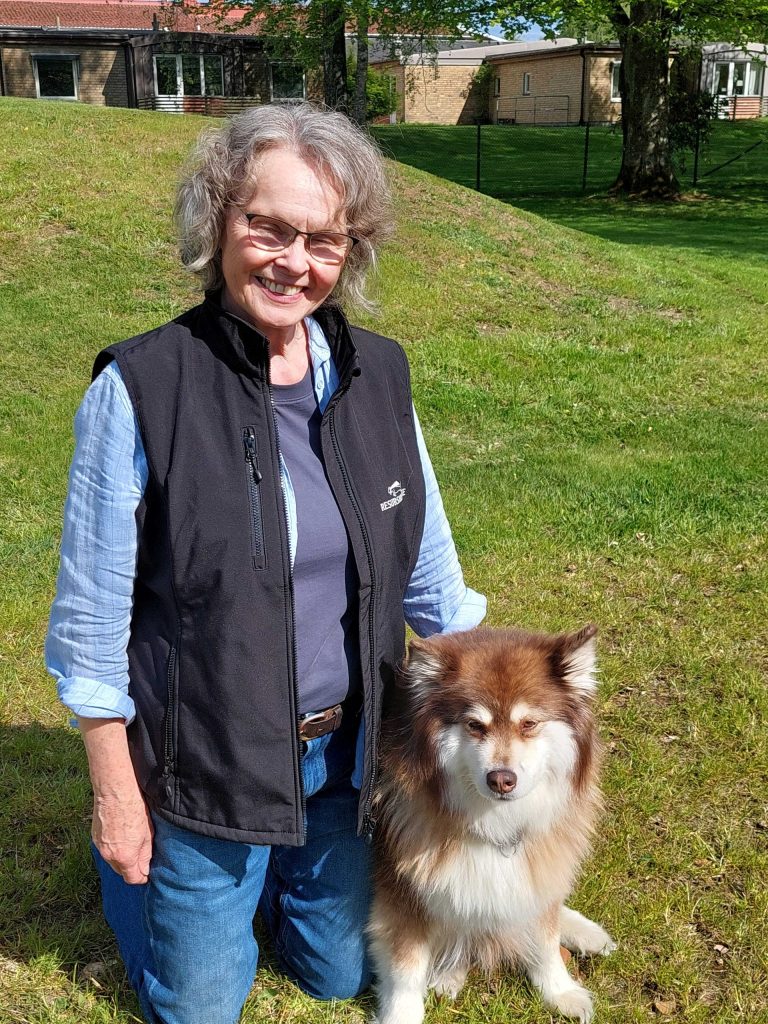
Teaching life skills is the Närvaroteam’s main task. They help the pupils create routines and deal with social settings like going to the shop or getting the bus. But they also impart knowledge.
“When we try to break social exclusion and isolation, we start with the pupils’ interests and introduce dog activities. Then we can see just how beneficial it is for their self-confidence to take on a trainer roll.
“We also work with subject-based learning at a pace and level that’s suited to the student.”
The Närvaroteam is part of the municipal’s student health and wellbeing service, which all Swedish pupils must have access to by law.
Student health and wellbeing service
Includes “medical, mental, psychosocial and special educational interventions” and work primarily in a “preventing and health-promoting” way, to “support pupils’ development towards their educational goals”, writes the Swedish National Agency for Education
A gain for pupils and society
Since the first pupils were being helped by the Närvaroteam in August 2023, the staff and their dogs have managed to help four pupils graduate from upper secondary education, giving them a good chance of finding work.
“We usually refer to the national economist Ingvar Nilsson who has spent 40 years working out what social exclusion costs society.
“He says one pupil who ends up being excluded could, in a worst-case scenario, cost society between 12 and 15 billion Swedish kronor (€1.1 bn to €1.4 bn).
“Our team together with our dogs can be considered to be a saving both in human and economic terms,” says Britt Bengtsson.
And a freelancer who turned a hobby into a successful business can help keep the costs of exclusion down.