
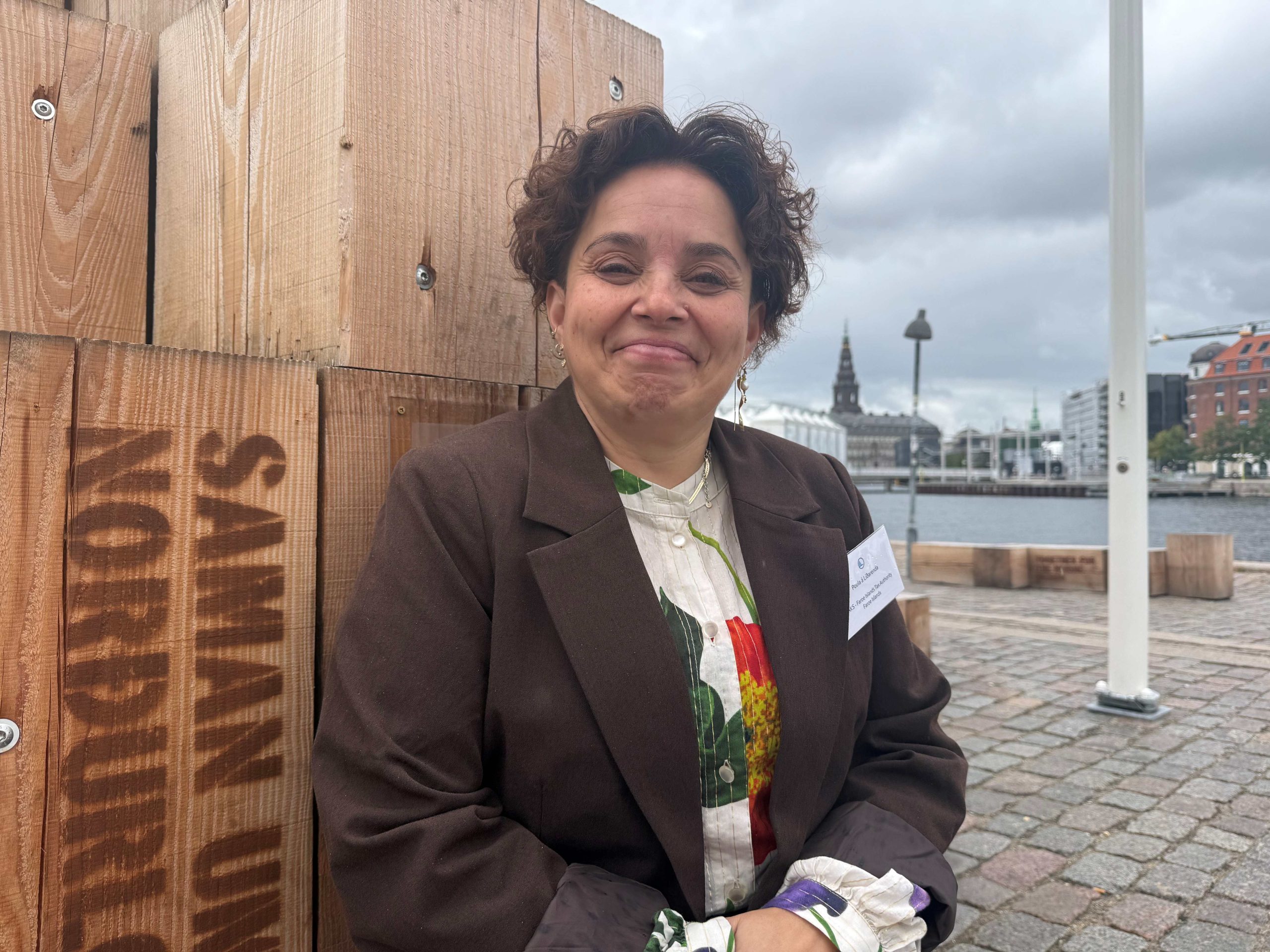
Foreign workers primarily from Asia account for 7.5 per cent of the workforce in the Faroe Islands, and the proportion is growing. But despite the high share of foreign workers, labour market crime is virtually unheard of in the small North Atlantic island group, says Poula á Liðarenda.
Read this article in Danish on Arbeidsliv i Norden
She is head of department at the Faroese Ministry of Finance and a member of the inter-agency cooperation body working to combat organised crime in the Faroe Islands.
“We are a small society with a high degree of social control, where foreign workers are part of the local community. Everyone knows what terms and conditions an employer offers their employees, and foreign workers must be offered the same pay and employment conditions as Faroese workers.”
Four in ten foreign workers in the Faroe Islands come from the Philippines and Nepal, and many of them work in the Faroese fishing industry. This is a development that has taken place over a relatively short period, Poula á Liðarenda explains.
“The labour market was very stable, with few foreign workers, until an economic boom in 2014 led to labour shortages and an influx of workers, particularly from Eastern Europe. In 2019, controls were also tightened.
“A television documentary showed that Romanian workers in the Faroe Islands were living in unacceptable housing conditions. This prompted the current cooperation between the tax authorities, the Ministry of Labour and the police.”
Since then, workplace inspections have been carried out, also on islands without tunnel or bridge connections.
However, the inspections uncover very few irregularities. When they are found, it most often concerns work permits. The inspections are carried out without the use of AI.
“It is quite easy to track who enters and leaves the Faroe Islands by air and ferry, and whether they have a return ticket,” says Poula á Liðarenda.