Can the Nordic model adapt to new types of employment that do not necessarily provide economic security, and can it adapt when some workers are far less able than others to claim their rights?
Read this article in Norwegian on Arbeidsliv i Norden
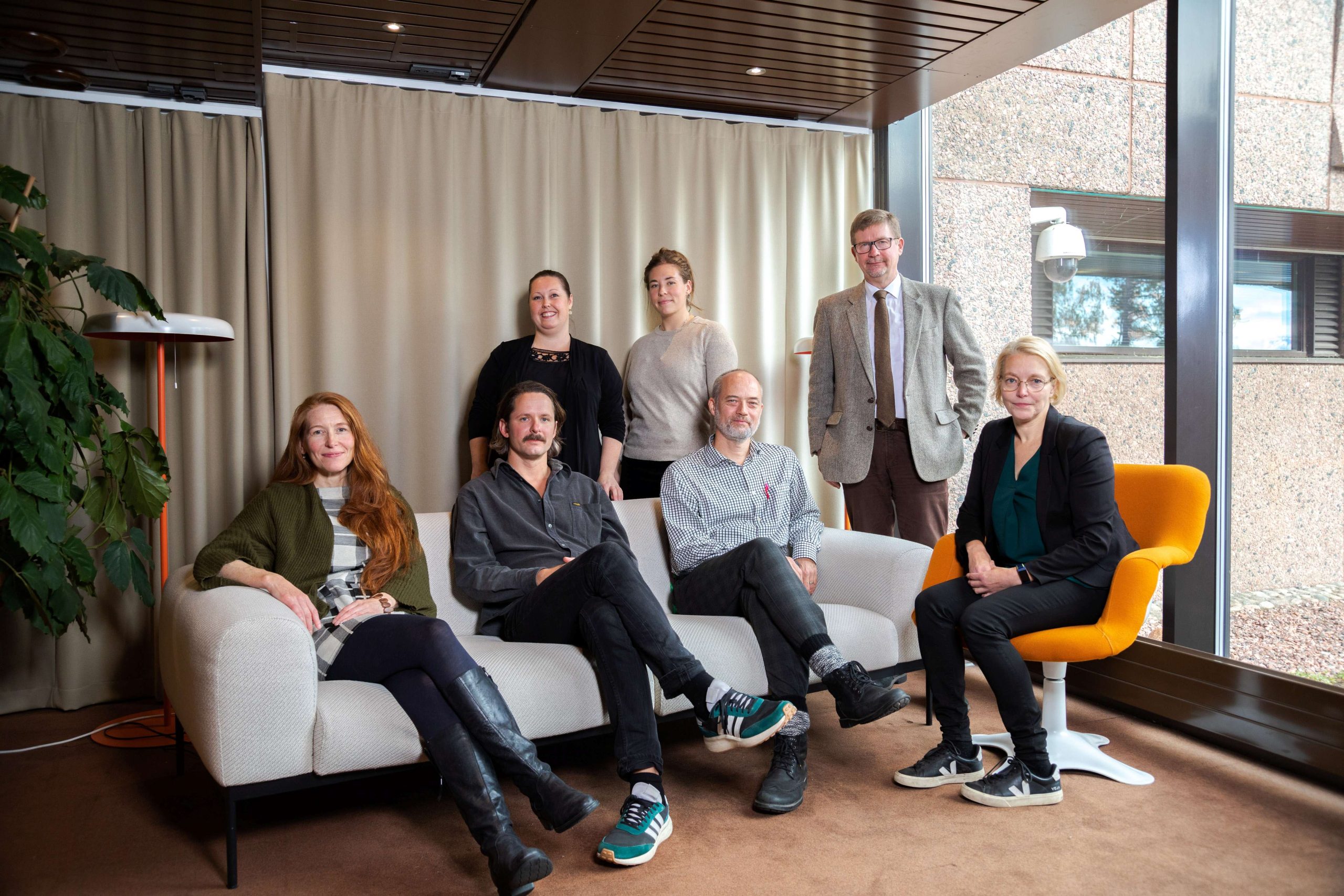
Researchers in the PrecaNord project have been focusing on conditions in the construction and cleaning sectors as well as the growing platform economy – services ordered through apps.
PrecaNord – Tackling Precarious and Informal Work in the Nordic Countries
Research project examining how precarious and informal work challenges the Nordic model.
Compares Finland, Norway and Sweden.
Focuses particularly on cleaning, construction and platform work.
Examines work characterised by insecurity and situations where workers themselves bear a large share of the risk.
Combines qualitative interviews with workers in cleaning, construction and platform work, trade union representatives, NGOs and experts with quantitative analysis.
A collaboration between researchers at the University of Helsinki, the University of Bergen, Lund University and Stockholm University.
Project period: 2022–2026.
Project leader: Lena Näre, University of Helsinki.
Funded by the “Future Challenges in the Nordic Countries – People, Culture and Society” programme (see separate fact box).
Migrants are often over-represented in what is known as “precarious work” – jobs characterised by insecure contracts, unpredictable income and few rights.
This is linked to issues like insecure immigration status, limited access to welfare services and structural factors in the labour market.
Vulnerable when navigating systems
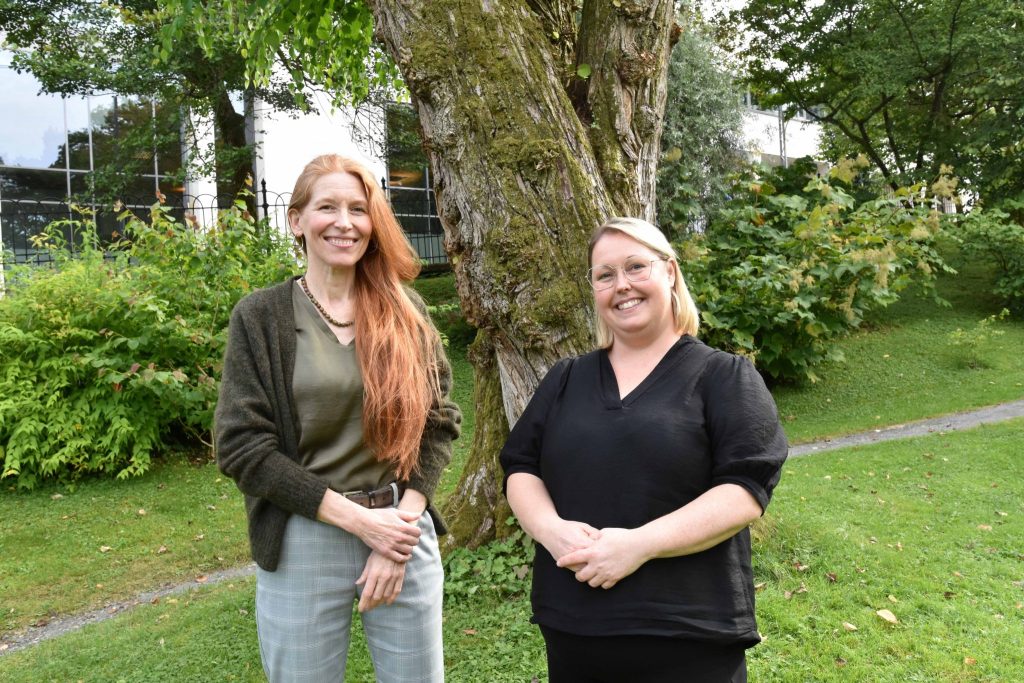
Postdoctoral researcher Ann Cathrin Corrales-Øverlid and professor Synnøve Bendixsen at the Department of Social Anthropology at the University of Bergen are participating in the Nordic research project.
The social anthropologists underline that migrant workers should not be seen as an inherently “vulnerable group”.
“Migrants are often called a vulnerable group or vulnerable people. But they are not necessarily vulnerable per se just because they come from certain countries or have certain characteristics.
“Something happens during the migration process that puts them into vulnerable situations,” says Ann-Cathrin Corrales-Øverlid.
This can involve immigration status, work permits and access to welfare systems. So vulnerability emerges in the interaction between the worker and the labour market’s systems.
Work, migration and welfare
One of PrecaNord’s main conclusions is that precarious and informal work cannot be seen purely as a working life problem.
The labour market, migration policies and the welfare state go together. Changes applied to one area can impact another.
What characterises precarious work?
Precarious work can include:
- insecure or short-term employment
- low or unpredictable income
- lacking or limited access to social rights
- weak ties to employer and labour market institutions
- the risk of wage theft or other forms of labour exploitation
- high dependence on the employer
- working hours that exceed those stated in the contract
- fewer opportunities to organise or get help from trade unions
A key point in PrecaNord is that such conditions should not simply be explained by the characteristics of individual workers. The researchers examine how labour market regulation, migration policy and welfare arrangements can interact to create or exacerbate situations of vulnerability.
For a migrant worker, the employer might be important for more reasons than the salary. Their employment might also be linked to the opportunity to obtain or retain the right to stay in the country.
The need to earn enough, residency rights and family reunion can make it harder to turn escape poor working conditions.
“Migrants often find themselves in a particularly vulnerable situation because of their immigration status, residence and work permits and other legal circumstances. This can make them more vulnerable to exploitation,” says professor Synnøve Bendixsen.
Few alternatives, stronger dependence
A worker could, for instance, be aware that she is working more hours than she is being paid for. She can also discover that her employer has not paid taxes. It might still be difficult to leave that job as she lacks the safety net others enjoy.
Bendixsen calls this a kind of “welfare state border control”: Access to the welfare state helps shape how much room for manoeuvre individuals have in the labour market.
“Without the safety net, it’s harder to get out of a situation where you’re being exploited,” she says.
Norway not so different
Lena Näre is a professor of sociology at the University of Helsinki and the PrecaNord project leader.
She says that the researchers had expected to find both similarities and differences between the three countries. She herself was surprised that the countries seem more similar than she had thought them to be at the outset.
“Future Challenges in the Nordic Countries – People, Culture and Society”
A seven-year research programme supporting research in the humanities and social sciences across the Nordic region.
The programme focuses on major societal challenges in the 21st century and how they are understood and addressed by Nordic societies.
The research programme funds a number of research projects.
It aims to ensure that research benefits society by providing accessible knowledge for citizens and decision-makers.
Funded by the Society of Swedish Literature in Finland, the Finnish Cultural Foundation, Svenska kulturfonden, the Brita Maria Renlund Memorial Foundation, the Riksbankens Jubileumsfond and the Kamprad Family Foundation.
“Perhaps I also saw Norway with somewhat rose-tinted glasses. I believed conditions to be better there.”
She had also expected Sweden to stand out more, partly because of the country’s traditionally strong trade union movement.
In all three countries, the researchers found examples of wage theft, labour exploitation and migrant workers being excluded from parts of the welfare state.
“We see how migrant workers are becoming increasingly dependent on their employers, not only for wages and work, but also for the right to remain in a country. We also see that employers face few sanctions,” Näre says.
Migration laws and residency permit systems differ between the three countries, but the consequences for the workers’ everyday lives are much the same.
From social dumping to labour market crime
The term “labour market crime” has become increasingly central in the debate around exploitation and unscrupulous employment practices.
Corrales-Øverlid points to how the term has contributed to securing broad political support for fighting serious problems in the labour market.
“We used to talk a lot about social dumping. Later, the conversation shifted towards labour market crime. Using this term has helped create a broad political support to fight these conditions.”
But the researcher warns that using crime as a term individualises the problem. If the main focus is to “get the bad guys”, attention might shift away from the structures that make exploitation possible.
Norway has introduced a range of measures. The researchers highlight the introduction of legislation on wage theft and changes relating to temporary agency work, while platform work is increasingly being covered by policy measures.
“The measures are, however, largely aimed at the labour market and sanctions. Through this project and after having spoken to many different stakeholders, we see that many policy areas interact with one another,” says Corrales-Øverlid.
“What you might call the migration regime or migration policy puts migrants in different precarious situations in terms of their residence or employment,” she adds.
The two Norwegian researchers believe labour market crime, migration policies and welfare policies are too often treated separately, while they interact in practice.
“Many measures are positive, but the problem is silo thinking,” says Bendixsen.
“You forget to see how these areas are interlinked. Public administration is highly specialised and fragmented, which leads to silo thinking.
“You fail to solve the challenges when you only study one part of the picture. It can be frustrating that these connections are not more widely recognised,” says Bendixsen.
The invisible workers who keep society running
During the Covid-19 pandemic, there was a lot of talk about “essential workers”. Lena Näre argues the term covers cleaners, construction workers and those with jobs in the platform economy.
“They keep important parts of society running, but at the same time, they have little visibility in public life,” she says.
“Without migrant workers, there would not be enough cleaners or construction workers, and we would not be able to order food through digital platforms like we do today”.
“In that sense they are essential workers. Nevertheless, their own experiences and voices are not very well represented in the public and media debate.”
Trade unions’ relationship with other types of workers
Trade unions also play an important part in the researchers’ analysis. They believe parts of the trade union movement are still geared towards more traditional workers than the mobile and fragmented workforce we now see.
At the same time, civil society organisations are gaining a larger role. Many migrants are seeking support outside of the welfare state and labour market’s traditional support structures.
Charitable organisations like Caritas, the Salvation Army and the Church City Mission often play an important role. They can assist with interpreters, documentation of wage theft and practical help when dealing with public authorities.
“The traditional trade union movement is built around ideals from Norwegian working life, like standard employment contracts and a well-regulated labour market. But the standard employment contract belongs to the post-war welfare state – a short period historically speaking.”
“Today’s working life is far more fragmented and varied, and this ideal no longer corresponds with reality. Trade unions and the welfare state are still clinging on to this ideal. It is a positive one, but it simply does not reflect reality in many sectors,” say researchers Corrales‑Øverlid and Bendixsen.
When work is not enough
The researchers also found that there are an increasing number of people in work who remain poor – the “working poor”.
It can be hard to reconcile the traditional idea of the Nordics being societies where work provides economic security.
“In Finland, at least, we don’t talk that much about poverty, and we speak even less of people who are in work yet remain poor,” says Näre.
She thinks this is a development that ought to worry us.
For the Nordic model, work has traditionally been the main route to security. Having a job has normally meant you can support yourself and enjoy a reasonable standard of living.
“If this is no longer the case, I believe we are about to abandon something we have traditionally understood to be at the core of the Nordic model,” says Näre.
The project’s quantitative analysis points in the same direction. The differences between the Nordics and the rest of Europe are shrinking according to several indicators.
“The traditionally favourable Nordic outcomes are no longer quite as favourable compared to other European countries,” says professor Markus Jäntti from Stockholm University.
“A politically driven development”
In discussions about labour shortages, migrant workers are often presented as the obvious solution. If cleaning, construction or other sectors face labour shortages, recruiting workers from other countries might seem like the obvious choice.
But this must not lead to unsuitable working conditions for certain groups, argue the researchers. This could be avoided.
“It is not something that happens by itself but is driven by clear political choices and political change,” says Näre.
She calls for new ways of thinking about policy in this area.
“You could imagine organising cleaning or construction work in a way that offers working conditions, pay and other terms that make these jobs more attractive to a far wider group of workers,” says Näre.
PrecaNord is first and foremost about workers who find themselves in precarious positions. Yet the researchers believe these developments should not be understood as a problem limited to migrants.
When informal practices become more commonplace in parts of the labour market, this can also affect other workers.
If it becomes normal for cleaners to work for more hours than their contract stipulates, or that workers have several different contracts with different terms, such practices might gradually become part of ordinary working life.
“It could also spread to other sectors. What we like to see as the Nordic model’s distinctive characteristics in working life cannot be taken for granted in the future,” says Bendixsen.