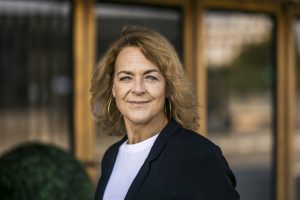
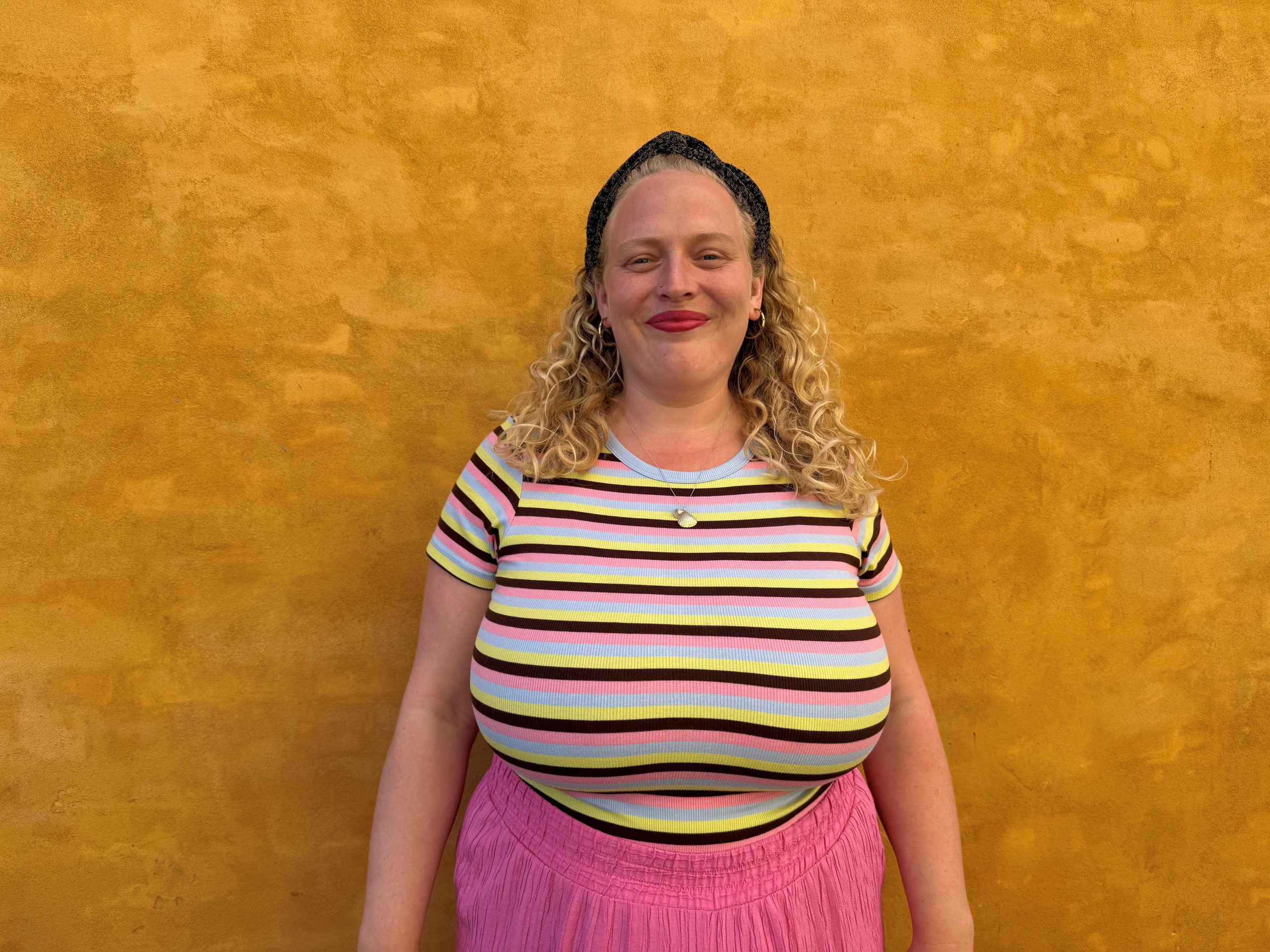
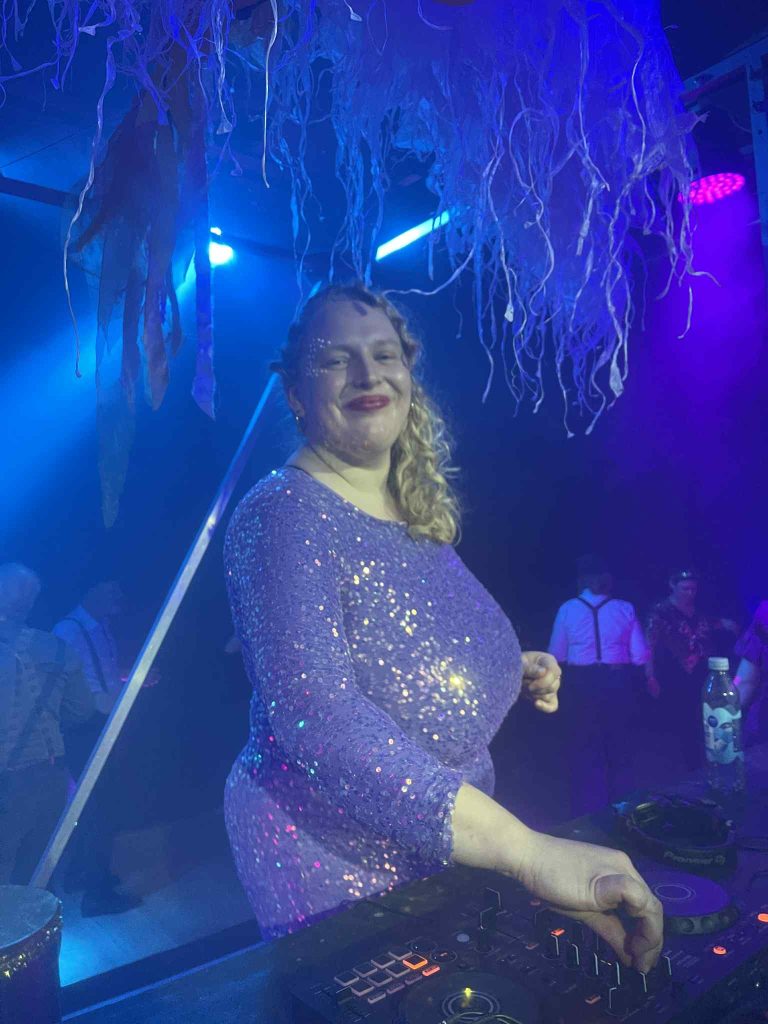
33-year-old Laura Astrid Colstrup DJs at parties, receptions, weddings and other events – including at Rört, a movement community in Copenhagen, where she also has an office space.
Read this article in Danish on Arbeidsliv i Norden
“I spend around once a week DJing, which I really enjoy even though the working hours are often a bit crazy. My working day often starts near midnight, and I don’t get home until the middle of the night,” she says.
Alongside her work as a DJ, Laura Astrid Colstrup is a consultant on how to include people with larger bodies at the movement institute Rört, which offers classes in, among other things, yoga and dance.
“I am myself daily confronted with the fact that I have a larger body that does not fit the norm, so for me it gives a lot of meaning that my lived experience can benefit others.
“Having work that is relevant is very important to me, and I find it valuable to try to increase diversity.”
No safety net
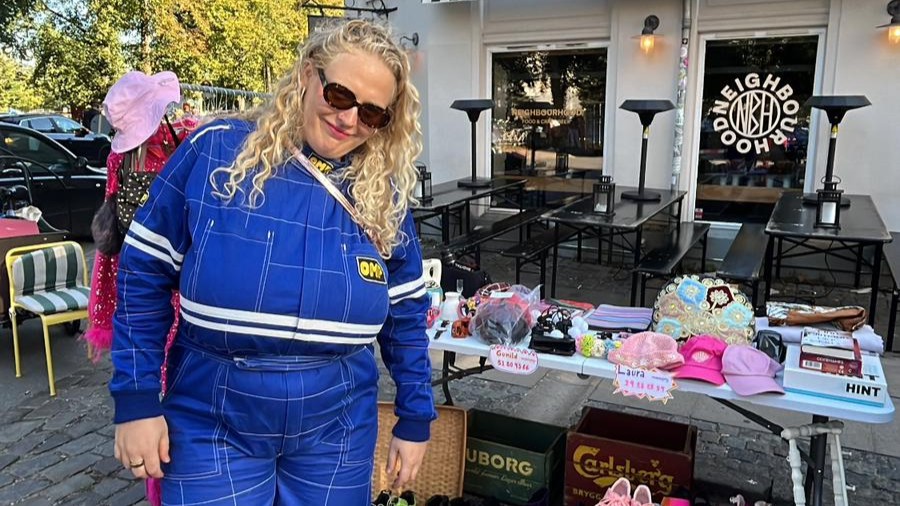
In addition to DJing and her consultancy work, Laura Astrid Colstrup runs her own business – Frirum.kbh – where she visits people’s homes and helps them tidy.
Right now, she is working alongside the City of Copenhagen on a joint campaign to get citizens to donate discarded items to the city’s recycling stations.
“I’ve always enjoyed tidying and making sure that the stuff that I and others just have lying around can get back out into circulation to the benefit of others. I love the fact that decluttering can provide calm and energy in our everyday lives.”
On top of that, she has just taken on a part-time role assisting at events at Demokrati Garage, a physical meeting place for democratic development and community, housed in a former car workshop in Copenhagen’s Nordvest district, where Rört is also located.
“My new part-time job is the only one of my income streams that brings rights like holiday pay, and that’s actually quite nice – even though I generally have chosen to opt out of that kind of security in my working life,” says Laura Astrid Colstrup.
Left the unemployment insurance scheme
Laura Astrid Colstrup has a bachelor’s degree in techno-anthropology and a master’s degree in applied cultural analysis – a form of anthropology aimed at the consultancy sector.
After graduating in 2019, she struggled to find a job and chose to go freelance instead – which she has been ever since.
She soon secured work for a consultancy firm where she worked as a freelance project manager and anthropological consultant.
The following year, she left her unemployment insurance scheme, saying goodbye to the possibility of receiving supplementary unemployment benefits if she did not earn enough to support herself 100 per cent as a freelancer.
“I didn’t feel like paying a lot into an unemployment insurance scheme when the rules state that self-employed workers can only draw benefits for a relatively short period of time.
“After that, you would have to wind up your business in order to qualify for economic support. It’s completely mad.”
That is why Laura Astrid Colstrup chose to manage without this economic safety net. Yet she is not entirely without protection.
Her parents have given her a decent sized child trust fund, she lives cheaply in her own housing cooperative flat, she has cut her own expenses down to a minimum and has saved some money over the years working as a freelance consultant.
“I am in a very privileged situation. That probably means I can cope better with the insecurity of being self-employed than other freelancers who might not have the same financial buffer.”
Shares, not a pension
Wage earners receive pension contributions from their employer, while the self-employed pay into a pension pot themselves. Many self-employed people chose not to spend money paying into a pension scheme, because this could be an expensive post in a small budget.
Laura Astrid Colstrup is one of them.
“I have chosen not to take out a pension savings scheme with a pension company. Instead, I invest part of my savings in shares. It’s more risky, but I am probably quite willing to take risks, and I like knowing what I am investing in,” she says.
She has still not had any children but has a burning desire to have some. Yet she has still not found the man she wants to have children with.
”The thought of being a mother to a small child and perhaps a single parent, can sometimes make me anxious,” she explains.
“Being self-employed, I have to contribute to a maternity leave scheme, but I actually don’t know whether I would be eligible for that when I go on maternity leave one day. I have to look into that when the time comes.”
She can wake up at night thinking that it will be complicated and difficult to have children with the insecurity that comes with the way she has chosen to structure her life.
“But there is also a part of me who has a lot of faith in finding a partner and creating a family situation that fits well with my working life.”
Community for the self-employed
Laura Astrid Colstrup does not see herself enjoying an ordinary full-time salaried job at all.
“I might miss more structure and security in my work, but I have tasted the freedom of being self-employed, deciding for myself whether I want a lazy morning or for instance picking up my nephews from their childcare.”
Happy solo self-employed people
The number of self-employed people in the Danish labour market is declining. In 2017, they made up eight per cent of all employed persons. By 2025, just under seven per cent were self-employed.
There has been a decline in self-employed people who have their own employees, while the number of self-employed without employees has increased. The same applies to the share of salaried employees, according to data from Statistics Denmark’s labour force survey.
Solo self-employed people without employees report high job satisfaction. According to figures from the Danish Employers’ Confederation, nine in ten are either highly or somewhat satisfied with their jobs, and almost nine in ten do not wish to work as employees.
She does not envy her friends who struggle to get full-time jobs and family life to fit together.
“We have a slightly unhealthy work culture where pursuing a career takes centre-stage, even though we are many other things besides being workers.
“But it’s challenging to be outside of the norm. I have had to suppress a feeling of cheating when I have periods where I don’t work and earn very little. Even though I haven’t received a single krone in public welfare support for years.”
The loneliness by not being part of a workplace was a real challenge for Laura Astrid Colstrup, until she chose to stop working from home and joining the office community Co-Wörk, a part of Rört, 18 months ago.
“That’s been a game changer, being part of this magical community where I meet and eat lunch with other self-employed people who have also chosen to step off the treadmill to get more freedom.
“We are all in our own ways concerned with contributing to a world with more meaning and wellbeing, and our working community makes self-employed life a lot less anxiety-provoking and far more fun, as we share the ups and downs,” says Laura Astrid Colstrup.