The Nordic Freedom of Movement Council is now in the second year of a six-year programme designed to strengthen freedom of movement across the Nordic region. Three major themes currently dominate the council’s work, and in one case the Nordic ministers for cooperation have taken direct responsibility for driving progress.
Read this article in Swedish on Arbeidsliv i Norden
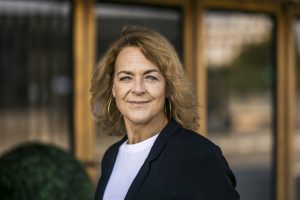
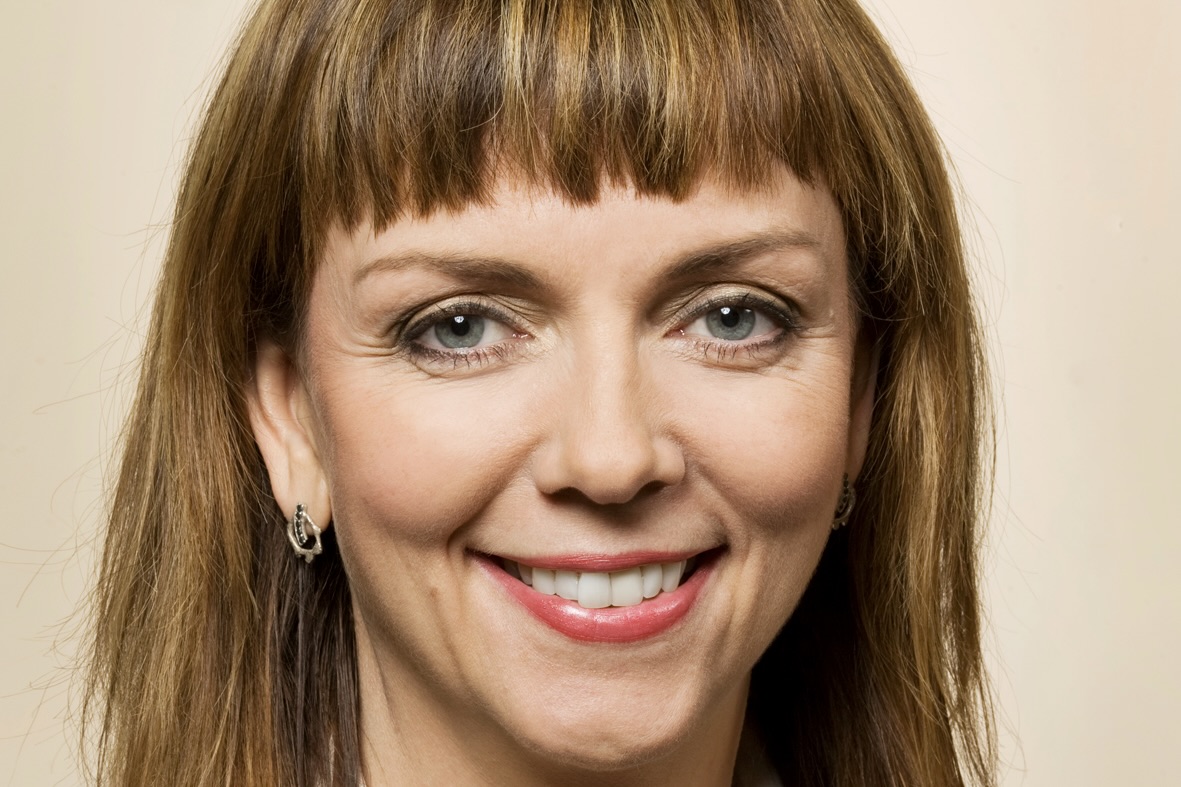
Siv Friðleifsdóttir represents Iceland on the council. The council has helped remove numerous cross-border obstacles since it was founded in 2014.
“To begin with, the council focused on obstacles in the border obstacles database. There were simple obstacles which in many cases were connected to a few isolated incidents.“
Many of these cases involved Iceland. Some were straightforward, others more complex.
“Some issues have been resolved, while others have been deemed impossible to solve because there is insufficient political will.
“One example involved guide dogs for blind people. Under Icelandic regulations, guide dogs returning from abroad had to undergo four weeks of quarantine, causing considerable inconvenience.
“The rule was intended to protect the Icelandic horse from diseases. After extensive work and review, the quarantine period was reduced to two weeks, and guide dogs were allowed to remain in home quarantine under certain conditions. We considered that an acceptable solution.”
Another case concerned two women who were married and had a child before moving to Sweden to study. The child had a valid Icelandic birth certificate listing both women as parents.
However, the Swedish population registry refused to register both as parents because they were both female, and the child’s Icelandic birth certificate was not recognised on those grounds.
“This led to a great deal of work, and the parents even sued the authorities, although they lost the case. In the end, the issue was resolved when Sweden amended its legislation.”
A new working method
Friðleifsdóttir says the council’s work changed significantly when it got a new mandate at the beginning of 2025.
“We are no longer focused primarily on individual obstacles, although we still address them to some extent. Instead, we have been asked to concentrate more on broader, thematic challenges.”
The council’s work is now centred on a number of areas of which the following three have priority:
- Enabling cross border identity matching in the Nordics
- Improving access to pension rights across countries
- Safeguarding freedom of movement during times of crisis
Ministers take ownership of digital identity
Friðleifsdóttir says the issue of cross border identity matching is the first major obstacle that the Nordic ministers of cooperation have chosen to address directly.
“This is closely linked to the new working method introduced last year, where the Nordic ministers for cooperation take greater direct responsibility for removing barriers.
“They decided at one of their meetings to make this a priority, which sends a strong signal that the countries are committed to making it happen.”

Progress has already been made, and the issue is also a priority for the ministers of digitalisation and as a result also includes cooperation with the Baltic states.
“Identity matching enables individuals from one country to use their own national digital identification to access digital services in another country.
“A key stakeholder is national population registries and the data they store on individuals. This data could be used to verify that an individual actually is who she claims to be.
“Our goal is that, as soon as possible, residents of the Nordic and Baltic countries will be able to use their national identification numbers across borders when dealing with public authorities.”
She notes that significant obstacles remain.
“There are technical, legal and security-related challenges. Initially, we want to prioritise people who are already living in another Nordic or Baltic country so that their identification numbers can be linked together. That work is currently being tested.”
Part of this vision is already becoming reality. Friðleifsdóttir points to cooperation in healthcare between Finland and Estonia, where Finnish patients can collect prescription medicine in Estonian pharmacies and vice versa.
Difficult to access pension information
Increased mobility within the Nordic region means that more people earn pension rights in several countries during their working lives. Yet many citizens find it difficult – and some almost impossible – to gain a clear overview of their pension entitlements.
The problem is not a lack of effort by authorities. Rather, pension systems, administrative processes and archives remain national, while people’s lives are increasingly cross-border.
Residents with employment ties to another Nordic country
Challenges include registering, tracking and documenting pension rights, as well as managing cumbersome administrative and payment procedures.
“At present, it is very difficult for people to find out what pension rights they have accumulated in other Nordic countries,” Friðleifsdóttir says.
“This issue is closely connected to digital identity. If digital identities can communicate directly with Nordic systems, people will be able to obtain detailed information much more quickly than they can today, when much of the process still relies on manual enquiries.”
Learning lessons from COVID-19
The council’s third priority is ensuring freedom of movement during future crises.
Friðleifsdóttir says that the aim is to learn from the experience during the COVID-19 pandemic.
A report prepared for the Nordic Council of Ministers found that the pandemic highlighted a fundamental structural vulnerability in Nordic freedom of movement that persist today.
Mobility in times of crisis is largely governed by national decisions. Although coordination and preparedness at national levels have been strengthened since the pandemic, this has led to joint agreements between the Nordic countries to a limited extent only.
According to the report, the mechanisms underlying the border obstacles observed during COVID-19 are largely still in place.
“When the pandemic struck, political leaders closed borders for understandable reasons, primarily to protect public health. But it was a major shock to the freedom of movement,” Friðleifsdóttir says.
“We want to learn from that experience and have commissioned a report, due this autumn, to examine whether more can be done proactively so that the impact of future crises will not be as severe.”
She does not believe the issue will be politically contentious.
“I am convinced that the authorities in the Nordic countries genuinely want to strengthen freedom of movement. The common Nordic labour market has existed since 1954, and the countries are very proud of that achievement.
“The Nordic Council of Ministers’ goal is also to make the Nordic region the most sustainable and integrated region in the world by 2030. The prime ministers have made it clear that this ambition also applies to technical solutions such as digital identity.”
Despite the momentum, Friðleifsdóttir cautions that a fully functioning cross border digital identity system is still some years away.
“This is not just around the corner. The legal obstacles in particular could take a long time to resolve.
“However, we are expecting a report in October that will map out the challenges and propose solutions. Once we have that report, we will have a much clearer idea of the next steps.”