Every second Monday, Jeppe Skovgaard gets on the train in Växjö in Southern Sweden with a smile as he heads to Copenhagen. There, he gets off at Nørreport Station and cycles the last stretch to the movement institute Rört which he owns and runs together with a business partner.
Read this article in Danish on Arbeidsliv i Norden
Two days later, he commutes back to Växjö on the train, takes a bus to the city of Åseda and drives 15 kilometres on narrow roads until he reaches a winding gravel road that takes him to a disused mill in the middle of the forest.
He bought the place together with his wife five years ago, and now is has been restored, rebuilt and extended. Möllan is their family home and also the couple’s workplace where they hold retreats and courses.
“I absolutely love commuting between Denmark and Sweden. It’s the only time during the week that I sit still and it also provides a nice transition between the two very different environments that make up my working life.”
An old dream
Möllan has space for 25 guests and is a popular place for hosting retreats and courses, explains Jeppe Skovgaard.
“It is far inside the forest while also being right in the middle between Stockholm and Copenhagen, and our calendar is fully booked for the next six months,” says Jeppe Skovgaard.
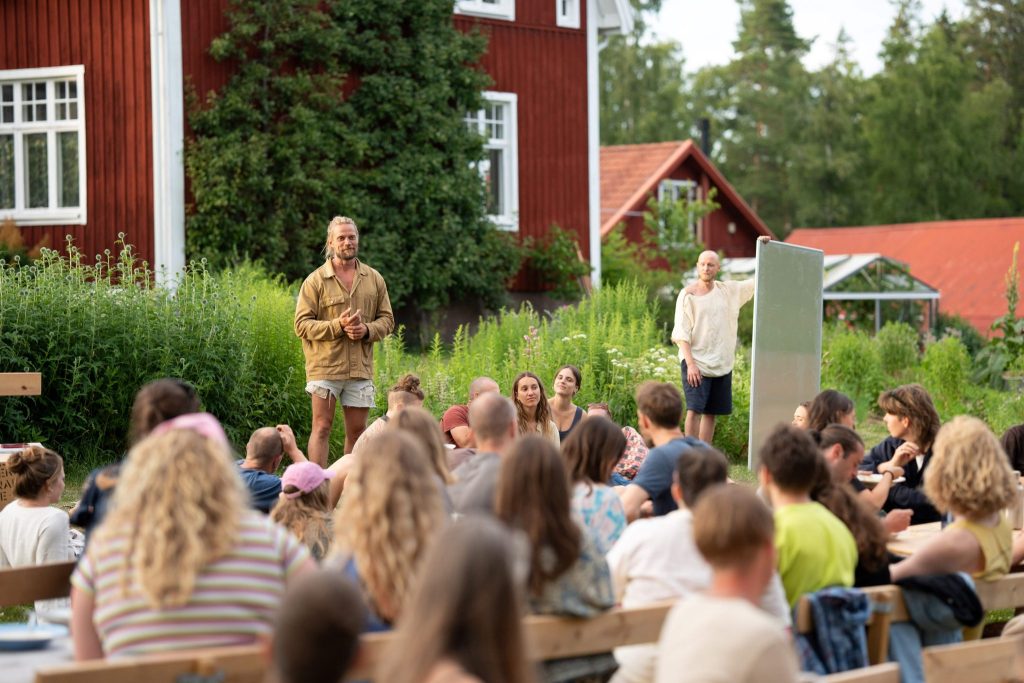
Running a retreat centre in Sweden is the fulfilment of an old dream for Skovgaard, who all his working life has been passionate about creating communities within movement environments.
In his youth, he began climbing buildings at night because he could not sleep. This led him to start doing parkour, where you move smoothly and fast through an urban environment, using things like stairs and walls.
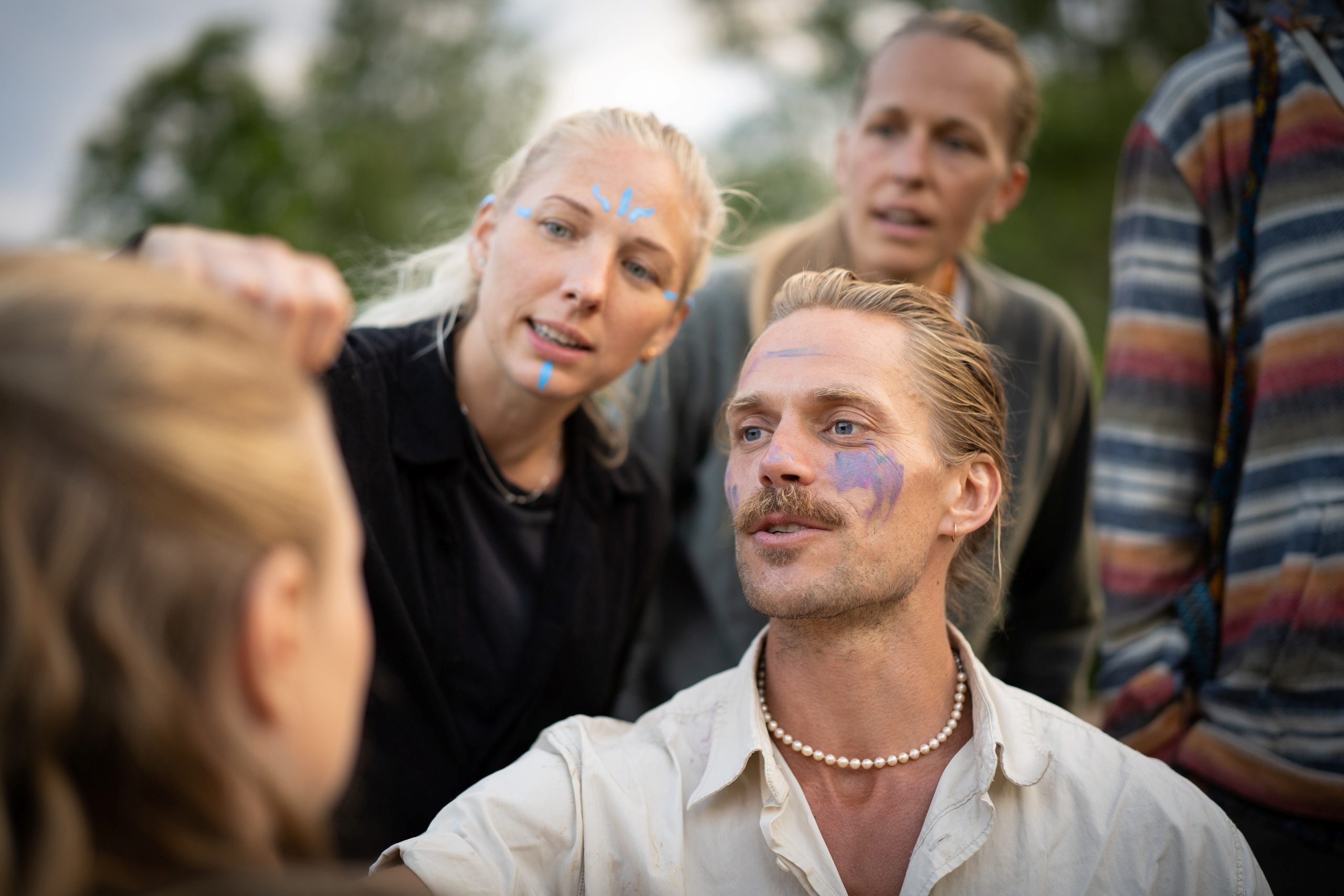
He has also been active in Copenhagen’s acroyoga environment, and both parkour and acroyoga can be found on the programme at Rört. There, he teaches yoga himself when he is in Copenhagen.
He is also the employer for Rört’s other 25 instructors who teach around 40 classes weekly across a plethora of disciplines.
Jeppe Skovgaard and his business partner founded Rört eight years ago, while he and Åsa lived in a small flat in Nørrebro in Copenhagen. The dream of moving to Sweden to set up a retreat centre was born long before then, but it grew when the couple got their two children.
Before he met Åsa, he lived for a while in a small house in Sweden.
“I was living out my inner farmer-hipster and moved a lot of rocks around, while my Swedish neighbours looked on in bemusement. I also wrote a blog about it,” Jeppe Skovgaard says with a smile.
An easy transition
When he and Åsa became parents, it was time to realise the dream. They wanted a life for their children with nature, space and peace, and started looking for a place suitable for retreats.
“We were dreaming of a place we could fill with people and we found Möllan.”
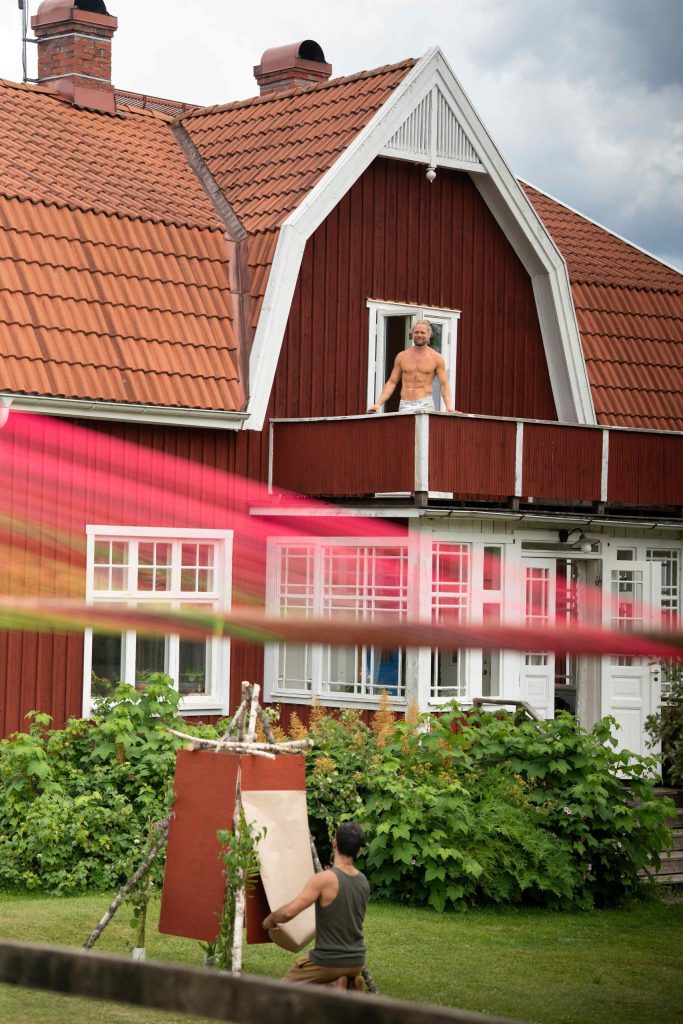
His children were six months and three years old when the family moved into the forest and began turning the disused mill into a retreat centre.
“We didn’t have our own kitchen to begin with, but we started holding retreats from day one to help pay off our loan, and at the time I commuted to Rört three days every week.
“Yet I still look back on that time as absolutely fantastic, having so much space and peace around us. I still remember one day lying in the bath tub at Möllan and feeling, ‘Now I’ve arrived.’ It was a powerful moment.”
Jeppe Skovgaard remembers the administrative and economic aspects of moving between countries as totally manageable. It also helped that Åsa is Swedish and was born in the area where Möllan is located, explains Jeppe Skovgaard.
The move has also been a boon for family life, even though their daughters now have a long journey to school and kindergarten.
“My oldest daughter is now eight and gets the school bus at 6.50 am which takes her to her school 12 kilometres away. My youngest is in preschool five kilometres from our home.
“Both have been welcomed with open arms by staff who have a lot of energy: ‘Oh, new children, how nice’. When we dropped our girls off at childcare in Copenhagen, it seemed – quite understandably, I should add – as though the staff were thinking, ‘Oh no, more children.’”
Praising Swedish craftmanship
Jeppe Skovgaard has personally overseen the restoration of Möllan, and he often hires local Swedish tradespeople. It has given him a deep respect for their professional skills and approach to their work.
“The tradespeople I work with in Sweden have a very high level of expertise. They turn up when they say they will, are very skilled and gladly share their extensive knowledge. They are also reasonably priced. It is much easier to find good tradespeople here than in Copenhagen, and I learn a lot from them.”
The Swedish tradespeople he works with seem to take much greater pride and enjoyment in their work than the tradespeople Jeppe Skovgaard hires to carry out work at Rört in Copenhagen.
He generally notices a significant difference in attitudes towards working life among the people he meets in Sweden and Copenhagen.
“Copenhagen is to an extent an academic bubble. That’s the way it is in bigger cities, I guess. People’s jobs are an important part of their identity. Working is a form of self-realisation.
“In the Swedish countryside you feel lucky to have a job less than 50 kilometres away from home. Work is not as important to who you are.”
He himself embraces both approaches to work.
“My own creative work is definitely more solitary here in the forest, but I really like the attitude to working life that I see in rural Sweden.”
New communities
Jeppe Skovgaard’s ambitions do not end with a life as a retreat host in the forest. He has just started writing a book about creating communities, and his next ambition is to create something akin to a Danish folk high school.
The school will lie near Möllan, students will live there together for a year and get trained in what he calls “surviving and thriving”.
“The world needs people who can create good conditions for life. We should be able to grow our own food, and we must have a roof over our heads.”
That requires an understanding of nature and practical skills, so he is making this one of the pillars of the programme.
“The students will learn basic survival, but survival only has value if you enjoy life.
“That’s why the second pillar of the programme will be to introduce students to some of the profound spiritual practices that can help us connect with nature, love and community – for instance through dance and meditation.”
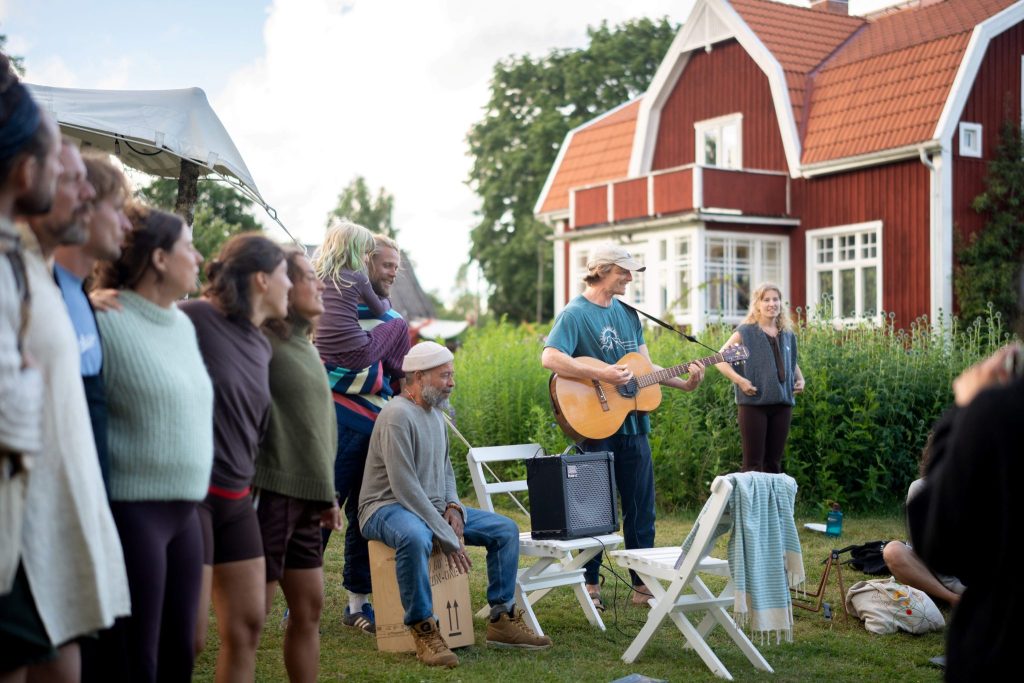
He expects the coming 10 to 20 years will bring political, economic and climate-related chaos that will radically change living conditions on Earth and place new demands on communities.
“That chaos will probably require us to simplify our lives and focus our attention. I think we will see a huge pull towards communities that can answer the question of how we survive and coexist.
“That requires communities that also have good answers to how we can thrive together within the community,” Jeppe Skovgaard says.