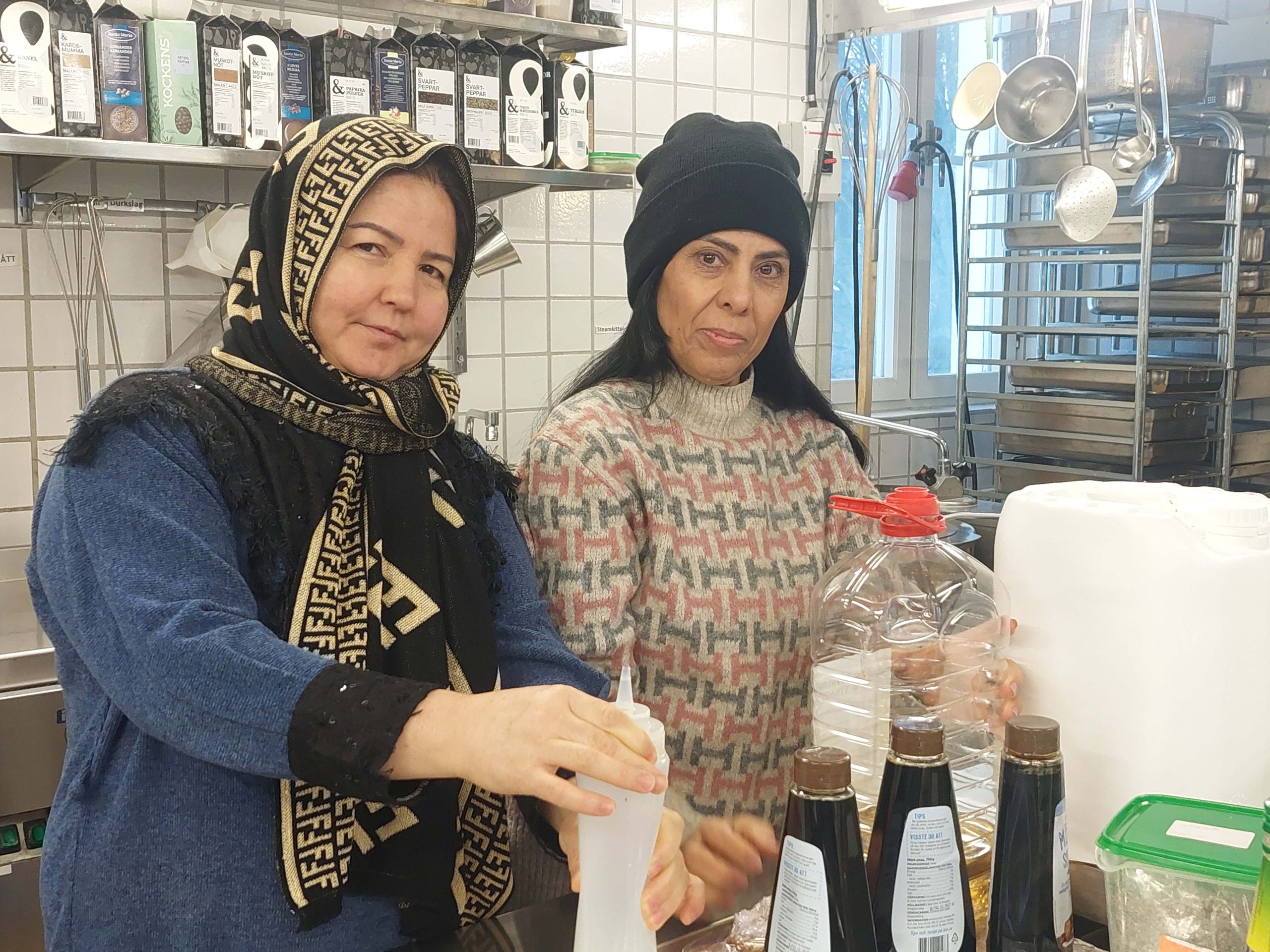
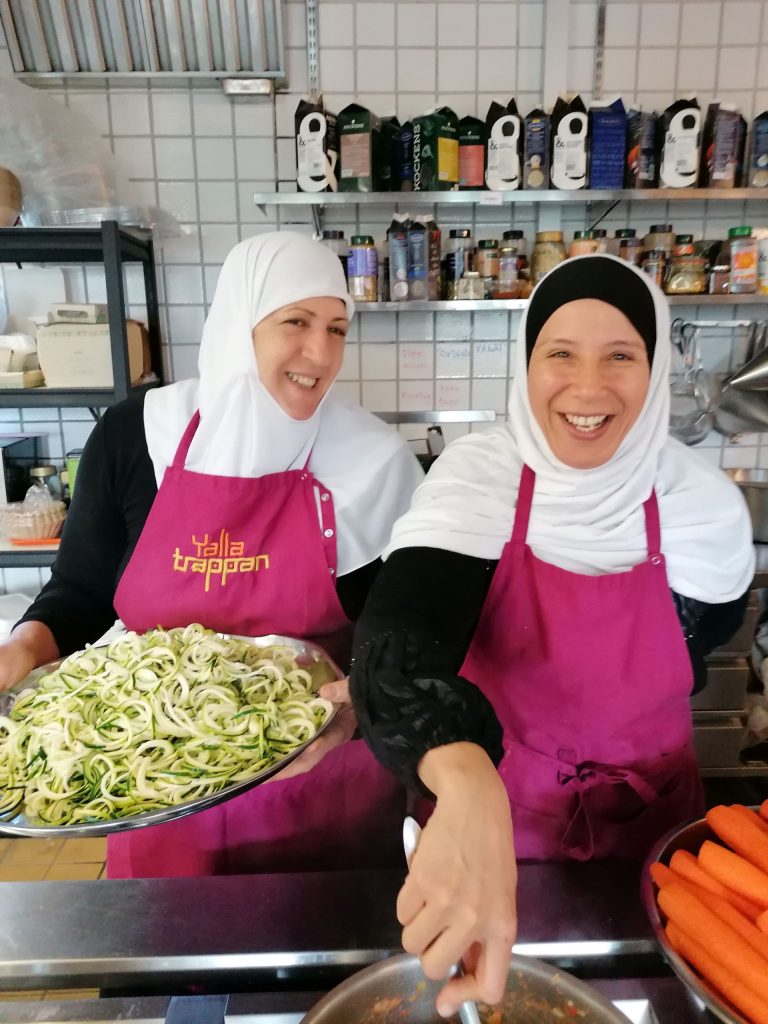
Qudsia Azizi and Shukria Noori stand in Yalla Trappan’s kitchen in Malmö’s Rosengård neighbourhood, peeling and cutting vegetables. They are taking part in ”Y-allas väg till arbete” (Everyone’s path to work) – a project that develops a model for cooperation between private businesses, social enterprises and the public sector.
Read this article in Swedish on Arbeidsliv i Norden
Beyond their participation here, they have also had work placements in industrial kitchens for some of Malmö’s larger employers. This inspired them and sparked a greater interest in working in industrial catering.
Now, they want to train to get a paid job they know they will enjoy.
“I’m talking to my supervisor at the labour and social services authority about becoming a chef,” Shukria Noori tells the Nordic Labour Journal when we visit.
Qudsia Azizi is leaning towards a job as a kitchen assistant and is discussing her options with her employment adviser.
Outside of the labour market
“What are many women who work at home good at? Cooking, cleaning and sowing, of course.”
Christina Merker-Siesjö tells the Nordic Labour Journal that this is what she was thinking back in 2006 when she got funding from the European Social Fund and started Yalla Trappan’s first project. It focused on precisely these three areas of work in order to bring together women who were far from the labour market.
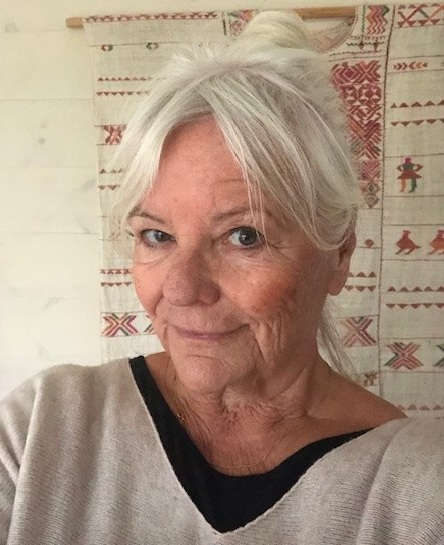
“The women were not included in various support measures because they arrived after their husbands had come to Sweden. They ended up isolated at home if they did not already have an education which could be recognised and allow them to find work.”
For the past two years, Christina Merker-Siesjö has been a senior advisor at Yalla Trappan, a work-integration social enterprise which, during her time as executive chair, has increased its number of employees tenfold.
Social sustainability
Social sustainability has its origins in the Brundtland Commission’s report “Our Common Future“.
Yalla Trappan operates as a non-profit organisation with commercial activities. With its own sewing workshop and kitchen, it offers products and services, such as cleaning, to companies, organisations and private individuals.
At present, they do not receive any operational funding or association grants, but they do get support from two sources. One is the Swedish Public Employment Service.
Outside the Employment Service’s commissioned services
“The women have varying language skills and lengths of residence in Sweden. What they have in common is a low level of education and little or no work experience. For that reason, they are very far from the labour market,” says Rudina Luta.
She is head of section at the Swedish Public Employment Service and explains that the commissioned services that she and her colleagues can offer rarely contain what these women need to move closer to the labour market.
“‘Y-allas väg till arbete’ meets the needs of this group of people.”
During the six months that the women participate in the project, a designated employment officer regularly monitors progress.
When the period is over, all participating women have been given a concrete action plan designed to accelerate their entry into working life.
‘Y-allas väg till arbete’ aims to welcome 70 participants from the Employment Service every year and has received support from the service since 2014. In 2025, the support was 2.6 million Swedish kronor (€245.500).
“When I regularly visit Yalla Trappan, I get a warm feeling. It is important to keep in mind, while talking about results and progress, what their time there does for the women’s self-esteem, and for their motivation to engage in further support measures,” says Rudina Luta.
Private experiences
Zeina Doulani knows what it is all about. She was once a participant at Yalla Trappan herself. In Lebanon, she worked as an assistant nurse, but in Sweden, she became unemployed.
A friend had a work placement with the organisation and advised her to get in touch with them. It turned out to be sound advice.
“At first, I sat behind the till at a lunch café run by Yalla Trappan here in Rosengård. After that, I joined the kitchen and started making fig marmalade after a recipe I brought with me from my home country.
“Now, we make several different marmalades which we sell to private individuals and shops around Malmö. We also offer catering services to our customers,” she says.
Her employment over the years has increased from 25 to 75 per cent and means that Zeina Doulani is now head of the kitchen and mentors the women who participate in “Y-allas väg till arbete”.
“The kitchen job suits me very well, and it makes me happy if I can help a woman, even if it is just a small step on the way. I tell them, ‘ask questions, ask questions’ because taking initiative is positive.”
Zeina Doulani says that some women can be nervous during their first week at Yalla Trappan, but that this usually eases after they have had a one-to-one conversation with one of the mentors. It is often about fear, she says.
“It’s completely normal to feel like that, and in the second week, they open up. Our mentors have previously been interns and know how it can feel. It is important to listen to their worries.”
Together with Christina Merker-Siesjö, Zeina Doulani has attended conferences and visited several municipalities across Sweden. Zeina also visits SFI classes (Swedish for Immigrants) to talk about ‘Y-allas väg till arbete’.
“Then I usually say that Yalla Trappan is like Sweden. This is a democracy. We work together, and everyone gets to know what is happening.”
Their progress draws attention
Yalla Trappan’s activities also attract many study visits from Sweden and abroad.
While Christina Merker-Siesjö was responsible for operations, she took part in a range of conferences, both in and outside of Sweden. She also participated in a panel debate organised by the Nordic Council of Ministers during an Almedalsvecka event in Gotland.
“Above all, our concept has helped educate and inspire women in Norway, Finland, Latvia, Ukraine and the UK,” she says.
In 2015, the social enterprise received the City of Malmö’s Business Award for Diversity. The citation read: “For its innovative work with creating job opportunities and integration for women in Rosengård.”
Five years later, Yalla Trappan won the European Citizens Prize, a prize that “recognises initiatives that contribute to European cooperation and the promotion of common values”.
Several municipalities have wanted to copy the successful model, and sometimes they will call Christina Merker-Siesjö for some ideas.
“I answer that there is no quick fix. It requires hard work, resilience and a conviction that the vision you have will endure.”
Crucial relationship building
Setting up Yalla Trappan did not happen without any opposition, explains Christina Merker-Siesjö, who saw the potential in creating a women’s cooperative where the participants’ own skills would be developed into professional ones. There were many negative responses.
“’You will never manage to get them to do it’. ‘Women enjoy staying at home’. That is what I was told. But when you fully believe in something and have experience from the values-based sector and from work on democracy and gender equality, as I did, it was about continuing to believe that the idea could be realised.”
The founder argued that if you broke the isolation, it would be a win for both the individual woman and for society as a whole, because the risk of mental health and physical problems increases when people live in isolation.
“It would also mean that children got a role model in their mothers. So the best thing to do is to give these women the tools they need to change their own situation. Which is what Yalla Trappan has been doing for 20 years now,” she says.
Mixed funding
The City of Malmö is the second funding body supporting Yalla Trappan. Since 2014, this has taken place in cooperation with an IOP (public–civil society partnership) within the city’s labour market and social services department.
Last year, the budget amounted to 2.3 million Swedish kronor (€217,000), with the goal of admitting 42 women.
Therese Frykstrand, who has been Yalla Trappan’s operations manager since 2015, explains all this.
“We have two projects that have been partly publicly funded for a long time. In addition to ‘Y-allas väg till arbete’, there is ‘Yalla lotsar’ (Yalla guides), which targets foreign-born expectant mothers and mothers of young children in Malmö.
“The projects are integrated into our areas of activity: sewing, cooking and cleaning.”
Today, Yalla Trappan employs 46 people, all of them on permanent contracts. That is a deliberate decision made by the organisation, explains Therese Frykstrand.
“Many other employers offer people who are far from the labour market just two years of employment with wage subsidies, and then it ends. Or they offer ten-month contracts or hourly employment. That is not how we do things,” she says.
The workforce has shrunk slightly in recent years. Partly because several companies that previously used Yalla Trappan’s services went bankrupt during the economic downturn.
In addition, several organisations such as study associations and folk high schools, which have also been clients of the association, have seen their state funding reduced, resulting in necessary cutbacks.
In 2025, Yalla Trappan had a turnover of 26 million Swedish kronor (€2.4m)
“Out of that, 65 per cent was sales and 35 per cent public financing. When I started ten years ago, it was the opposite, and we continue to work towards increasing our sales,” says Therese Frykstrand.
Successful combination twice over
Anna Rydén is the ”Y-allas väg till arbete” project leader. As she puts it, she “keeps hold of the threads” of the participants’ activities in the sewing workshop, the kitchen and the cleaning services.
She believes two key combinations are the reason why the organisation works so well. One is that Yalla Trappan’s mentors have done the same work themselves.
“They got out of their isolation, began as participants with us and were then hired.”
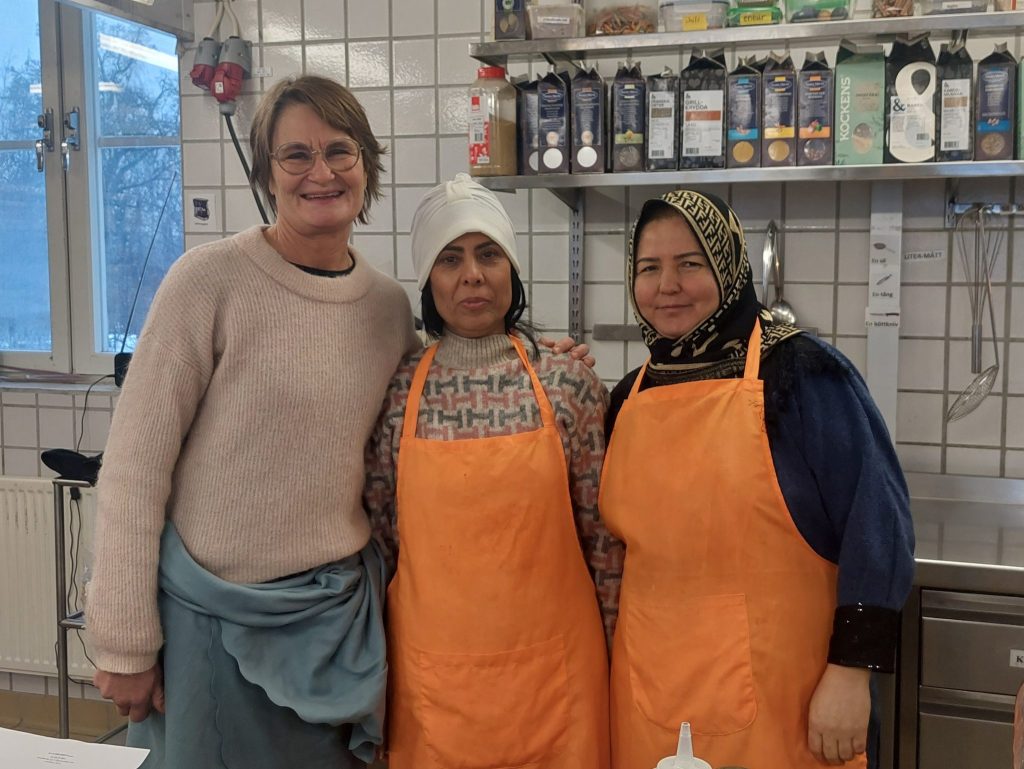
The other is that participants spend around half of their time in the organisation’s study room, where they learn about Swedish working life and get information about Swedish society while also practicing the Swedish language.
“During the other half of their time, they get to experience a sense of workplace community while they’re working on real assignments. They feel needed and welcome. When they see that we really believe in them, their self-esteem grows.”
During the six months that the women participate in “Y-allas väg till arbete”, they also have time to visit various education providers.
“We go there to see both teachers and pupils. Not just those who are studying traditional female occupations, but also those who study to become graphic operators or machine operators, for instance.
We try to broaden their horizons and show them the many options open to them, and that it is necessary to take responsibility for oneself. It is important to understand this,” says Anna Rydén.
Qudsia Azizi and Shukria Noori have taken the call to broaden their horizons to heart. They say they are very grateful for everything they learn at Yalla Trappan and through the SFI language classes they participate in.
They look forward to further education that will enable employers to hire them.
They both come from Afghanistan, where they lived in places where only boys were allowed to go to school.
“I like living in Sweden. Everyone gets to go to school here. That is good,” says Qudsia Azizi.
Shukria Noori nods.
Yalla Trappan’s books
Yalla Trappan has published three books to feed the interest in their operations:
- “Yalla’s journey – the book about the women at Yalla Trappan”
- “The road to Yalla – this is how we did it”. A guide to Yalla Trappan’s method, also published in English
- “From Yalla Trappan with love”. A cookbook with food memories