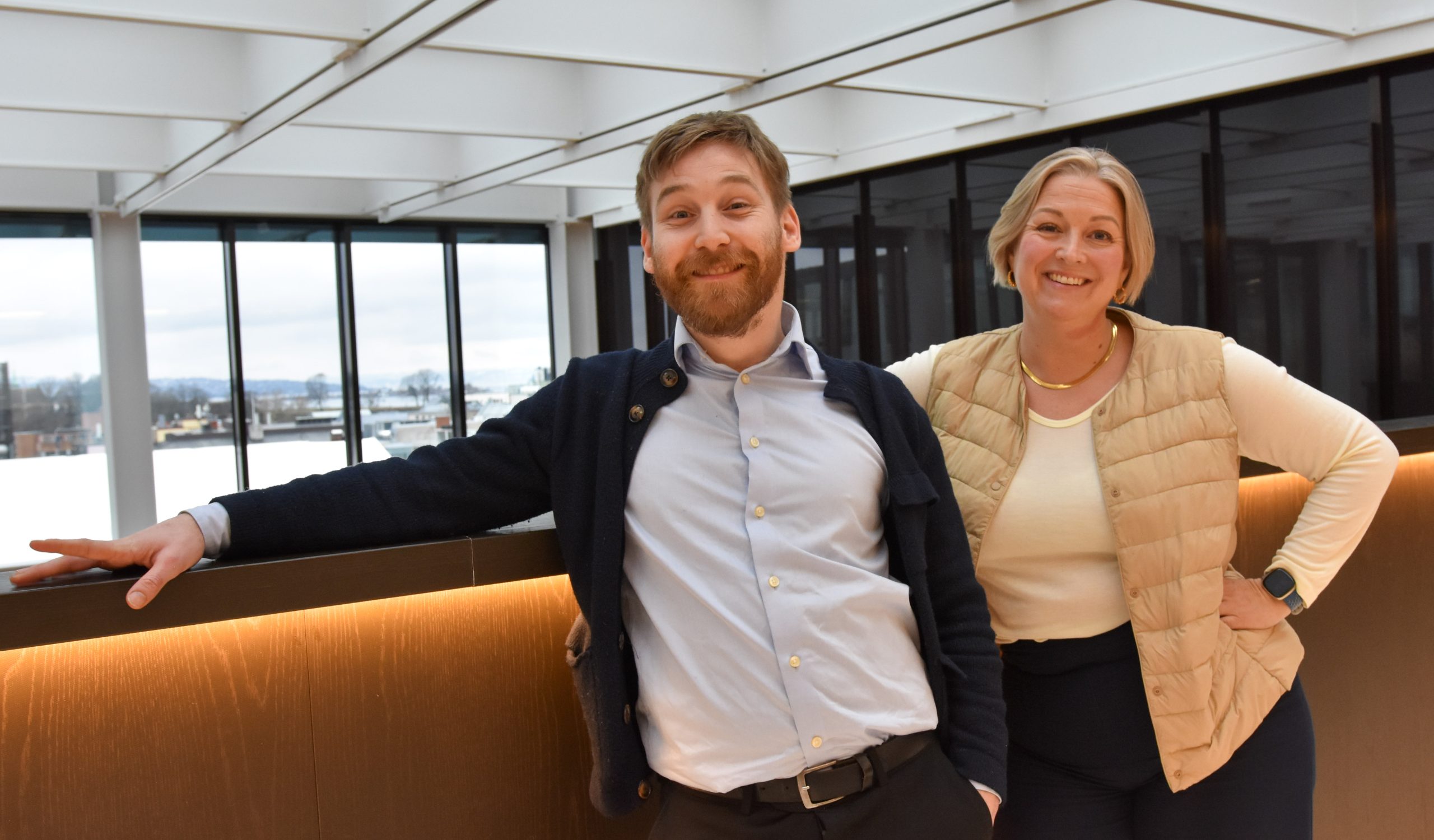
As soon as Oskar Eikeseth welcomes us into EY Norway’s headquarters, it becomes very clear: Oskar has a few challenges most of us do not have.
Read this article in Norwegian on Arbeidsliv i Norden
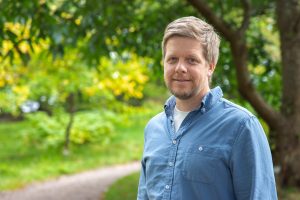
He was born with cerebral palsy and struggles with his balance and speech. His disability is visible to others.
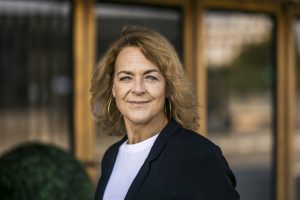
We meet him together with head of HR, Line Finstad.
Choosing something we are good at
Eikeseth has a master’s in social economy. Towards the end of the five-year course, he was anxious about how he would manage to find a job.
Quite a few reports do show that people with disabilities face major obstacles in the labour market. The employment rate among people in group is considerably lower than the population average, even though they are often well qualified.
“Generally, it is not easy for people with disabilities to get a job. There are still many prejudices among people and employers,” says Eikeseth.
He also believes it is important for people with disabilities to be realistic when choosing an education and career path.
“We often hear one of two stories: ‘You can’t manage anything’ or ‘You can do everything!’ None of them matches reality,” says Eikeseth.
He prefers to use the following analogy:
“I would have been a rubbish surgeon. My coordination is not good enough. But that does not mean I can’t become good at something else. I think it is important to choose something you can become pretty good at and that you enjoy doing.”
It is also important to be aware of your own strengths and to use them, for instance, during a recruitment process, believes Eikeseth.
“I have cerebral palsy. It’s a drag, and I wish I didn’t. But as that is how it is, I have to try to use the resources and experiences I have in a good way,” he says.
Head of HR: Tired of hearing about barriers
Eikeseth got a job with EY.
Head of HR Line Finstad is convinced that the company made the right recruitment decision.
“Recruitment processes are not easy, and they have not become easier over the years. But it is important to ensure that everyone can be at the starting line and get the chance to showcase their talents.
“It is also very expensive to make the wrong recruitment choice,” she adds.
Finstad points out that inclusion and diversity is nothing new. It has been part of the company’s strategy for many years.
She is tired of hearing about barriers. For her, it is about focusing on the opportunities.
“Diversity is about gaining access to the best possible expertise, which can bring new perspectives on the challenges our clients face. We need to reflect the market we operate in. Diversity is also good business,” underlines Finstad.
Our most important resource: people
Eikseth works with inclusion, diversity and communication as well as sustainability and climate budgets at EY.
“I didn’t really know what to expect from working life, but I was very well received.”
As a social economist, Eikseth is interested in how companies should position themselves to run a good and sustainable business – not just next year but also in 10 and 30 years.
“People are our most important resource. So we have to ask: Which people do we need on a team?”
He is also focused on making sure everyone brings their own experiences into a team and that the diversity of those experiences strengthens the team.
“When you live with a disability, for instance, you are used to solving problems as you go. It’s a bit like living with a knife to the throat – what works and what doesn’t? This can make you a better problem-solver.”
Diversity = good business
For Eikeseth, inclusion and diversity is not about businesses being kind.
“It’s a way in which to build a business. We need more perspectives, which we get by putting together a team of people with different backgrounds, ethnicities or with disabilities.”
The social economist is also not too concerned about figures, at least not when it comes to the debate about inclusion and diversity in the labour market.
“This is first and foremost about how many people with disabilities a company has hired. It might sound great with 10 to 15 per cent, but if the people have a bad experience and disappear after a short while and end up on disability benefits, the whole thing is meaningless.
“The question is: How do you look after the diversity when it is actually there? That is when you start to unlock its values in the form of a better working environment, more creative teams and improved problem solving,” says Eikeseth.
The goal that vanished from the IA agreement
Authorities and the social partners in Norway have had an inclusive workplace agreement – the IA agreement – in place since 2001, aimed at making the Norwegian labour market more inclusive.
One of the three sub-goals was to prevent dropouts and to increase employment among people with disabilities. This sub-goal was taken out of the agreement in 2018.
At the time, the then Minister for Labour and Social Inclusion Anniken Hauglie (Conservatives) defended the changes by pointing out that older people and people with disabilities had been part of it for nearly 20 years without it resulting in any change.
An inclusive working life – a future-oriented priority for the Nordic region
The Nordic Welfare Centre heads an ongoing project that looks at how working life can become more inclusive for people with disabilities.
The main aim is to improve knowledge of what actually contributes to inclusion in practice. The project “An inclusive working life – a future-oriented priority for the Nordic region” uses surveys, webinars, workshops and conferences to gather experiences and knowledge from across the Nordic region.
Several webinars were held in the autumn of 2025: on work environment and inclusion for people with disabilities, on how AI and other new technologies can promote inclusion in the workplace and on challenges related to the lack of comparable statistics in the Nordic region.
At the moment, both definitions and data sources vary considerably between the countries, which makes it difficult to follow developments over time.
“Comparable data is crucial for knowing what works and where the challenges remain,” says Lars Lindberg, senior advisor at the Nordic Welfare Centre.
More events are planned for 2026.
Instead, the government launched the “inclusion drive” (inkluderingsdugnaden). But this also failed to change the statistics. The number of people with disabilities who are in work has remained approximately the same for more than 20 years.
In Norway, around 100,000 people in this group are still outside of the labour market, even if they can and want to work.
Disability association took action
In 2001, the Norwegian Association of Disabled decided to set up InClue – a recruitment and competence house with one clear ambition: to help far more people with disabilities get the chance to use their skills in the labour market.
The company has been operating since 2022.
“Nearly all businesses want diversity, but they don’t know how to do it,” says Tor Andreas Bremnes, InClue’s managing director.
“Far too often, we also see people with disabilities being hired because the employer wants to ‘contribute’ and ‘take social responsibility’. That is the wrong approach. We need to change that mindset. The labour market needs to hear what they can actually contribute,” says Bremnes.
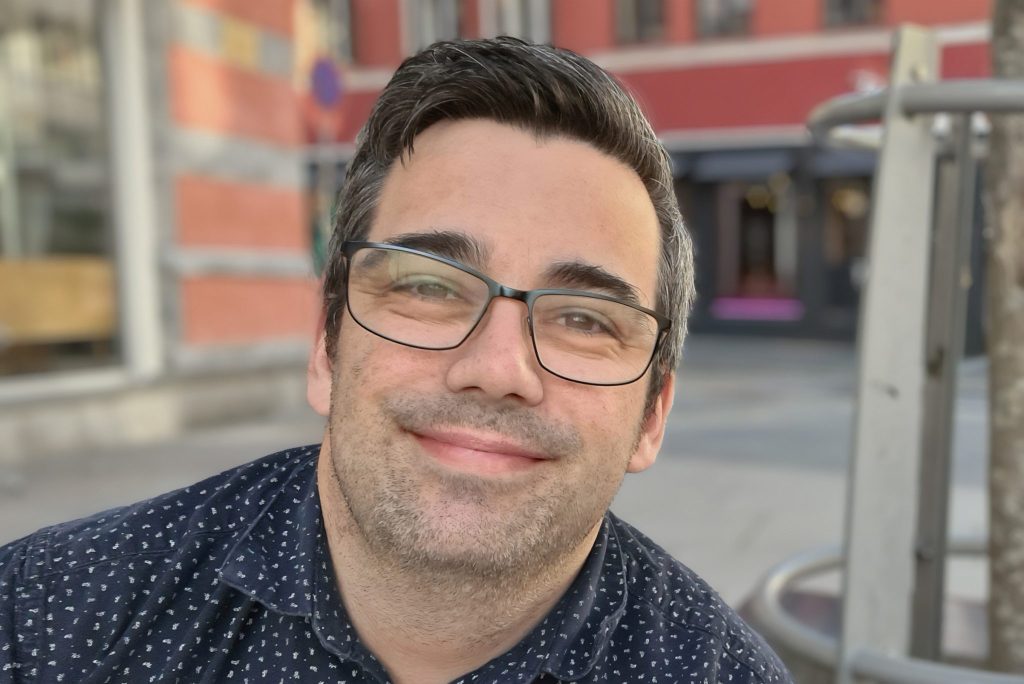
At InClue, they work with language, job adverts and assessment criteria to shift the focus from limitations to skills and added value.
But to get into the labour market, we often have to go through a recruitment process first. This is where things often stop for people with disabilities. Recruitment models are often made for “everyone”, and are therefore exclusionary, according to Bremnes.
So InClue has mapped 15 typical pitfalls where diversity usually drops out of the process They use this as a basis for certified recruitment processes for companies.
Got help to recruit
NORCAP is part of the Norwegian Refugee Council. They have a mandate from the Foreign Ministry to recruit, train plus send and guide election monitors on behalf of Norway.
When NORCAP wanted to recruit new observers, they sought help from InClue. They wanted more diversity among their team of observers.
“A diverse observer corps gives better analyses and reports. Different experiences result in different observations – whether this is geography, age or disability,” says Anne Sofie Molandsveen.
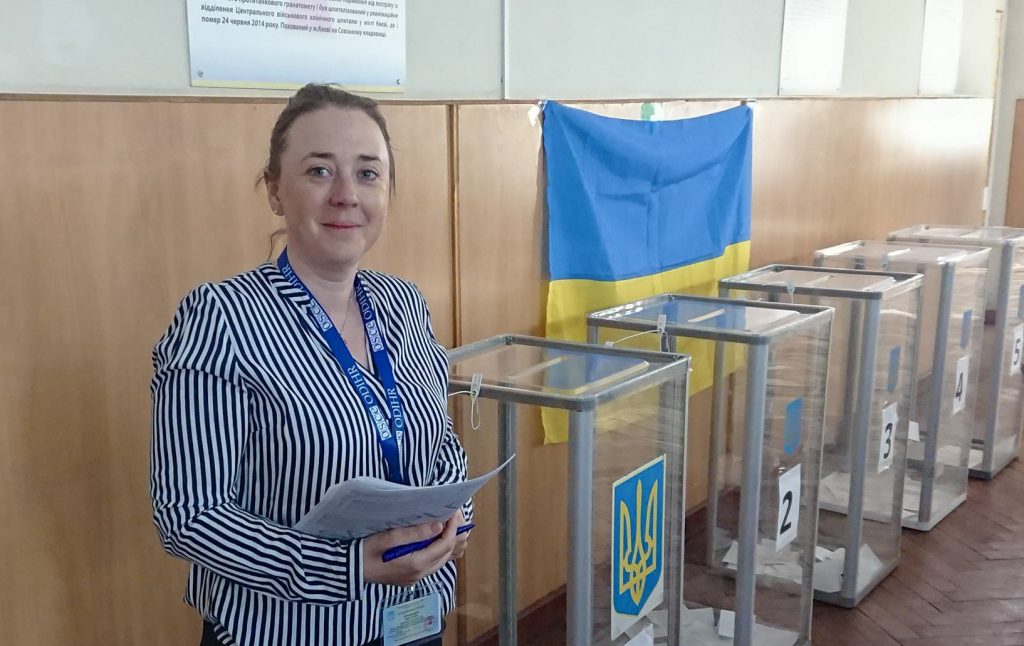
InClue helped them make the recruitment process less exclusionary than before.
“One of the things we realised was just how much exclusion was baked into our recruitment tools,” says Molandsveen.
Video tools and standardised solutions proved to be obstacles to well-qualified candidates.
Offer “extra skills”
There were around 1,000 applicants for last year’s intake. Only a few dozen were selected. Irene Elise Hamborg was one of them. She has low vision.
“I am more observant than many who have good eyesight,” she says.
“If you have a disability, you learn to navigate in a world that was not designed for you. It makes you more aware of details and of things that do not work,” says Hamborg.
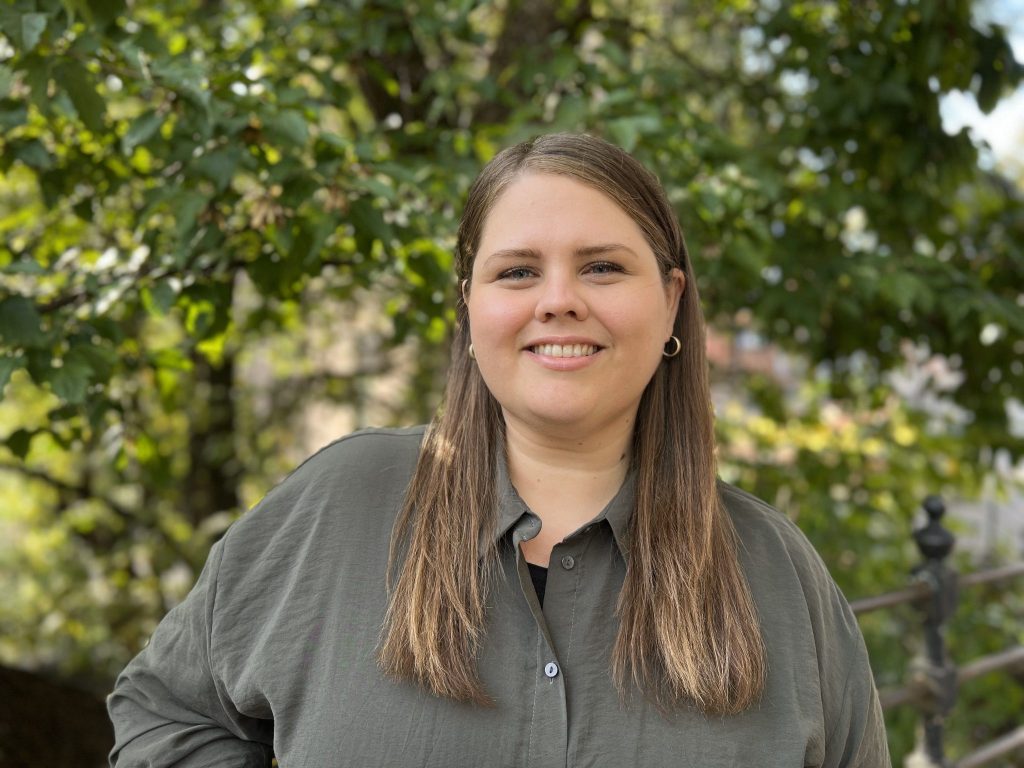
She has the relevant training, speaks Spanish and has lived in Latin America for many years. She also has experience from emergency services, psychosocial crisis management and early warning systems.
“I’d like to think that the sum of these skills was what secured me this job,” she says.
One of her jobs as an election observer is to look for accessibility and universal design.
“There is a lot that needs to be in place before a polling station is actually accessible to all. When it comes to vision, it might be issues around text, the use of images or who is guiding you into the voting booth,” she says.
Hamborg has already been on an observer mission, and it went well, she says.
Dialogue the key to success
Dialogue is crucial for Hamborg, both in terms of recruitment and in working life in general. She thinks a lot can be solved simply by talking to each other.
“You cannot prepare the ground without dialogue. Many leaders are worried they will do or say something wrong. It is often well meant, but by avoiding the theme, you create unnecessary problems.
The best thing she thinks a leader could say is “I don’t quite know how to handle this. Can we talk about it?”
“That’s when I see a leader taking their due responsibility. I also have one piece of advice to all employers out there: Not everything needs to be in place from workday one. What’s most important is having the will, curiosity and room to find solutions together.
“Accommodation is a shared responsibility, but it is important that the employer remembers that it is their job to drive this process forward. Far too many employees end up including and accommodating themselves when they feel they have become a burden,” says Hamborg.
A handbook for leaders working with workplace inclusion
A new book is focusing on the opportunities for a more inclusive working life – and in particular the role of management and HR.
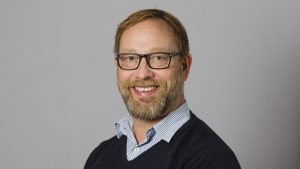
“We know a lot about the obstacles in working life, but far less about what businesses that actually succeed are actually doing. This is exactly what we want to find out: What are they doing differently?” says Eric Breit.
He is a professor at the Oslo Business School BI, at the Department of Leadership and Organisational Behaviour. Breit used to work at the Norwegian Work Research Institute (AFI) at OsloMet.
The book “Shaping Inclusive Workplaces for Persons with Disabilities – A Management and HRM Practitioner Perspective” is written like a handbook for people working with workplace inclusion.
It is a result of the ENGAGE research project, financed by the Research Council of Norway. Breit has been working with former AFI colleagues on this project.
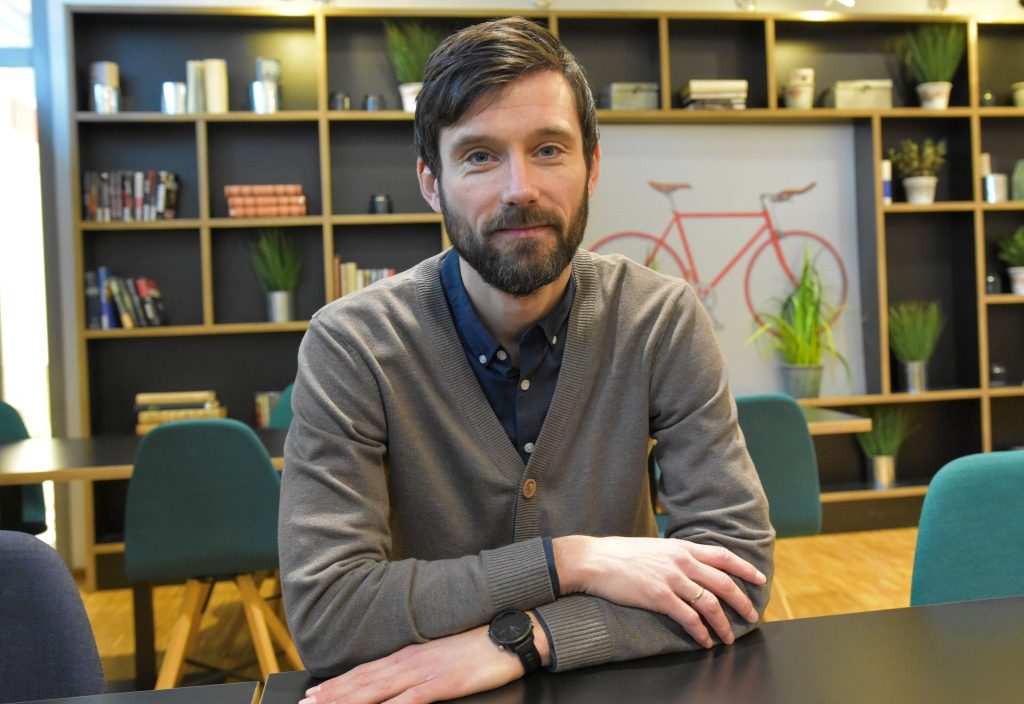
He believes leaders who do not like people should not be in leadership roles.
According to Breit, inclusion is a lot about leadership. And leaders who succeed are those who take more responsibility and go beyond the traditional employer’s role.
These leaders are often adept at using available funding schemes, they work well with NAV and employment specialists and make sure to provide follow-up when needed.
Yet far from all leaders are like “the cleverest ones”, according to the researcher.
“Many leaders struggle. They have the will but lack the tools. They need a toolbox,” says Breit.
This is exactly where the book is meant to help. It is written for leaders and HR staff who want to develop their inclusion competence, and highlights reflection exercises, among other things.
Molandsveen also agrees that dialogue is the key to success. She believes the fear among employers often stems from the worry of not being “good enough”, rather than ill will.
“The will was there for our part, but I was worried about saying something wrong. We wanted to recruit a more diverse workforce, but I, for one, had this idea that everything had to be in place and all special needs fully mapped before we even began.
“I think some of that worry means the labour market keeps the door shut.
“InClue helped us feel safe that what we came up with actually was good enough. We got help to develop the right language, create job adverts and job descriptions.
“We went from insecurity to something that felt safe, fine and completely second-nature. Now, we ask ourselves why we didn’t do this sooner.”