
As the ice sheet is melting, more and more water is surging into the hydroelectric power plants in Northern Greenland. This could help secure the green transition and new jobs, but it requires local influence.
Read this article in Danish on Arbeidsliv i Norden
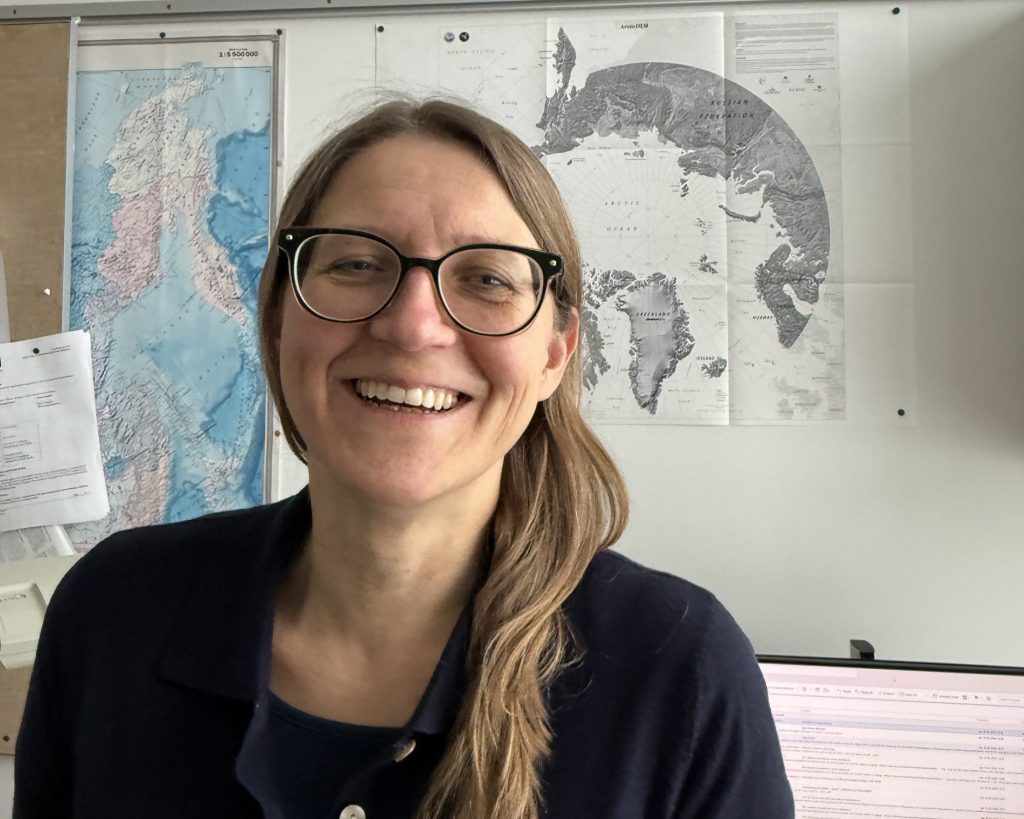
That is Lill Rastad Bjøst’s opinion. She is a lecturer in Greenlandic and Arctic Studies at the University of Copenhagen, where she researches climate change and the green transition in Greenland.
“Hydroelectric power is one of Greenland’s strengths. Because of the climate crisis, a growing share of Greenland’s energy needs could potentially be covered by energy from hydroelectric power plants and open for new businesses and jobs. But this will depend on local involvement, and it must make sense and create local jobs.”
Lill Rastad Bjørst is part of the LIQUIDICE research project, where researchers from 18 research institutions in Europe and India collaborate to predict the consequences of climate change for sea levels, water resources and the living conditions for millions of people in particularly vulnerable areas, including Greenland.
Local considerations
The project aims to give researchers and decision makers better knowledge about snow cover, permafrost and the ice sheet as temperatures rise.
The researchers focus in particular on the ice in glacier areas like Norway’s Jostedalsbreen. Its meltwater is the source of 15 per cent of Norway’s hydroelectric energy.
In Greenland, the researchers are looking at the consequences for the city of Ilulissat, which gets energy from one of Greenland’s five hydroelectric power plants.
“Climate changes mean more water going through Ilulissat’s hydroelectric power plant and therefore more energy, but that does not necessarily translate into a lot more jobs to Greenlanders nor a platform for new and greener production in the city.”
As tourism is growing in Ilulissat, there is increasing construction activity and a growing service sector, which recruits a lot of labour from Asian countries, explains Lill Rastad Bjørst.
She refers to Greenland’s Minster for Business, Mineral Resources and Energy, Naaja H. Nathanielsen, who told a conference on Greenlandic business in 2022 that Greenland does not need businesses with 1,000 employees, and that it is necessary to consider the relationship between business, society and culture.
“It’s important to remember that while it takes a lot of labour to physically establish energy production, it is not a sector that requires a large workforce to operate.
“This matters both practically and culturally in a small country with a small population, a significant need for imported labour, a small language and small communities.
“We need to consider the relationship between business, society and culture in order to avoid friction, and here, too, the green sector appears to be a good match for the country,” Naaja H. Nathanielsen told the conference.
Nothing about us without us
Lill Rastad Bjørst’s research takes a societal perspective of Greenland’s strengths, and she considers hydroelectric power to be one of them. The same goes for the mineral wealth in Greenland’s subsoil.
However, mineral extraction has not yet really taken off, because this strength is also subject to the fact that Greenland says no to development that does not take health, local interests and local conditions into account.
“‘Nothing about us without us’ is a very strong principle in Greenland and in all Arctic societies. Greenland wants to help define projects from the very beginning.”
The starting point is that Greenland’s population and society must be taken into account both in the relationship with Denmark and the rest of the world, and in terms of the green transition.
She sees a general desire in Greenland for developing a labour market that is more independent.
“Greenland is still very dependent on Danish labour in many sectors. Companies in the private sector in Greenland are also dominated by Danish ownership and leadership.
“Greenland would very much like to change this. And young people in Greenland now want to study and work in an international jobs market – not a Danish labour market.”
Paradigm shift in research
Lill Rastad Bjørst often leads major research projects in the Arctic and in Greenland and has gathered polar researchers across universities and countries to work together.
Right now, she is leading the research programme Fulbright Arctic Initiative IV – a three-year-long collaboration between Arctic researchers in several countries aimed at stimulating research cooperation on Arctic security.
“I see a paradigm shift towards greater local leadership and involvement in research also within Arctic research. Today, those of us who conduct research in Greenland and the Arctic are required to involve local rights-holders.
“The research must have value for them. I see that as a very positive development,” she says.