
The Arctic is a blue region with long, maritime traditions and strong marine industries. As the sea ice retreats, the marine activity will increase.
Read this article in Norwegian on Arbeidsliv i Norden
The question is what it will look like and how the maritime industries in the Arctic, and in the Nordic region in particular, will develop towards 2050.
Scenarios for a Nordic ocean economy
Nordic Oceans 2050 is a scenario cooperation led by DNV and part-financed by Nordic Innovation. The project has been carried out in collaboration with, among others, the Swedish University of Agricultural Sciences and the Technical University of Denmark.
The aim has been to explore how the Nordic ocean economy can develop towards 2050, using various future scenarios.
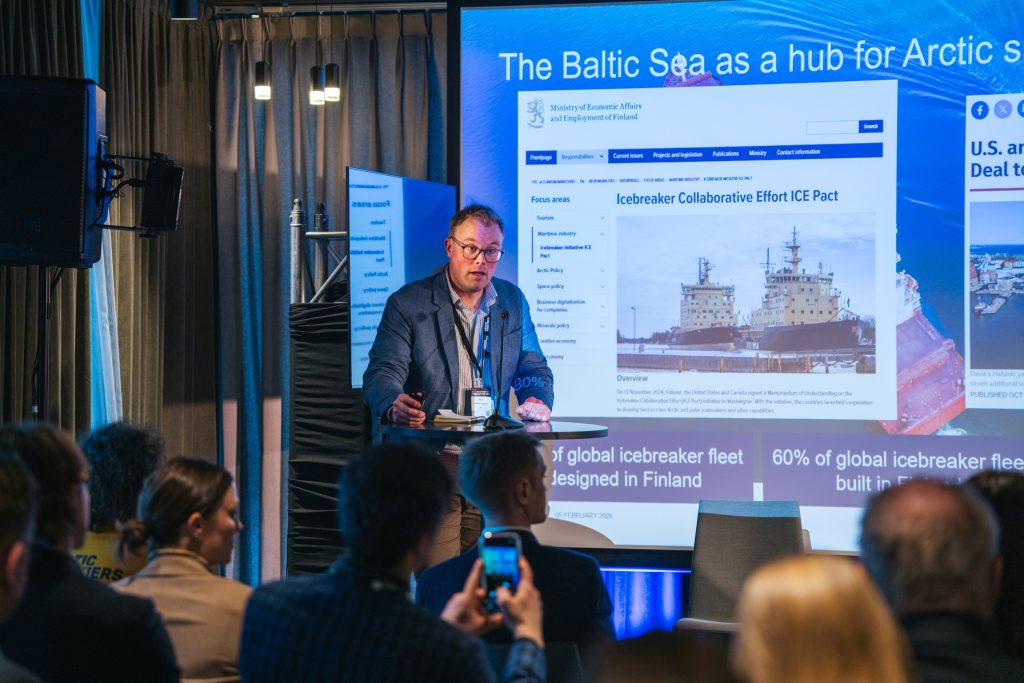
Sigurd Pettersen from DNV presented the main findings during the seminar “Blue economy in a Nordic perspective” at the Arctic Frontiers conference.
The report points to increased value creation from natural resources as a central driver for a more sustainable ocean economy. Two main areas are highlighted:
The development of new biomarine resources and materials – for instance, the identification of new species or bioactive compounds for use in biotechnology, pharmaceuticals and other high-value segments, or the farming of new species.
Increased value creation based on existing resources – including improved use of residual materials and by-products that are currently being used in low-value segments in the biomass hierarchy.
Pettersen underlines that the project has primarily mapped existing industries, but that there is considerable potential for increased and more efficient use of resources.
“We can use more of the resources in the ocean,” he says.
Pettersen also hopes they will have the opportunity to look more closely at circular solutions and improved utilisation of waste and by-product streams.
Offshore energy, fisheries, aquaculture and shipping are already central to the region’s economies. Together, they make up an ocean economy of considerable value. Demand for energy, raw materials and low-carbon proteins is likely to amplify this development.
The Nordic Oceans 2050 report is prepared by DNV together with Swedish and Danish partners and partly financed by Nordic Innovation. It points to the need for developing new biomarine value chains.
Red copepod – the largest renewable resource
This story begins with the small zooplankton Calanus finmarchicus – red copepod – a small crustacean living in enormous numbers in northern waters.
Its biomass renews annually on the order of hundreds of millions of tonnes and is considered the largest renewable resource in the Norwegian Sea.
Professor Jan Raa, a microbiologist and marine biochemist, became excited about the species.

“What caught my attention was the fact that we were talking about the North Atlantic’s largest biological resource by far. How does it live? How is it ingested?” he explained earlier.
He discovered that the oil in the red copepod differed from traditional marine oils. It is bound in wax esters and occurs naturally in a form that requires little industrial processing. Unlike cod liver oil, it does not need extensive purification and treatment.
“You can heat it, extract the oil and centrifuge it. Then you have the oil just as nature made it,” Raa has said.
It is worth noting that Raa has been appointed Commander of the Order of St. Olav for his work in biomarine research and development.
In the official citation, it was noted that Raa had been an innovator and contributor to modernising and providing the fisheries and aquaculture industries with new platforms for development.
From idea to production
The company Zooca Calanus now develops a marine oil with documented beneficial health effects, as well as protein products for fish and animals.
The journey from research idea to industrial production has been challenging.
“Developing a commercial product based on a wild resource means a lot can go wrong. We have relied on both professional expertise and a measure of luck,” says Roar Hausner from Zooca Calanus.
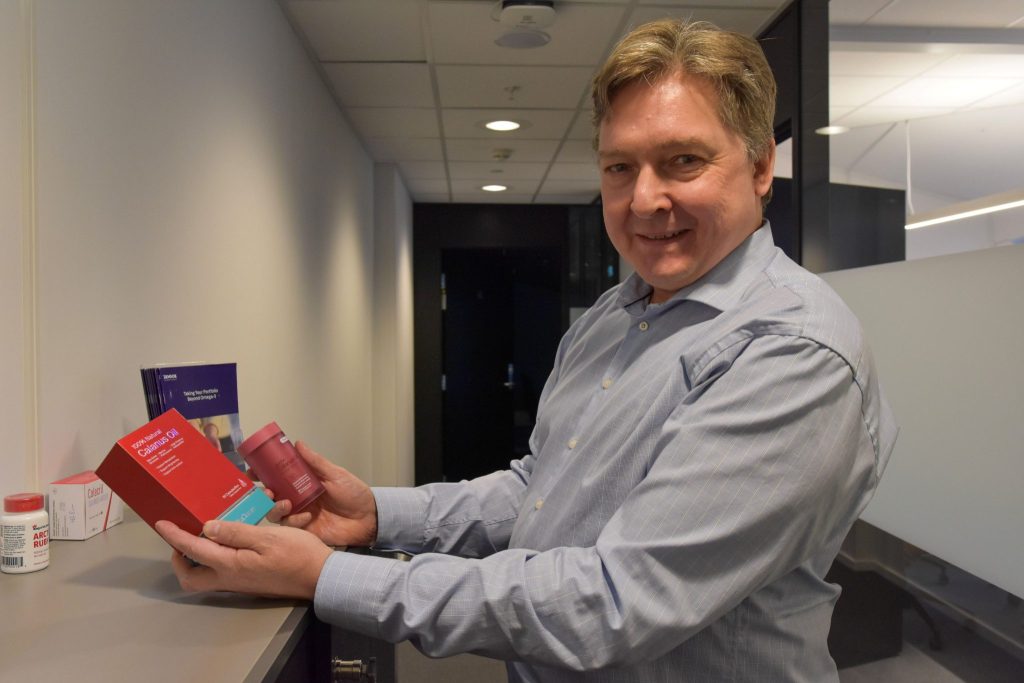
There have been many challenges: the capture and conservation of raw materials, sustainability documentation, access to commercial quotas, regulatory approvals and creating a market for an unknown product.
New ocean activities rarely happen without opposition. The fisheries industry has expressed concern about the impact of bycatch. According to the Institute of Marine Research, the effect on other species has been minimal.
Meanwhile, the market has to be built from scratch.
“Nobody knows what red copepod is. Why should you choose this over cod liver oil? We have had to educate the market.”
Regulatory processes and international approvals have been time-consuming and costly. The USA and China are among the key markets so far.
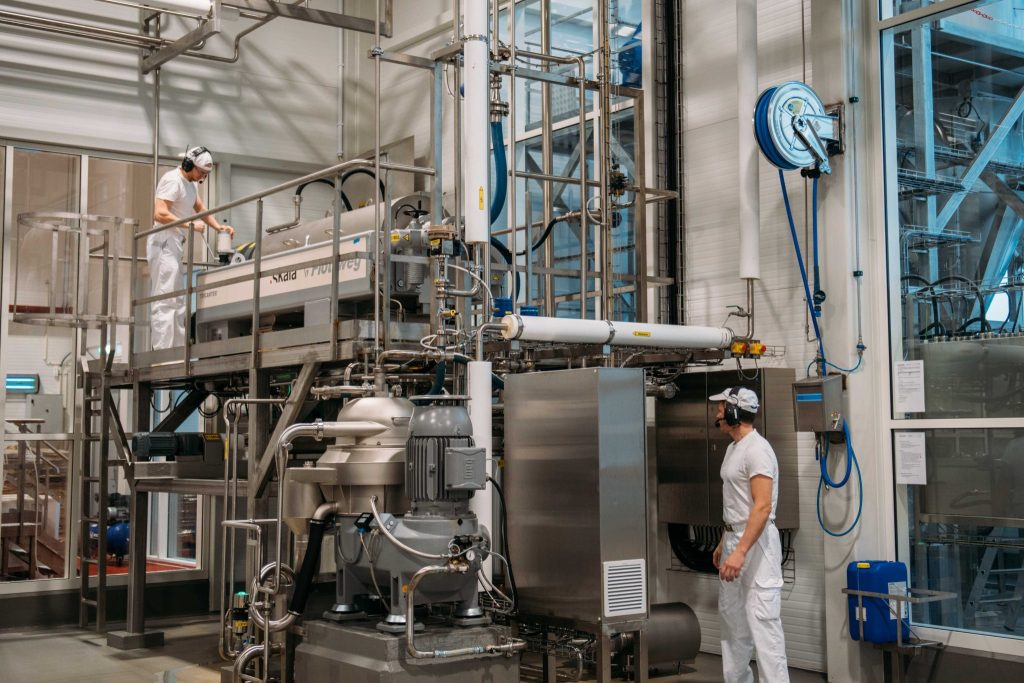
In August 2021, the world’s first red copepod factory opened in Sortland in Vesterålen.
“There are many pitfalls along the way. If 1000 companies try, perhaps one succeeds. We are one of them,” says Hausner.
The company has invested around 400 million kroner (€ 35.6m) in development and facilities. Funding has come from public support, private investors, the founders themselves and not least family and friends. Professional investors only joined in 2021.
A need for more
“We would very much like to have more companies like this,” says Line Kjelstrup from Biotech North, a business cluster for the biomarine sector in Northern Norway.
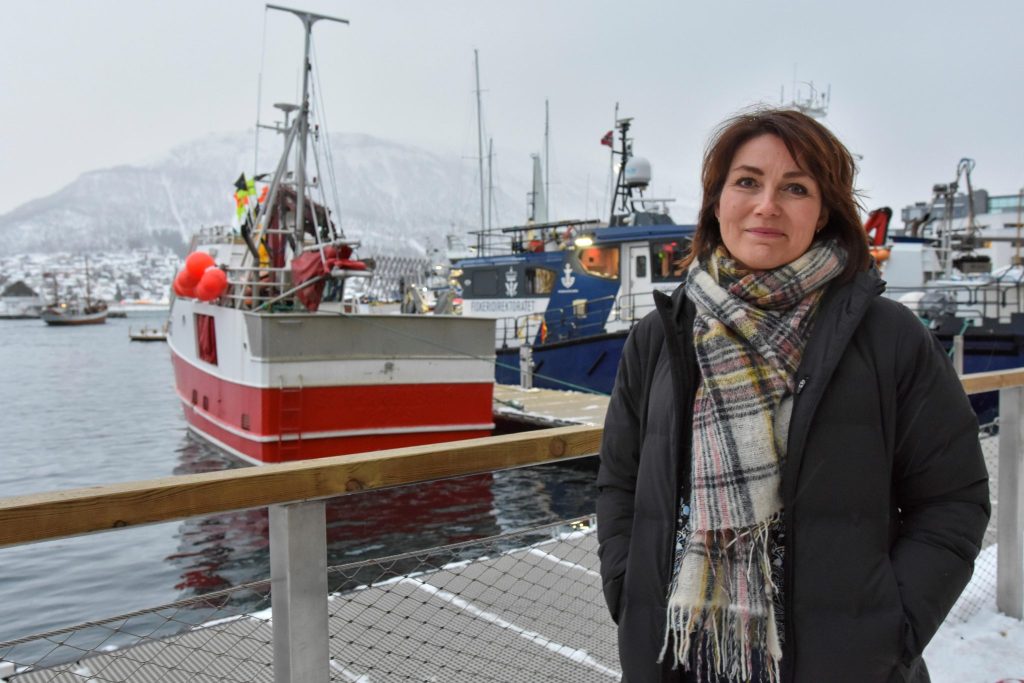
She points to the blue bioeconomy as a national advantage, where Northern Norway enjoys particular potential.
“The ocean not only gives us food and export income, but a starting point for sustainable change.”
The blue bioeconomy includes the production of food, animal feed, chemicals, ingredients, materials and pharmaceutical products based on marine resources.
The Nordic ocean economy
The Nordic countries have very different ocean economies.
In the Faroe Islands, Greenland and Iceland, the seafood sector is crucial to the national economy. Aquaculture alone makes up around 8 per cent of the Faroese BNP. In Norway, the ocean sectors have been contributing at least 10 per cent of the country’s GDP since the 1800s – first with fisheries, later with shipping, and offshore energy has been central in recent decades.
Denmark has also held important positions historically when it comes to seafood and maritime activities. This is in contrast to Sweden and Finland, where the ocean economy is smaller overall.
The report also highlights different national strengths:
Norway: offshore energy, shipping and seafood clusters
Denmark: leaders in offshore wind energy
Greenland, Iceland and the Faroe Islands: strong fisheries nations
Finland: Arctic technology
Sweden: innovation and technological development
(Kilde: Nordic Oceans 2050)
Yet Kjelstrup points out that commercialisation can be demanding.
“There is inventive power in the research environments. Creating a profitable business from that knowledge is another matter. That takes time, capital and endurance.”
She is worried about what she sees as signals of cuts to the support system.
“There are high risks over time. If the framework is weakened, who will have the muscles to see it through?”
She believes that much of today’s new industry considers sustainability from the start, but stresses that change does not happen in a vacuum.
“Everyone is pointing to the ocean. But to make these opportunities a reality, we need to prioritise and cooperate.”