Inspired by the EU’s Draghi report, NHO produced an analysis of Norway’s competitiveness last August.
Read the article in Norwegian on Arbeidsliv i Norden
Among the issues highlighted in the report is how Norway is doing in terms of competitiveness, innovation, technological development and the green transition.
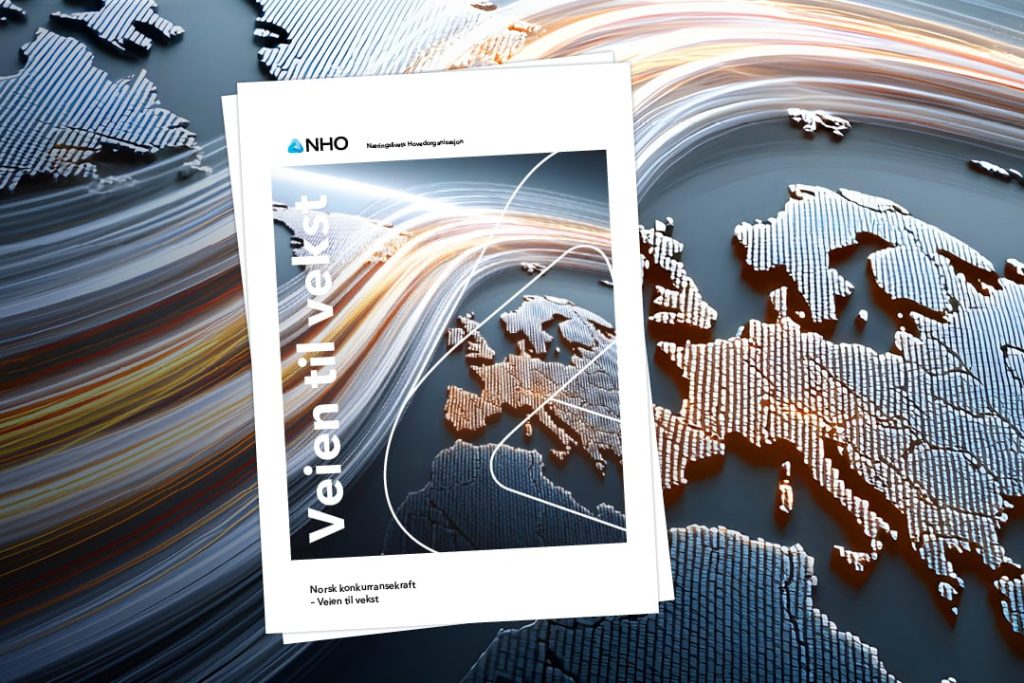
Norway’s “Draghi report” The Road to Growth – What now, Norway?, was launched during a seminar on the same day that US President Donald Trump introduced his new tariff regime. The publication also coincided with the final days of electioneering before Norway’s parliamentary elections in September.
NHO: Worried about the future
Like the original Draghi report for the EU, NHO also sounds the alarm about Norway’s competitiveness in its report.
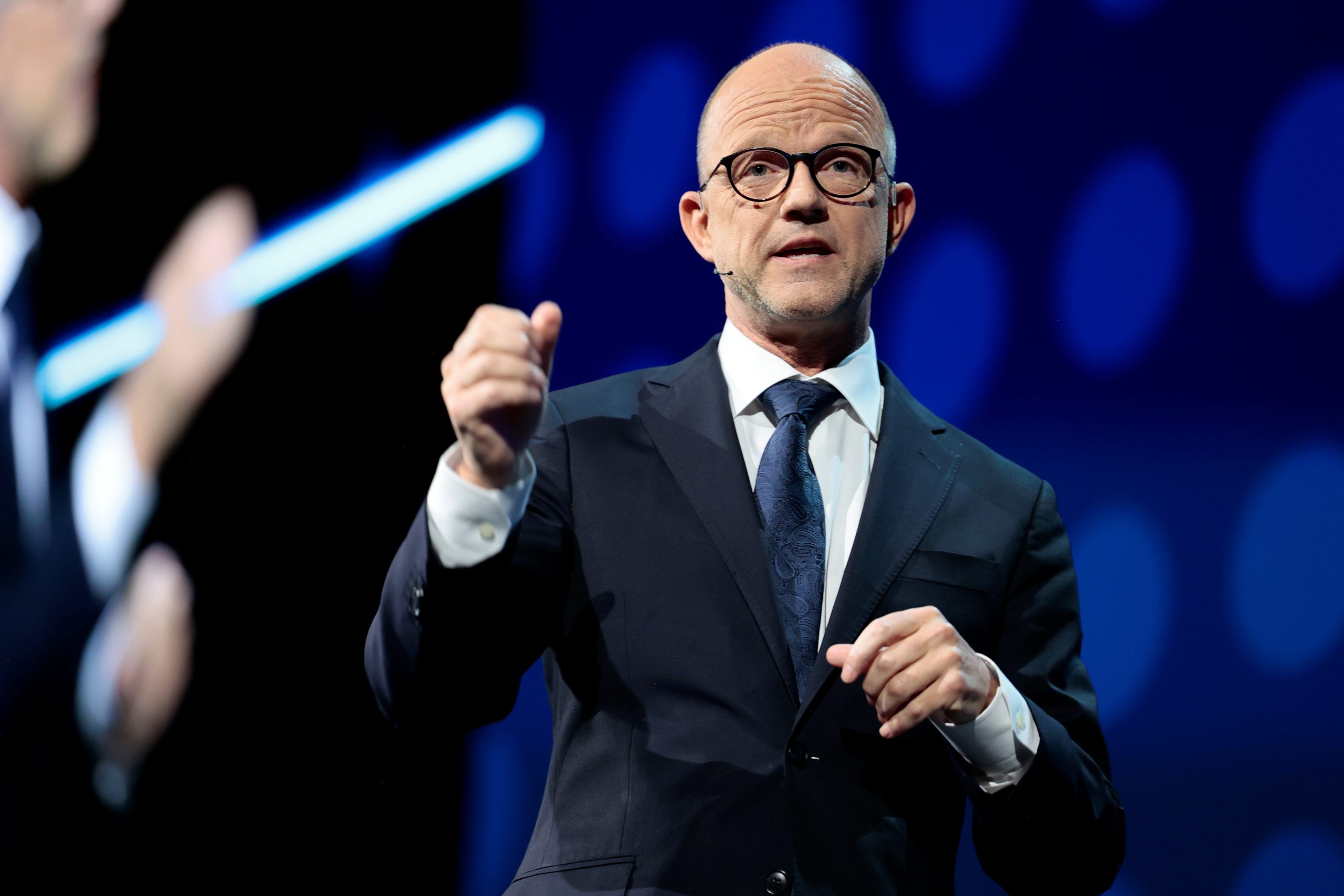
At the launch, NHO Director General Ole Erik Almlid said that many things are going well in Norway, but that the NHO sees trends that make them worried about the future.
Some of the report’s findings is that Norway:
- scores poorly on innovation and technology
- has fewer patent applications and growth companies
- lacks “elite universities” and has lower ranked institutions
- fails to build energy capacity important for the green transition
- faces a shortage of renewable energy that in turn can lead to businesses flagging out
Norway lags behind Nordic neighbours
NHO also points out that the largest Norwegian companies perform worse than the largest companies in other Nordic countries.
“We are behind comparable nations in critical areas like competitiveness. We are too weak on innovation, too slow on climate and energy transition and we are more vulnerable in a world in rapid development,” writes NHO.
NHO’s seven key measures for a change of course
A new tax policy to strengthen the ability of Norwegian private owners to invest in innovation, technology, restructuring and preparedness. This includes abolishing the wealth tax on working capital.
A boost to research and skills to develop and adopt new technology.
Strengthening the work-first principle and creating more ways into employment. The use of temporary agency work is a key issue.
A public sector focused on simplification, increased public–private cooperation and innovation in public procurement.
Greater pace and capacity in Norway as an energy nation: A significant increase in power supply is essential to ensure competitive electricity prices, continued growth and the green transition.
Improved market access to the EU, Norway’s most important market. In a more unpredictable world, Norway needs the EU as an anchor.
Ensuring strong societal preparedness by strengthening the contribution of businesses.
Sweden and Finland consistently rank top in European innovation indicators, while Norway is more in the middle of the pack.
Sweden has also developed one of Europe’s strongest risk capital environments, while Norway is weakest among the Nordics in this respect.
There are fewer Norwegian growth companies and growth in new companies has flattened out in recent years. Norway falls behind its Nordic neighbours in patenting.
This picture is reinforced by the fact that Norway has, to a lesser extent, a broad base of companies that grow to become large on the international stage.
The share of the largest Nordic companies that are Norwegian has been cut by more than half since 2005.
Since then, Norwegian companies have prioritised dividends over reinvestments. On average, 86 per cent of profits have been paid out to owners, compared to 63 per cent in Denmark.
Productivity is still high in Norway, but growth has been weaker than in neighbouring countries. Sweden and Denmark have over time seen a stronger development.
“Call to action”
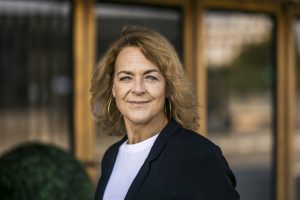
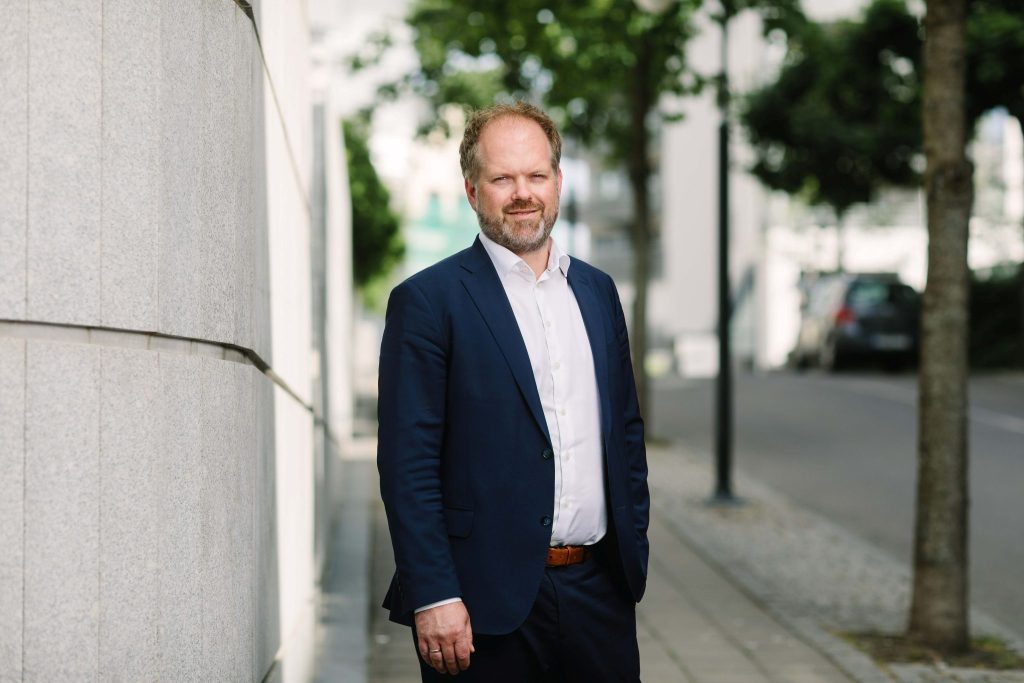
Per Øyvind Langeland is NHO’s Director of Business Policy.
“The original Draghi report gave a brutally honest description of the situation in Europe and was a clear call to action,” Langeland tells the Nordic Labour Journal.
“The EU Commission has put competitiveness on the agenda. The Draghi report inspired us to make a similar analysis for Norway,” he continues.
Although Norway is not an EU member, there are very close links. Around two-thirds of Norwegian exports go to the EU market.
“We have to be competitive there. That’s why we also need to know how we are doing.”
Doing well now, but what about the future?
According to Langeland, the overall picture is divided in two:
“The Norwegian economy and business sector are doing well right now, but we worry about what we will be facing going forward.”
The main worry is around innovation capacity and the pace of transformation.
“We have to become more innovative. Right now, we’re behind our Nordic neighbours in several key areas.”
Access to risk capital is one example.
“When we are at the bottom and Sweden is best in Europe, that’s a challenge.”
He also points out that Norway, despite an overall healthy access to capital, spends less on innovation and the scaling of new companies.
NHO also believes Norway should do better when it comes to patents and the emergence of growth companies.
Green transition = competitiveness
And not least: the challenges linked to the green transition.
“We expect that green competitiveness will become a more defining competitive power in the future,” says Langeland.
Norway has a solid starting point with its long energy production history and high share of renewable power. Yet the other Nordic countries are now expanding renewables and zero-emission energy faster than Norway is.
“There has hardly been any new power development in Norway in recent years. This has to change to make sure Norway remains attractive for industry development and investments,” says Langeland.
Closer Nordic cooperation
Langeland welcomes a new Nordic “Draghi report”.
Read more about the Nordic “Draghi report” here
“This will be very exciting. In an increasingly volatile world, it is important for the Nordic countries to stand together,” says Langeland.
He points to NHO’s close cooperation with sister organisations in the Nordics, and that the countries share an interest in strengthening Nordic competitiveness.
Langeland hopes the business sector will be invited to contribute to the Nordic report.
“It is important that the business community is involved,” he points out.