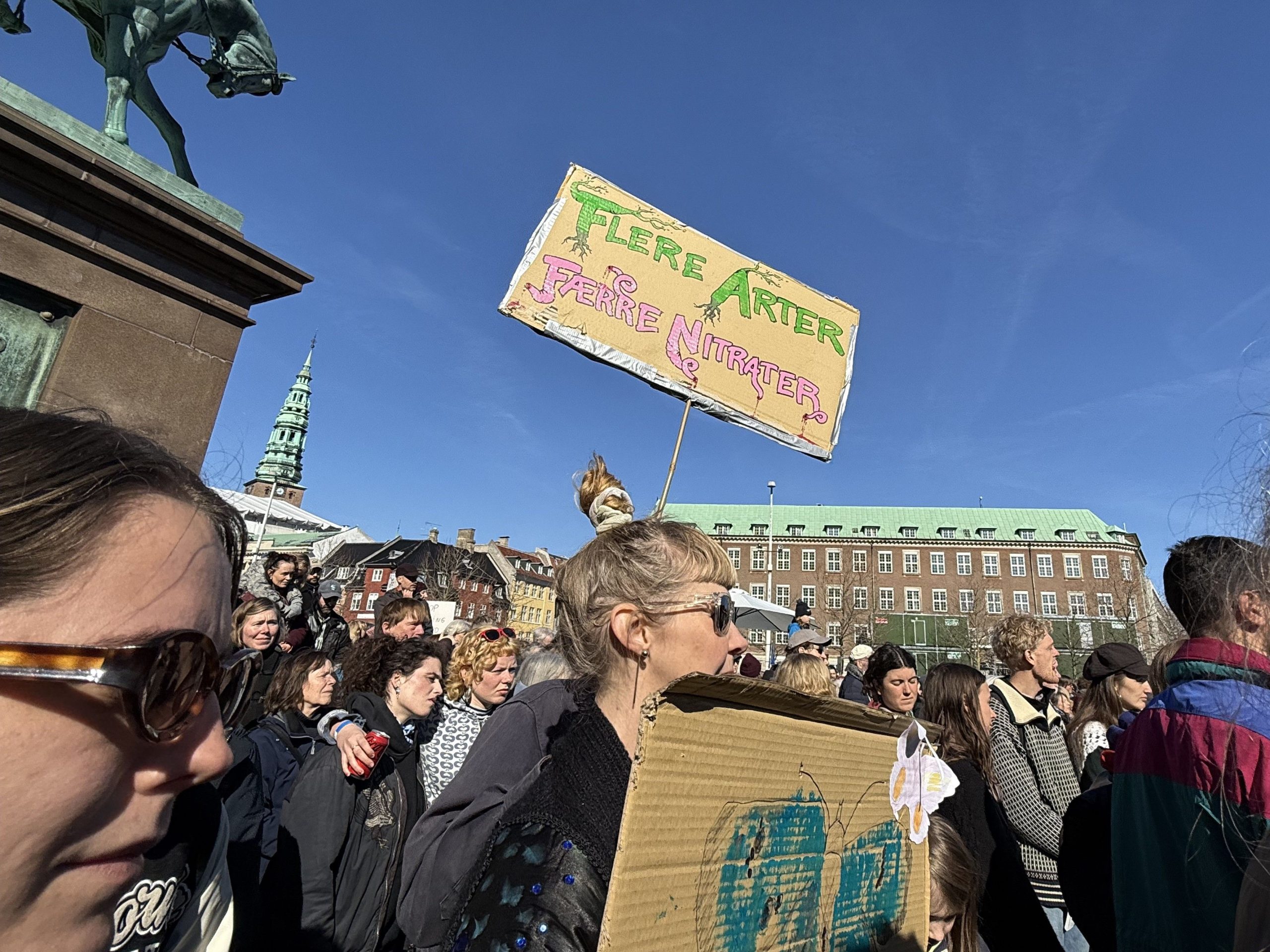
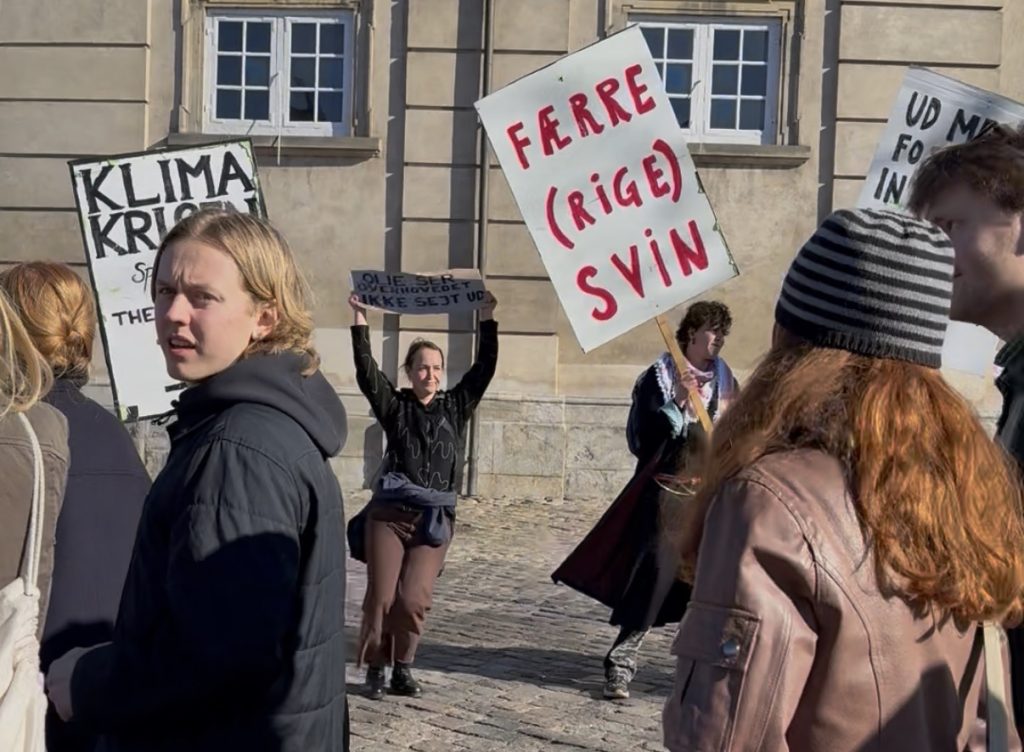
“It has become a climate election,” said several speakers with both excitement and surprise from the stage at Christiansborg Palace Square, where many thousands had gathered for the “People’s Climate March” three days before Danes went to the polls.
Upheaval in Danish politics
The major traditional parties in Danish politics, the Social Democrats and the Liberal Party (Venstre), both recorded their worst election results in over 100 years at the general election on 24 March 2026.
Voters punished the two parties’ collaboration in a coalition government formed in December 2022, while the third party in the outgoing government, the Moderates, saw only a marginal decline.
The election result gave a pivotal role to the leader of the Moderates, the outgoing Foreign Minister Lars Løkke Rasmussen, who has played a key role in Denmark and Greenland’s handling of relations with the United States and President Donald Trump.
Several parties that campaigned on climate and the green transition made significant gains. The Socialist People’s Party (SF) saw a particularly strong increase, winning 11.6 per cent of the vote, its best result in nearly 20 years. This makes it the second-largest party in parliament.
Only one party is now larger than SF: the Social Democrats, who received 21.9 per cent of the vote. Venstre is now the third-largest party in parliament, with 10.1 per cent.
Political observers predict that the era of the large catch-all parties may be coming to an end.
Danish media were filled with stories suggesting that people could no longer trust there would be clean drinking water, along with other consequences of Denmark’s large-scale pig production and intensive farming and spraying, including in vulnerable natural areas.
Read this article in Danish on Arbeidsliv i Norden
The first weeks of electioneering was dominated by debates on the retirement age, competitiveness and the economy.
But towards the end there was a shift, driven by new studies showing that climate change and intensive farming represent an even greater threat to Danish nature and public health than previously thought.
A green, just future
“We want a green, just future,” people shouted again and again during the People’s Climate March, which is held every year in Copenhagen and other major cities.
And with the upcoming parliamentary elections, the message was shouted particularly loudly. Many MPs used the march to give out flyers to potential voters.
The fact that the green transition became a major theme in the final days of campaigning surprised politicians too, some candidates from The Alternative party told voters in a meeting four days before the election.
The meeting had the form of a “Friday bar” and was held in at Demokrati Garage, an independent meeting place in Copenhagen’s Nordvest district
“With less than two weeks to go before the parliamentary elections, something we had been hoping for but not quite dared to believe happened.
“Climate, the environment and nature become major election issues,” parliamentary candidate Catharina Næsby Malkki told the Nordic Labour Journal when we met her during the gathering in Nordvest.
Carrying the heavy load
Catharina Næsby Malkki is 37, a landscape gardener and has spent 12 years campaigning for the green transition.
She is part of Copenhagen Municipality’s Climate Citizens’ Assembly – a forum where 36 randomly selected citizens provide climate recommendations to local politicians.
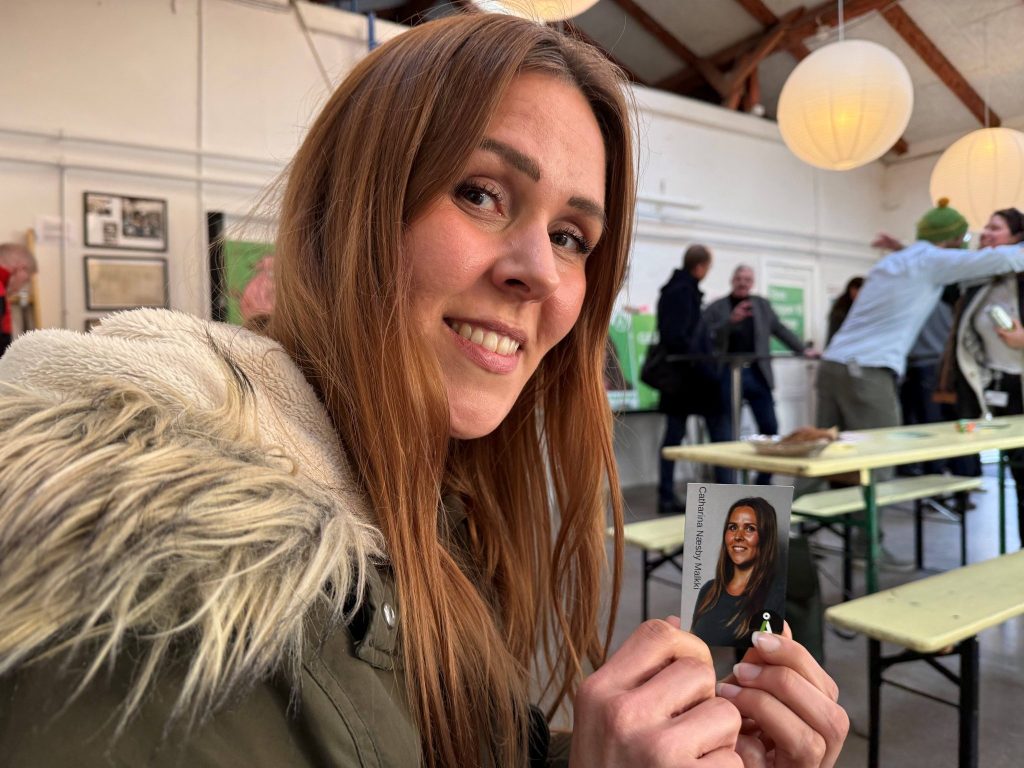
Now she is ready to work for the climate at national level as a candidate for The Alternative. She takes a campaign flyer out of her handbag.
It is the only one she has, as she does not want to burden the environment with large numbers of flyers and posters. The headline reads: “…I will carry the heavy load.” And this fits the situation well, she explains:
“I come straight to this meeting from my job as a landscape gardener, so I am physically tired after having moved heavy loads of earth all day.
“At the same time, it is my campaign promise that I want to carry a heavy load in politics. We need more people who think sustainably, both socially, economically and environmentally,” says Catharina Næsby Malkki.
A leap forward for the green transition
The Alternative party’s lead candidate in Greater Copenhagen, Signe Wenneberg,
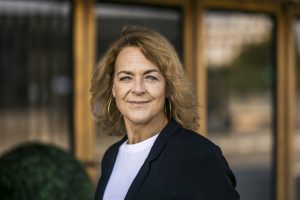
also attended the gathering in Nordvest. She opened the event together with the party’s lead candidate for Copenhagen, Franciska Rosenkilde.
“I was shocked that the climate was not an issue when the election was called, but I can promise that climate, the environment, animal welfare and clean drinking water are all back in the campaign.
“And this is the first time that I hear politicians say that we need a different kind of agriculture,” said Franciska Rosenkilde as she welcomed the participants at the meeting.
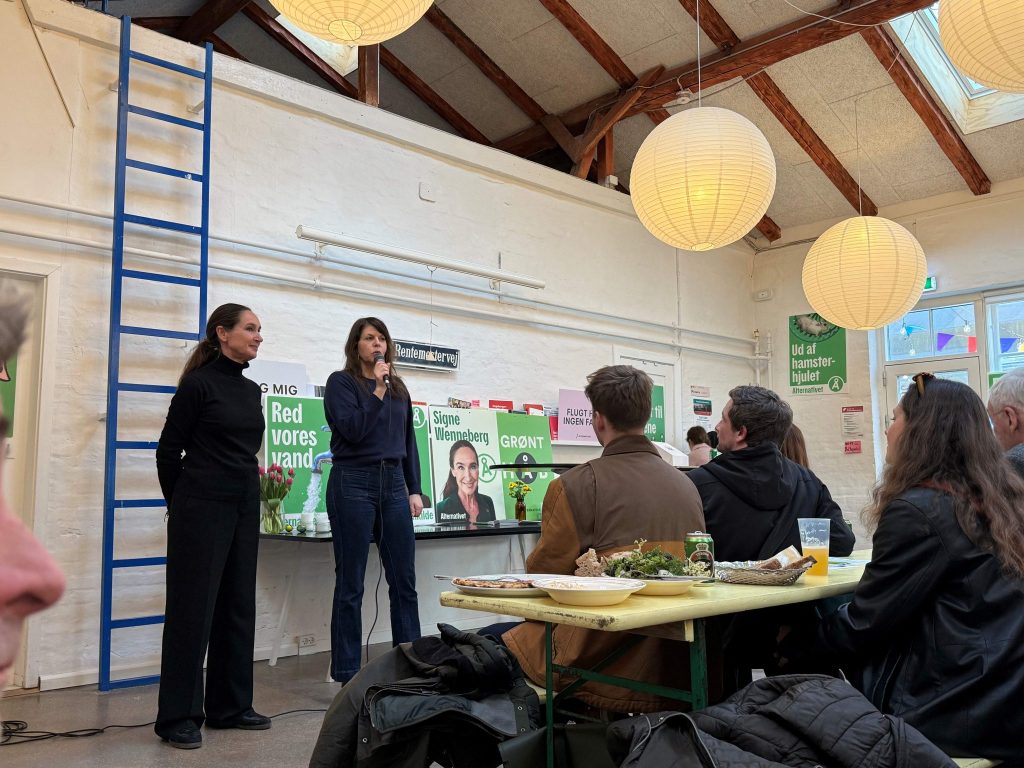
The Alternative is calling for a “giant leap” in the green transition and a restructuring of Danish agriculture,replacing conventional methods with pesticide-free and regenerative practices, and significantly reducing meat production.
During the campaign, the party also gained the support of one of Denmark’s best-known green influencers, Signe Wenneberg, who has 172,000 followers on Instagram and publishes Den lille grønne avis (The Little Green Newspaper), Denmark’s largest climate-focused media outlet by readership.
“I’ve been an everyday activist for decades and have so far said ‘no thank you’ to entering politics, but now is the time. Climate must be at the top of the agenda, even after the election,” Signe Wenneberg told the audience.