Theme
-
Nordics: Surprisingly many struggle with literacy and numeracy
The challenge facing politicians is helping two million adults who lack the necessary skills for working and social life to secure a chance to develop, says Anders Rosdahl. He is a senior research fellow at the Danish National Centre for Social Research, and the Danish representative in the network which has just presented the Nordic…
7 minutes
-
New comparative Nordic research measures adult competencies
For the first time ever there is a Nordic version of the OECD’s Programme for the International Assessment of Adult Competencies, PIAAC. PIAAC was first published in 2013. The survey comprises comparative data from 24 countries.
3 minutes -
Workplace learning depends on what we learned in school
Our capacity to learn at work is to a large degree dependent on what we have learned in school, and working life cannot fully compensate for differences in formal schooling. That is according to a new Nordic survey which builds on the OECD’s large skills survey PIAAC. Many women in a gender segregated labour market…
8 minutes -
Numeracy, not literacy, most important in working life
Numeracy is more important for participating in working life than previously thought. An OECD assessment of adult competencies shows that being bad at maths increases the risk of unemployment and influences wage levels.
5 minutes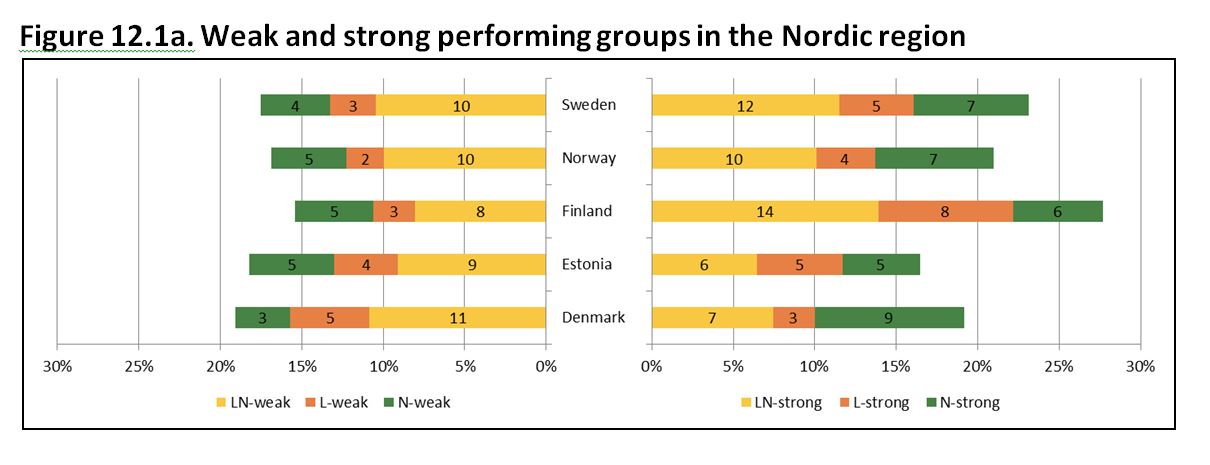
-
PIAAC researchers in Finland and Estonia: Continuity is key
There are no shortcuts for creating a foundation for the skills needed in working life. It is a time consuming process. Finland’s good results in international surveys stem from a 1970s school reform. The results are now at risk due to cuts and readjustments. Estonia, meanwhile, is catching up with the Nordic countries.
4 minutes -
A Nordic helping hand to marginalised youths
A large group of youths are not in education, employment or training – so-called NEETs. There is increased focus across Europe on ways to prevent this group of young people from permanently falling outside of the labour market. The Nordic countries have good experiences with finding, motivating and preparing these youths for work.
1 minute
-
Building bridges to education helps youths move forward
Denmark has had success supporting marginalised youths to make sure they get an education. Mentor support, teaching and help finding apprenticeships makes the difficult transition into studies and work easier.
6 minutes
-
A bridge to education across Denmark
The Danish project of building bridges to education for marginalised youths has proved so promising that it is now being rolled out across the whole of Denmark on a permanent basis.
2 minutes -
Motivation key to get marginalised youths into education
Measures aimed at helping young people into jobs and education should support the youths’ own inner motivation. To do that you need to realise that young, marginalised people are very different from each other, says a Danish youth researcher and author of a new book on motivation.
4 minutes -
New concept at Sweden’s employment service gains young people’s trust
Good treatment and rapid measures targeted at the needs of young unemployed people, good coordination between municipalities and the public employment service — a proven way of achieving progress. The concept was developed in the project ‘Unga in’ and is carried forward in UNGKOMP.
8 minutes