

“We haven’t done enough, we just have to admit it,” says Helga Bårdsdatter Kristiansen, a sustainability advisor at Tromsø municipality.
Read this article in Norwegian on Arbeidsliv i Norden
Another winter’s day, and the streets in “the Paris of the North” are filling up with tourists from around the world. They stay in overpriced hotel rooms or in short-term rental flats and eat reindeer burgers. As darkness descends, they go hunting for northern lights.
Illegal northern lights tourism
Cowboy and criminal operators are now challenging the legitimate part of the tourism industry in the north.
A-krim centres (inter-agency labour crime centres) say illegal players operate relatively openly. They pick up tourists straight off the street of Tromsø and drive out of town in the hunt for clear skies.
“All you need is a seven-seater or an SUV and someone who can drive. Suddenly, you have an aurora safari business,” head of the A-krim centre in Nordland, Kurt Kolvereid Jacobsen, told the Norwegian national broadcaster NRK.
Many of the illegal guides arrive across the border from Sweden and Finland. Last autumn, A-krim centres in Northern Norway announced increased inspections in the tourism industry, citing concerns about the consequences of “extreme” tourism.
The inspections have yielded results. As of mid-February, nearly 20 people have been expelled for illegal guiding and transport without work permits in Northern Norway.
A-krim inspected 44 operators in Tromsø together with the Norwegian Public Road Administration. More than half were in breach of one or several regulations.
The inspectors uncovered social dumping, missing employment contracts, illegal passenger transport and violations of driving and rest time regulations.
Reactions in the south
This development has caught the attention of national politicians. In the middle of the Polar night, Minister of Trade and Industry Cecilie Myrseth and Minister of Labour and Inclusion Kjersti Stenseng turned up in Tromsø.
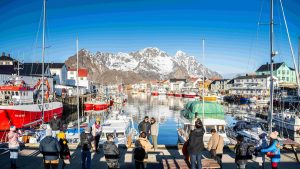
Tourism is Norway’s fifth largest export industry, and the government now says it will review regulations to ensure fair competition and proper working conditions, particularly in activity-based and nature-based tourism.
The plan is to publish a comprehensive tourism plan in the autumn of 2026.
“We don’t have much time to wait for national legislation and regulations. If we don’t act now, we risk losing so much,” says Helga Bårdsdatter Kristiansen, Tromsø municipality’s sustainability advisor.
She was on the panel at the Nordic event “On Thin Ice: Overtourism, Ecosystems and Livelihoods in the Arctic” during the 2026 Arctic Frontiers conference. The debate centred on how the Arctic region can handle the pressure from increasing numbers of visitors.
Making Tromsø a pilot
Tromsø is now working with more concrete measures. The municipality works with police, the A-krim centre, Troms County Council and business organisations to improve coordination and create clearer frameworks for the sector.
The aim is to make Tromsø a pilot municipality for a more structured visitor management. Up for consideration are both certification schemes and a “tour operator guide” – a kind of standard for how to execute trips and how guides should behave.
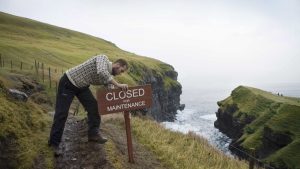
Other Arctic areas are highlighted as good examples. Greenland has introduced requirements for local participation and ownership in parts of the tourism industry. Svalbard and the Faroe Islands have tightened regulations for travel and cruise tourism.
“We have to define what kind of growth we want and what kind we don’t want,” argues Kristiansen.
New guidelines
As part of the Tromsøregionen mot 2050 (the Tromsø region towards 2050) project, new guidelines have been developed for tour operators covering Tromsø, Balsfjord, Karlsøy, Lyngen and Storfjord.
This has been done in cooperation with the police, NAV, the Labour Inspection Authority, the Norwegian Public Roads Administration, Visit Tromsø, research institutions and others.
The guide gathers relevant legislation and clarifies what is expected behaviour – on the roads, in nature and in the meeting with local communities.
It covers requirements for working conditions and tax obligations, safe winter driving and parking, consideration for local residents – especially in the evenings and at night – as well as waste management and low-impact travel.
It also includes reminders that nature is not a toilet, the feeding of reindeer is prohibited, and photos of children or private individuals should not be taken without consent.
The guide is a first step. But it is also necessary to follow up guidelines with controls, underlines Kristiansen.

“This is about being professional, but it’s also about showing respect. To take an example, how do you convey Sámi culture if you have no links to it yourself?” says Kristiansen.
The fight for culture and resources
Beaska Niillas is a member of the Norwegian Sámi Parliament. He points to experiences from Rovaniemi in Finland, where Sámi culture has been used as a prop for a long time in a rapidly growing tourism industry.
He describes a trend where stereotypical representations of Sámis are being used commercially, while natural resources like hunting and fishing are under pressure from increased tourism activities.
Northern Finland has developed ethical guidelines for Sámi tourism precisely to prevent the misuse and disrespectful use of cultural heritage. Niillas believes such measures to be necessary, but not sufficient.
“Legislation is important. But we also have to ‘educate’ the tourists. Knowledge and respect are key.”