It is safe to say that most Icelanders have noticed the growing presence of immigrants in certain sectors of the economy. Foreign workers are now common in restaurants and tourist attractions, as well as in healthcare, for example in nursing homes.
Read this article in Norwegian on Arbeidsliv i Norden
Their numbers have also increased in supermarkets. 25 years ago, this was much less common, with most of these jobs being done by Icelanders.
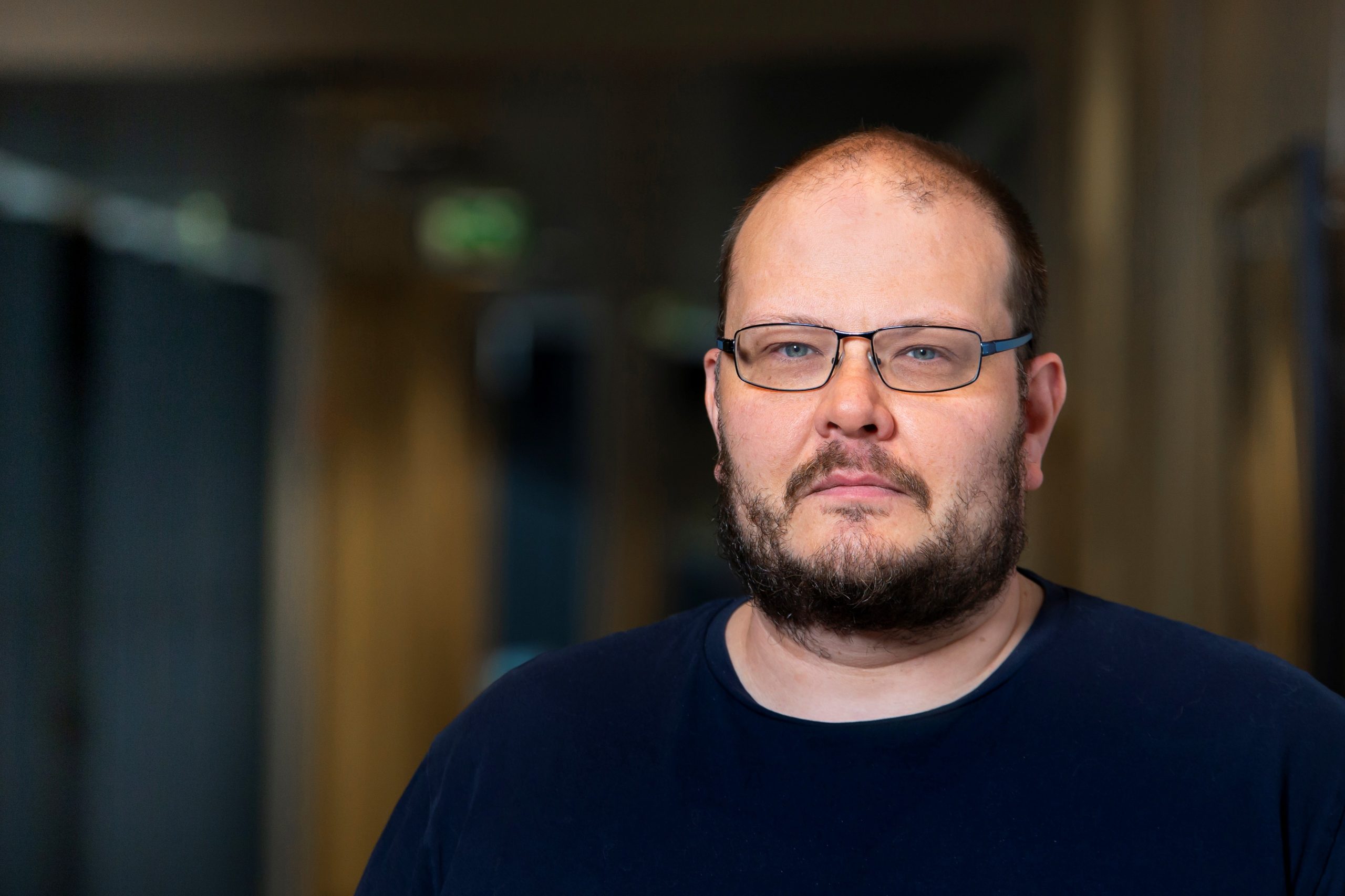
Kolbeinn Hólmar Stefánsson, an associate professor of economic sociology at the University of Iceland, has conducted extensive research on immigration in the country.
He says the increase in the number of immigrants is part of an international trend, although it happened somewhat later in Iceland than in many other countries.
“The key point here is 2006, when citizens of the new EU member states gained the right to move freely within the EEA. That increased opportunities for Icelandic employers to recruit foreign workers.
“At the time, unemployment was very low in Iceland. The labour market is normally tight in Iceland, meaning that demand for labour outstrips supply.
“In that situation, employers are tempted to recruit foreigners, not only because they may be willing to accept lower wages, but simply because employers need someone to do the work.”
Mainly Poles at first
Even before this increase, many Polish people were working in Iceland.
“They have a long history in Iceland. Many came here to work and eventually settled. They often brought family members or friends with them, so a chain reaction began.
“At the start of this period of growth, Poles therefore made up the largest group of immigrants,” Stefánsson says.
Over the years, the number of countries of origin has increased and the trend has expanded beyond the EEA.
“This is partly because employers started shifting their focus from Poland to other Eastern European countries,” Stefánsson says.
“I think around 75 per cent of immigrants in Iceland come from Eastern Europe. I have the feeling, although I haven’t done any research on this, that Polish workers began to realise their value in the Icelandic labour market and therefore started making greater demands.
“Employers were then tempted to look elsewhere for staff.”
Stefánsson also points out that a large proportion of workers in certain areas of healthcare now come from Southeast Asia, particularly the Philippines.
“A large part of this group consists of women from the Philippines who have married Icelanders. That has been happening for a long time.”
And that led to a different kind of chain reaction.
“For a long time, foreign students did not have to pay tuition fees at public universities, which attracted students from Africa and Southeast Asia.
“In the case of the Philippines, I think people working in healthcare in Iceland had relatives and friends back home and spread the word about the opportunities for a good life and a free university education.
“The simple fact is that Iceland is attractive because, for a large part of the world, it can offer a standard of living that few other places can match.”
From this autumn, foreign students will have to pay tuition fees at the University of Iceland.
Easier permits for jobs in demand
The fact that many of these workers come from outside the EU and EEA, and therefore have to apply for work permits, does not necessarily make it particularly difficult for them to work in Iceland.
“This is a workforce we need, and that makes it easier. It has also been relatively easy to obtain a residence permit as a student.
“Previously, there was also a loophole in the system whereby an employer could vouch for someone as an expert in a particular field.
“That did not go so well for many Vietnamese people in a well-known case, where an employer could claim that someone was an expert in Vietnamese cuisine simply because that person was from Vietnam. That turned out badly,” Stefánsson says.
The case he refers to became a major human trafficking case that has previously been covered in the Nordic Labour Journal.

Stefánsson says it is also interesting to look at where immigrants end up in the labour market.
“When the Poles first came here, they were mostly working in industry and manufacturing. It is more varied today. People from Southeast Asia are mostly working in care and healthcare, and the majority of them are women.”
Many immigrants have also worked in construction and tourism, but over time, they have become more visible in a wider range of occupations.
“Poles, for example, are everywhere. But we can see that certain industries rely more heavily on immigrants than others, tourism being a prime example.
“But people who come from outside the EEA find it harder to get jobs that match their qualifications. That applies, for example, to highly educated immigrants from Africa.
“We have seen that even employers who are positive towards immigrants can put up a kind of bubble to protect themselves from these same immigrants. This, among other things, pushes immigrants towards lower-paid jobs.”
He mentions the example of a Ukrainian man with a degree in nuclear physics who could only find a job at a kindergarten.
Stefánsson believes employers can also find it difficult to recognise qualifications from educational institutions outside Iceland’s closest allied countries.
“But even when people have qualifications from institutions that are well known, there is still prejudice within the labour market.”
Higher unemployment among immigrants
Stefánsson also says the labour market has largely been allowed to determine the flow of immigrants.
“The focus has largely been on importing cheaper labour to fill lower-paid jobs, while other countries have focused on attracting workers to areas where there are labour shortages and issuing work permits on that basis.”
In general, Stefánsson believes immigrants have a good life in Iceland.
“Their participation in the labour market is very high. But when unemployment increases, as it has done in recent months, the unemployment rate is higher among immigrants.
“There are two explanations for this. They tend to work in sectors that are affected first when the economy deteriorates.
“And there is a tendency, when companies have to lay off staff, for immigrants to be the first to go, before people the employers may know personally. That is simply human nature.”
But different groups adapt in different ways.
“For example, Poles have integrated exceptionally well, while they do not maintain much contact with other Poles in Iceland. The Vietnamese community, on the other hand, is very close-knit internally but relatively closed to the outside.”
“People also tend to draw the wrong conclusions, for example that Muslims form very tight-knit communities. The fact is that there are many different groups and individuals.
“You have Shia and Sunni Muslims who have little contact with each other. You have European Muslims from countries such as Kosovo and Bosnia who have more in common with other Europeans than with Muslims from the Middle East.
“So there are very different people within Muslim communities, both culturally and religiously.”
“We need them”
Stefánsson says it is clear that certain sectors would struggle to function if, for example, a large proportion of the Polish population in Iceland were to return home.
“We need them. They came here because we could offer them a better standard of living. But things are improving in Poland. And if they can enjoy the same standard of living there, while also having Polish culture, language, friends and family, that is bound to be a major attraction for them.”
Western countries in general are facing labour shortages and therefore need workers from elsewhere.
“This can create major problems in the countries where these workers come from. For example, EU countries have attracted many people from the Baltic states.
“That makes it difficult for those countries to fill jobs requiring specialised skills, because young people obtain their degrees elsewhere in Europe and do not return home. This creates a very difficult situation.”
Asked about the future, Stefánsson says:
“I don’t see an Icelandic labour market without immigrants being a major part of it.
“When people say that we need a larger population of Icelanders, that is true. But the problem is that it takes 20 to 25 years to get an individual from the cradle into the labour market.
“If we want to start increasing the population and send all the immigrants home, we would face the double burden of supporting both a baby boom and a generation that is reaching retirement age. That is a huge task for those in the labour market.
“I don’t see any scenario in which we would not have a high percentage of immigrants in the labour market.”