
A Swedish study has explored the possibilities of introducing a work model with 100 per cent delivery, 80 per cent working hours and 100 per cent pay.
Read this article in Swedish on Arbeidsliv i Norden
The private companies, public agencies and non-profit organisations that participated in the study report positive outcomes like improved health, reduced stress and better sleep.
These are some of the results from a study of sustainable working life carried out by Karlstad University.
The Nordic Labour Journal spoke to the HR specialist at the social services department and the boss of the accountancy firm. Both companies have chosen to continue with shorter working hours. We also spoke to one of the researchers behind the study.
Lasting results
“After talking about improving work schedules for years, the study made it necessary to put words into action and work smarter,” says Dick Andersson, HR specialist and the local project manager for the reduced working hours initiative at the Social Services Department North-East, Gothenburg, Sweden’s second city.
“We have a mandate from the municipal politicians to test issues that concern working hour innovations and how we can reduce sick leave and staff turnover. So for us, it was easy to say yes to taking part in the study,” he says.

Based on the good results from the first study, the social services leadership decided to participate in the second study too, as well as testing the model until the end of 2026 to assess whether it works in the long term.
“Since we’ve been working with this model, exploring how it works for more than a year, we have seen that it is solid. So we can no longer claim that the good results are due to a honeymoon period. We see that the results were not a blip.”
The target group’s needs come first
All social workers and case officers, as well as their managers across the department’s three units, are carrying on as during the study with a 32-hour working week. That is 85 people on a contracted 40-hour working week.
“The shorter working hours must not hurt those we are there for. That’s why we have adapted the new working hours based on the clients’ needs across our three units,” says Dick Andersson. They take the following into account:
- Children and young people – an emergency service where staff have split into two teams and each team is completely free on a Friday or Monday each week.
- Income support – a group with relatively little work experience who are not allowed to make their own decisions and therefore work six hours per day with flexible planning.
- The resource unit – plans its schedule individually alongside the families who are in need of the unit’s resources.
To allow them to measure the results of shorter working hours, the department now has a standing survey which staff answer every month, rather than once a year, as used to be the case.
“We have also introduced obligatory social time, like a common coffee break with an activity which helps bond the group together and prevents subcultures from forming,” says Dick Andersson.
Impact on sickness absence and staff turnover
The department has also set up reference groups within all three units, with contracted 40-hour working weeks, to be able to make a broader comparison of the effects of reduced working hours.
“We want to get more data to create as realistic a picture as possible, rather than simply looking at one unit and comparing their results with those of last year”.
Dick Andersson and the department can now see that sickness absence at the three participating units sank by 3.4 per cent from November 2024 to November 2025, and by 3.7 per cent in the reference units during the same period.
“Shorter working hours have also had positive effects on staff turnover. The year before, 18 people left. One year later, nobody did,” says Dick Andersson.
The Social Services Department North-East operates in an area with many social problems and high crime levels. The police call this type of area “particularly vulnerable”.
““For a long period, we had experienced problems with staff turnover and high sickness absence. Factors that make it particularly challenging to work here, so these are very positive results for us,” he says.
Unbridled curiosity
The first thought Erica Wärmé Ekblom had when she attended a lecture last year on what a four-day working week might look like was that it would not work for her own business.
“We are an accountancy firm operating in an industry normally associated with high workloads and tight deadlines, especially in the spring when the majority of our client’s annual reports and tax returns must be submitted to the Swedish Tax Agency.
“At the same time, it could be interesting to give it a try. If it worked, it could inspire the entire sector,” she says.
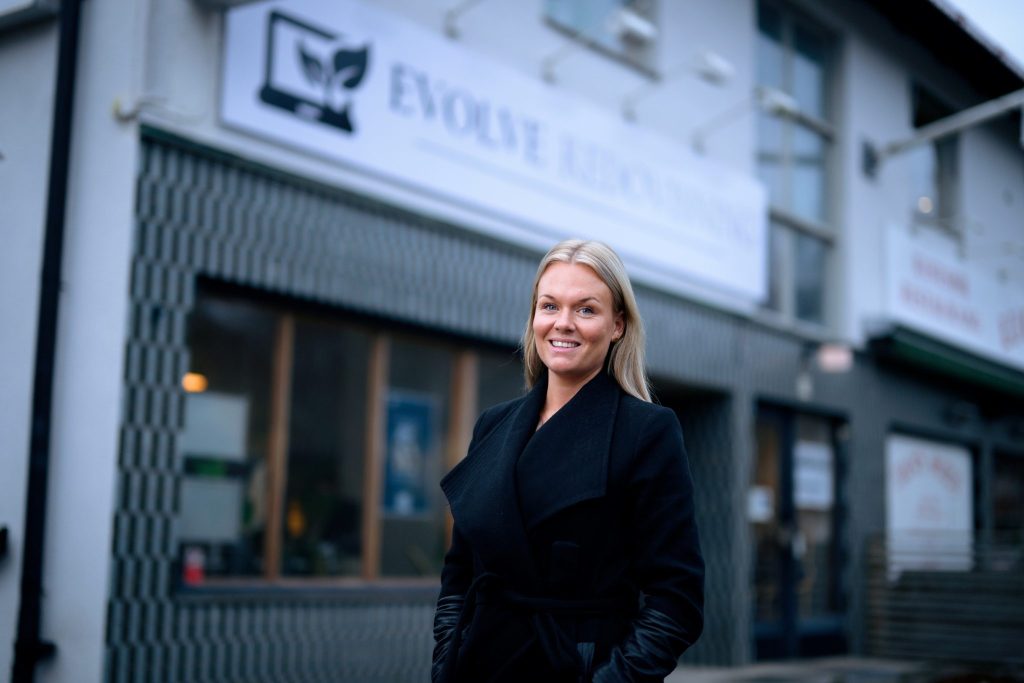
Erica Wärmé Ekblom founded the Evolve accountancy firm at the turn of 2019/2020. Now, seven consultants plus herself work at their offices in Bålsta, some 45 kilometres north-west of Stockholm.
She had two perspectives in mind when considering whether her company should participate in the study, she says.
1. Is it possible to find a more sustainable and efficient working model that means less stress for the consultants?
2. Can I offer my staff fewer working hours for the same pay and still deliver what we need to deliver? In which case, it would be a good thing for me who wants to create the world’s best workplace.
Necessary efficiency improvements
The company carried out what Erica Wärmé Ekblom describes as a thorough review of how they work and the changes they could make to create a more efficient way of working.
“When you are at work, you need to feel that things are flowing, that the work gives you energy. That was our starting point.”
One of the changes they implemented was to stop opening the inbox in the morning, which would just allow incoming emails to set the agenda.
Instead, they now focus on pre-planned tasks until lunchtime.
“We call it focus time – the hours in the morning when we work on what we decided to work on before going home the day before.”
Issues that emerge in the mornings are saved for later. Before, they would address them straight away in their open office space.
“We have stopped interrupting our colleagues. Now, we save our questions until after lunch and take them during meetings where only those who are expected to contribute participate,” says Erica Wärmé Ekblom.
Each week, she sets aside 20 minutes in her calendar for each of the consultants to discuss their job tasks.
During the study, the company implemented a 32-hour working week, which was a condition for participation. At the study’s end, the consultants now work a 35-hour week with flexible hours.
“We now have a better work-life balance and are also more productive. Our team spirit has improved and so have the company’s results,” says Erica Wärmé Ekblom, who plans to hire more accountancy consultants.
How do you work smart on a company and employee level?
The question comes from Lena Lid Falkman, one of the researchers behind the shorter working week study. She is a lecturer in working life science at the Karlstad Business School.
Lid Falkman has long been pondering the answer to that question while researching how activity-based workplaces and technological developments change the way we work, what it means that more people are working from home and how AI will influence the way we work.
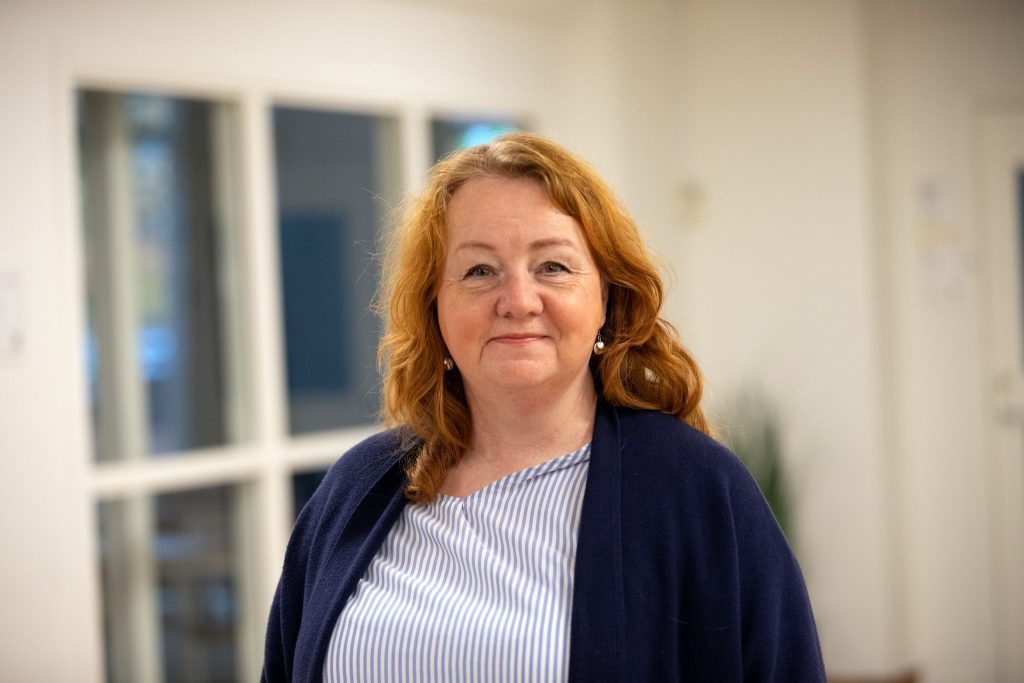
Together with Siri Jakobsson Støre, a lecturer in psychology at the same university, and researchers at Boston College, Lena Lid Falkman conducted a six-month organisation-level study to examine whether it was possible to reduce working hours, maintain the same salary, and continue delivering or producing the same output as during a 40-hour working week.
Working hours in the Nordic countries
Denmark – According to Arbejdstidsloven (the Working Time Act), normal working hours are determined by agreement with the employer. At workplaces with collective agreements, normal working hours are set at 37 hours per week.
Finland – According to Arbetstidslagen (the Working Time Act), normal working hours in Finland may not exceed 40 hours per week.
Iceland – According to Loven om 40 stunde arbeitsuke (the Law on the 40-hour Working Week), normal working hours generally may not exceed 40 hours per week, but employers covered by collective agreements determine how these hours are organised.
Norway – According to Arbeidsmiljøloven (the Working Environment Act), normal working hours in Norway are 9 hours in a 24-hour period and 40 hours in a 7-day period, with separate provisions for night work.
Sweden – According to Arbetstidslagen, (the Working Time Act), normal working hours are 40 hours per week.
(Source: The Nordic Council of Ministers)
The study included eleven businesses – two Norwegian and nine Swedish:
- Two social services departments
- One healthcare ward
- An energy company with 24/7 operations
- A couple of charities
- A consultancy firm
- An architecture firm
- An accountancy firm
The researchers borrowed a survey model from Boston College, which measures mental and physical health, general wellbeing, work ability, productivity, stress, sleep, finances, environment and more.
“We added joy, creativity and innovation to our model,” says Lena Lid Falkman.
Measurements before and after
Before the study began, 269 managers and employees completed the survey. Once the study was completed, 212 had answered.
The researchers also interviewed 77 managers and employees.
They also reviewed 31 diaries and examined organisation-level results from finances, sickness absence and production.
“The study shows that shorter working hours do not negatively impact finances, whether measured as turnover or maintaining a balanced budget,” says Lena Lid Falkman.
“The results should be interpreted with care, since this is a relatively small study,” she says, but adds that the results are nevertheless consistent with international studies.
More to come
The argument for continuing to study the effects of reduced working hours is how this can contribute to a more sustainable working life, says Lena Lid Falkman.
“it can also provide a competitive advantage for businesses within certain sectors that want to retain and attract staff, and also for businesses that want to cut sickness absence,” she says.
The researchers welcome participation from more organisations to help build a broader evidence base in ongoing studies of the 100/80/100 model.
No affiliations
The study was initiated by 4 Day Week, an organisation that has helped businesses in several countries shorten their working week through the 100/80/100 model.
“The organisation has not financed the study or influenced its execution or results. We as researchers are the ones who have carried out the work based on the businesses’ reporting,” says Lena Lid Falkman.
The study is also unrelated to any political developments. By pure coincidence, as the results were presented, the Swedish Trade Union Confederation (LO) invited the Confederation of Swedish Enterprise to negotiations on shorter working hours, explains Lena Lid Falkman.
“The study was conducted independently, without cooperation with any employer or employee organisations. It is also approved by the Swedish Ethical Review Authority.”