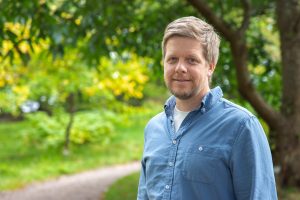

Hallur Mohr Sverrason is a student at Fróðskaparsetur Føroya and is researching NEETs.
NEET is an international term for young people who are not in employment, education or training.
Read this article in Norwegian on Arbeidsliv i Norden
“Faroese research on NEETs is very limited. We have some statistics on the number of people who fall into this group, but it is by no means complete,” says Mohr Sverrason.
Birgir Kruse has written about the project for the Nordic Network for Lifelong Learning – NLL (in Danish).
John Dalsgarð is the Faroese country coordinator for NLL’s three-year NEET project.
He says that although there is some focus on NEETs in the Faroe Islands, Greenland and Åland, the plan is also to seek knowledge and good advice from some of the larger Nordic countries.
“The NEET term is not new. There is a perception that the prevalence of NEETs is higher in peripheral areas, and that is why we want to see if – and how – this applies to the three smallest of the Nordic countries.”
Mohr Sverrason says the project he is involved in looks at how stakeholders in the Faroe Islands understand the NEET phenomenon, and how they assess the issues related to it.
“In my view, regardless of whether the NEET group in the Faroe Islands is small or big in numbers, it has a high societal significance.
“How do we make sure that young people have the opportunity to understand and see themselves as part of a community, and thus see a future for themselves?
“This requires cross-sectoral cooperation between education, municipalities, social services and the labour market, and that the young themselves participate in the process,” says Hallur Mohr Sverrason.