When Denmark and the Faroe Islands took over the Presidency of the Nordic Council of Ministers at the start of the year, they made it clear that one of their top priorities was to begin the process of updating the Helsinki Agreement to give the Faroe Islands, Greenland and Åland a chance to become equal parties to the agreement.
Read the article in Norwegian on Arbeidsliv i Norden
The Helsinki Agreement was adopted in 1962 and was last revised in 1996. It is often referred to as the Nordic constitution. The day it was signed, 23 March, is celebrated as Nordic Day.
This is how Nordic day will be celebrated in the Nordic countries in 2026
The possibilities for a revised Helsinki Agreement were discussed already in February, when the eight Nordic cooperation ministers met.
Sirið Stenberg is the Faroese Minister for Nordic Cooperation. After the meeting, she said:
Setting up a commission
Read about the commission’s remit here
The commission will prepare a joint proposal for concrete amendments to the treaty text and other initiatives to ensure equal participation in the Nordic cooperation by the Faroe Islands, Greenland, and Åland.
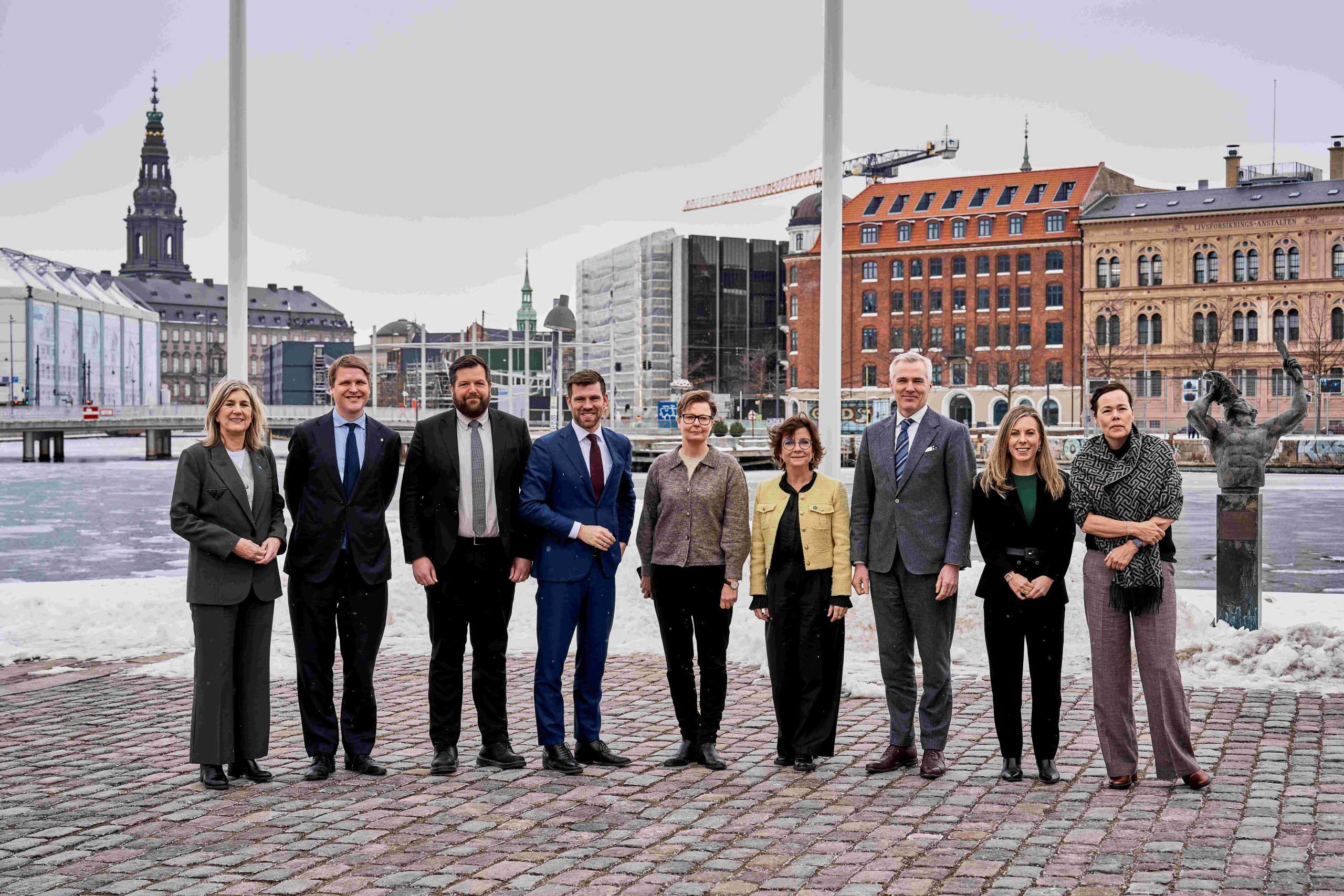
The commission will consist of eight members who will represent the governments of Denmark, Finland, the Faroe Islands, Greenland, Iceland, Norway, Sweden and Åland. Denmark will chair the work.
Asking for a modernisation of the treaty
The Presidency of the Nordic Council welcomes the commission but asks that its remit be expanded.
Ville Väyrynen is the Nordic Council President. He points out that the Helsinki Agreement has not been updated for 30 years and that the text is not aligned with the current level of ambition and the challenges facing the Nordic cooperation today.
Digitalisation, climate, cross-border barriers, and contingency and security policy are some of the areas that play a much greater role in the Nordic cooperation now than previously.
The Nordic Council Presidency also calls for the Nordic Council to be given a place on the commission that will work on updating the agreement.