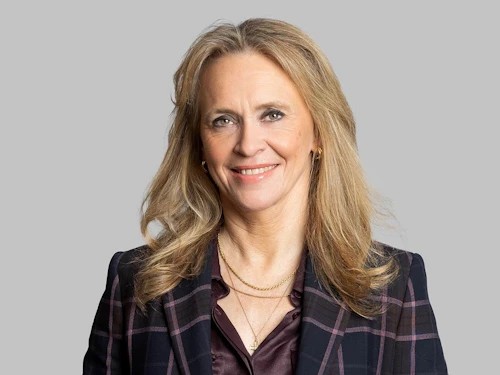
It came as quite a surprise when Iceland’s foreign minister Þorgerður Katrín Gunnarsdóttir on 6 January announced that a parliamentary resolution on holding a referendum on whether to restart EU accession talks would be introduced before the summer.
Not that the referendum was not expected – it formed part of the settlement announced when the government was formed. But the agreement only stated that the referendum would be held no later than 2027. It was not expected as soon as this year.
On 6 March, the government announced that the referendum would take place on 29 August.
In order for the referendum to take place on the proposed day, the resolution had to be accepted by parliament 29 May. In spite of strong criticism from the opposition, this happened on 28 May when the Althing voted in favour of resuming accession talks.
34 of the government parties’ 36 MPs voted yes, 8 MPs were against and 14 abstained. 2 of the government party MPs and 5 opposition MPs were absent.
The referendum outcome is expected to be tight. Recent polls show support for EU membership has dropped. A poll from April showed 47 per cent were against membership and 40 per cent in favour.
A year earlier, 36 per cent were against and 44 per cent in favour. How, or if, this change will affect the outcome of the August referendum remains to be seen.
When announcing the referendum timetable in January, foreign minister Gunnarsdóttir argued that global developments made this referendum even more important:
“[It] highlights that we should seek what is in the interests of Iceland and with the aim of strengthening what we Icelanders stand for. That is for peace in the world, democracy, human rights, and for the fundamental principles of international law to be respected,” she said in an interview on RÚV.
One of the coalition parties, The People’s Party, is actually against joining the EU, but its leader said that the nation had to be trusted with making that decision.
No EU country has ever held a referendum of this kind before. Usually a referendum on whether or not to join is only held when a membership agreement has been finalised.
EU says previous application is valid
Iceland applied for European Union membership in 2009 and talks formally began in July 2010.
The negotiations were suspended when the government of the Progressive Party and Independence Party – parties that have always been against EU membership – gained power in 2013, and in 2015, the then foreign minister Gunnar Bragi Sveinsson declared the negotiations had been formally terminated.
However, a spokesperson for the EU Enlargement Commissioner told RÚV last year that the EU considered the application still to be valid, but that EU member states and the EU Commission would need to decide on the next steps, should Icelanders approve accession talks in a referendum.
The proposed referendum has sparked huge controversy and fierce political debate where both sides accuse each other of false information.
The opposition has argued that the talks will go beyond merely clarifying what EU membership would mean for Iceland, claiming that adaptation to the EU system would begin during the negotiation process itself – making the referendum, in effect, a vote on that adaptation.
The governing parties reject this claim, arguing that the referendum is only about whether to resume accession talks. If that were to happen, a membership treaty would be put to another referendum.
This has in fact been the government’s main argument for restarting the talks; if the accession treaty proves unsatisfactory, it can simply be rejected in another referendum.
Fisheries the most important subject
The main dispute over the benefits of EU membership has revolved around fisheries. For centuries, fish has been the foundation of Iceland’s economy and international trade, making the issue very important to the country.
Previous membership discussions never got on to that topic.
The main worry for EU membership opponents is that other countries could be allowed to fish in Icelandic waters, which would lead to a big loss for the fishing industry and the Icelandic economy as a whole.
The government believes that it is possible to reach a sufficient agreement with the EU that takes Iceland’s special situation into account, and it also argues that the outcome would in any case be subject to a referendum once a deal has been reached.
Norway has on two occasions rejected EU membership in referendums, in 1972 and 1994. The country is in the same position as Iceland – outside the EU but in the EEA.
In the talks, Iceland will argue for retaining full control of overfishing and the allocation of catch quotas inside the Icelandic exclusive economic zone. This would likely require extensive exemptions from, or derogations within, the EU’s common fisheries policy.
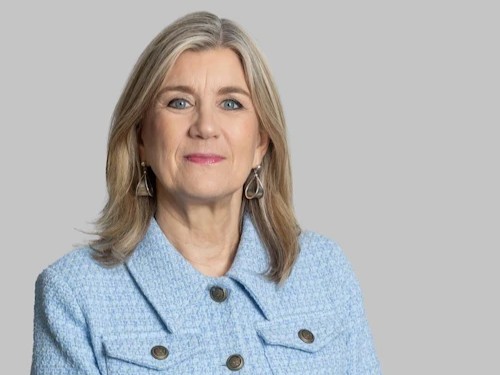
Hanna Katrín Friðriksson, Minister of Industries and Tourism, met Costas Kadis, European Commissioner for Fisheries and Oceans, in April. After the meeting, Kadis said he could not promise any exemptions from EU legislation.
However, he said he was aware that fisheries were important to Icelanders and that there were many examples of special consideration being given to countries applying for EU membership.
“Taking into consideration the specific circumstances of the country but also the established principles of the accession process.”
He also said that the accession negotiations will be real negotiations.
“And all I can tell you from our experience is that no two accession negotiations processes are identical,” Kadis said.

In response to that meeting, Heiðrún Lind Marteinsdóttir, CEO of Fisheries Iceland, said that while the EU takes account of the specific circumstances of candidate countries, Iceland is seeking broader concessions, including significant exemptions from EU legislation and a permanent opt-out from the EU’s common fisheries policy.
She told RÚV that there is no precedent for such exemptions being granted.
“The specific characteristics of nations are not in dispute, but permanent exemptions are something else entirely.”
She pointed, for example, to demands to limit foreign investment in Icelandic fisheries. In her view, the fish should be caught by Icelanders and processed in Iceland, not abroad.
“That is where the danger lies, and we Icelanders must be very clear about that.”