The OECD report “Labour Mediation in the Nordic Countries: Oiling the Wheels of Collective Bargaining” concludes that the Nordic model of mediation works well, but that it is more vulnerable than we might think.
Read this article in Norwegian on Arbeidsliv i Norden
The report is being presented at a seminar in Stockholm this morning.
The report’s authors are Sandrine Cazes and Andrea Garnero from the OECD, and it was financed by the Nordic Council of Ministers and the Swedish National Mediation Office.
The report describes and compares the mediation institutions in the five Nordic countries. It also looks at how the mediation institutions influence the Nordic model of collective bargaining, wage formation and working life.
Trust is the most important thing
The report’s authors argue the mediators’ formal authority is not the main thing that makes the system work.
The central issues are trust, strong social partners, high collective bargaining coverage and a joint understanding of the rules of the game.
You conclude that trust and legitimacy are at least as important as the mediators’ formal powers. What happens if/when the trust in the mediation institutions weakens?
“Trust in the mediation institution and in mediators is fundamental, probably as important as their legal powers. When confidence in the institution weakens, the parties become less willing to accept the mediator’s proposals, and disputes are more likely to spill over into the courts or politics,” according to Sandrine Cazes and Andrea Garnero.
Collective bargaining coverage
They use the “Efling case” as an example.
We go back to 2023 and Iceland. The Efling case was a wide-ranging and long-lasting conflict between the Efling trade union and The Confederation of Icelandic Enterprise (Samtök atvinnulífsins SA).
Efling, representing employees in relatively low-paid occupations, argued for higher pay increases than other trade unions has already agreed to.
SA refused, the negotiations broke up and the conflict ended with strike action.
The prolonged conflict is well-known because it had to be solved in the end in Icelandic courts after a controversial mediation proposal.
The national mediator presented a negotiation proposal without the agreement and support from the parties.
This led to a fundamental legal dispute about the national mediator’s powers. The case was heard by two courts, the last ruled against the national mediator.
Further rounds of mediations and negotiations between the parties were needed before the strike could be called off.
“The broader lesson is that mediation works best when it is seen as impartial and jointly owned,” argue the report’s authors.
Helping to resolve conflicts
All the five Nordic countries have developed public, independent mediation institutions tasked with helping to resolve conflicts between employees and employers before they develop into prolonged industrial conflicts.
The Nordic mediation institutes
Denmark – Forligsinstitutionen
Established in 1910. Headquarters in Copenhagen.
Website: https://www.forligsinstitutionen.dk/
Finland – National Conciliator’s Office (Valtakunnansovittelija/Riksmedlarens byrå)
Established in 1962, with a predecessor dating back to 1925. Headquartered in Helsinki.
Website: https://valtakunnansovittelija.fi/etusivu
Iceland – The State Conciliation and Mediation Officer (Ríkissáttasemjari)
Established in 1925, but today’s legislation dates from 1938. Headquarters in Reykjavik.
Website: https://rikissattasemjari.is/
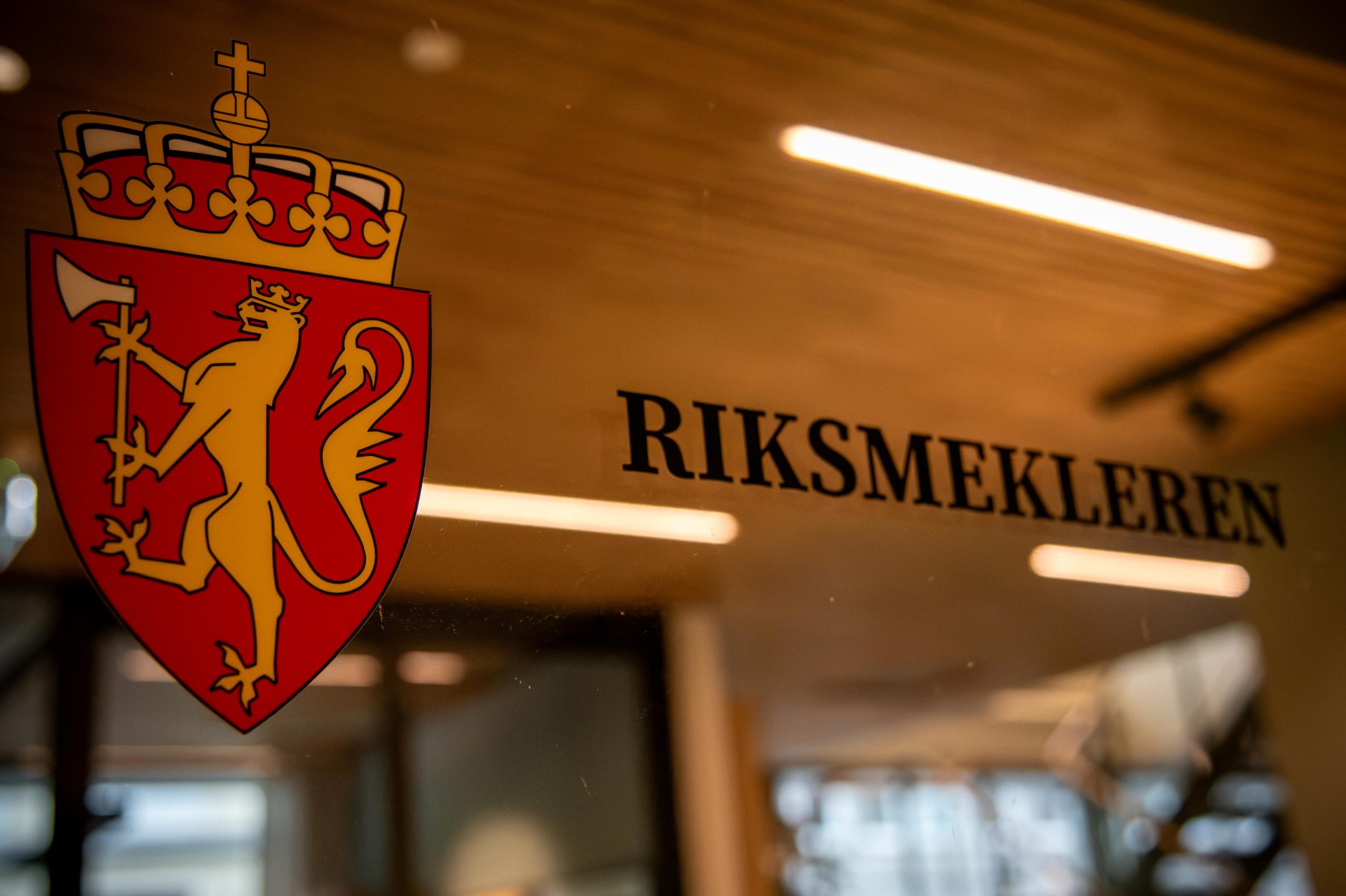
Norway – The National Mediator of Norway (Riksmekleren)
Established in 1915 with headquarters in Oslo.
Website: https://www.riksmekleren.no/
Sweden – The National Mediation Office (Medlingsinstitutet)
Established in 2000 (replaced a 1906 model) with headquarters in Stockholm.
Website: https://mi.se/
It is important to realise that mediation is not meant to prevent conflicts, but to ensure they are managed in a way that limits economic and social costs.
The report also highlights an interesting paradox: Mediation is sometimes used as a routine procedure before the parties have made any proper efforts to find solutions themselves.
That means the mediator might become a third party taking on the responsibility for a difficult decision.
Not one Nordic model
The OECD report points out that there is no single model for mediation. The countries have different institutional solutions, mandates and traditions.
Denmark, for instance, gives its mediators extensive statutory powers, while Iceland relies more heavily on voluntary cooperation.
In Norway, there is a strong link between the national mediator, the pattern bargaining model and the economic data and analysis provided by the Technical Calculation Committee for Wage Settlements (TBU).
Sweden has given the mediation institution a broader mandate which also includes producing wage statistics and promoting a well-functioning wage formation process.
Large differences in the number of mediations
Facing new challenges
The OECD report highlights four main challenges facing the mediation institutions:
- More decentralised collective bargaining and more are outside of established collective agreement structures
- Tensions between the pattern bargaining model and the need to recruit workers to the public sector, especially in health and social care
- Changes to legislation and political framework conditions that can weaken trust in the mediation institutions
- New forms of work and employer structures that challenge established systems of collective bargaining
You write that new types of businesses and forms of work challenge the traditional systems for collective bargaining. Will the systems prove equally resilient in the face of a changing world of work?
“Definitely yes. But there are also some challenges. The model depends on employers and unions being willing to bargain collectively.
“As the Tesla dispute in Sweden has shown, mediation has little to offer when one side rejects collective agreements altogether,” say the report’s authors.
“The Nordic systems have shown considerable ability to adapt, but their long-term effectiveness will depend on keeping collective bargaining broad and inclusive,” the researchers point out.
Lessons from Finnish reform
Finland stands out from the other Nordic countries with its high levels of strike activity. This reached a peak in 2022, when deep disagreements over pay norms in the public sector led to prolonged strikes, particularly in healthcare
The legislation was changed in 2024, strengthening the national mediator’s mandate by explicitly requiring it to safeguard the national economy and ensure that wage settlements follow the benchmark set by the internationally exposed industries.
The changes were not particularly well-received by the social partners.
Few working days lost to industrial action
The authors behind the OECD report believe it is too early to say how the reform of the Finnish mediation institute will impact negotiations and conflict levels in the Finnish labour market.
But the other Nordic countries can already take some lessons from the situation in Finland, they think.
“First, reforms work better when both employers and unions have confidence in them. Second, a wage benchmark only works when the economic figures behind it are accepted on all sides.
“Third, coordination over wages requires flexibility to deal with recruitment and pay pressures in lower-paid sectors.”
Little documented impact
The report identifies connections between strong mediation institutions, coordinated wage setting and low strike activity.
But the authors believe it is difficult to say how much of this is down to the mediation institutions themselves and how much is a result of strong labour market organisations and traditions of cooperation.
“It is difficult to separate the effect of mediation from that of the wider system, because strong mediation institutions usually go together with strong, representative employers and unions.
“Comparisons nonetheless suggest that mediation makes a difference,” believe the authors.
They point to research comparing Sweden and Denmark which concluded that Denmark’s stronger mediation tools help explain why its sectors depart less often from the common wage benchmark.
“When the system works, the role of mediators often goes unnoticed. Yet, like oil in an engine, they reduce friction when the moving parts are most likely to grind.”
But how well-documented is the effect of mediation really?
“Not very well. Beyond the mediation offices’ own reports, there are valuable studies by researchers, but systematic evidence at international level remains scarce.
“Data exist on strikes, disputes and mediation cases, but it is inherently difficult to know what would have happened without a mediator.
“This is a challenge across OECD countries. More systematic and comparable data on disputes, mediation and outcomes would allow more rigorous evaluation and show which arrangements work best,” the researchers say.