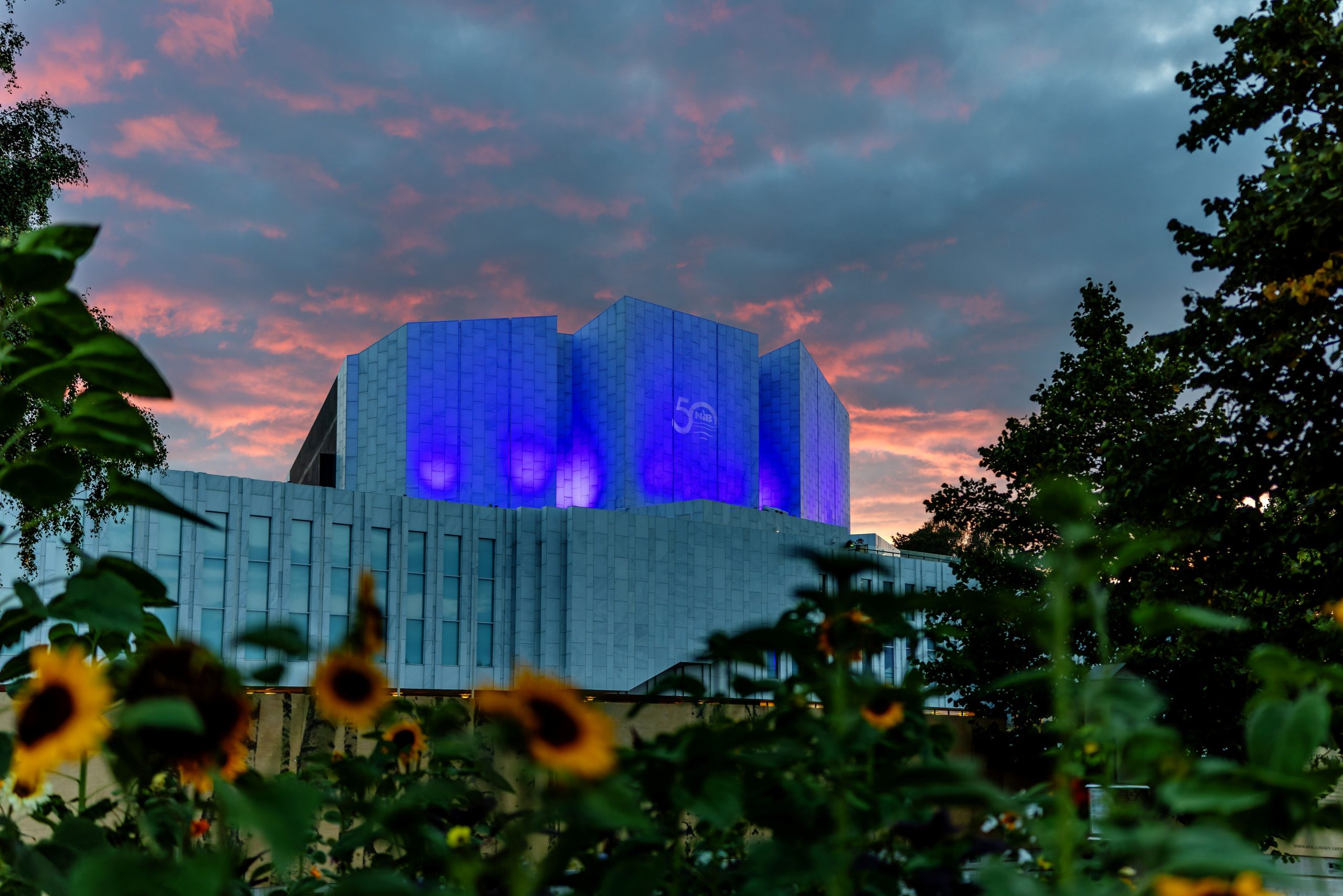
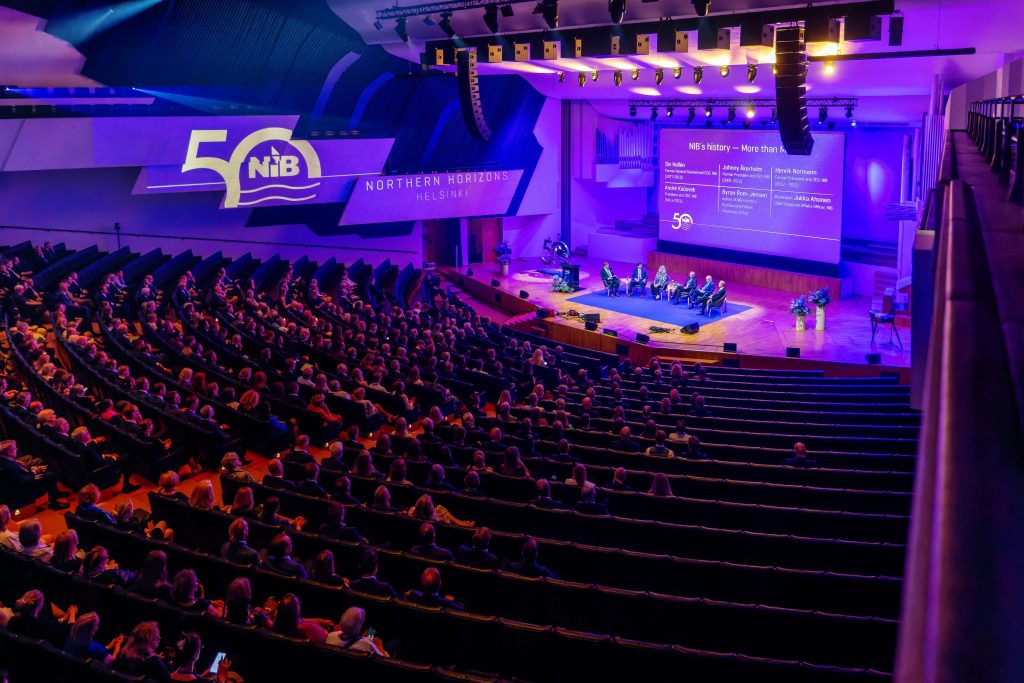
The 50th anniversary was celebrated in early September with an event at Finlandia Hall in Helsinki. Here, resilience, sustainability and competitiveness were highlighted.
Read this article in Swedish in Arbeidsliv i Norden
A newly written history of the bank, “More than Money”, was also presented at the event.
First loan to Iceland
Iceland’s Finance and Economic Affairs Minister and NIB Governor, Daði Már Kristófersson, spoke about the Nordic politicians’ original vision. The Nordic region was a small and remote part of the world, struggling to secure capital on favourable terms, something Iceland was particularly familiar with.
The Nordic Investment Bank
Founded at an extraordinary session of the Nordic Council in 1975.
The five Nordic countries, Denmark, Finland, Iceland, Norway and Sweden, were members from the start. Estonia, Latvia and Lithuania joined ten years after gaining independence from the Soviet Union.
Headquarters: Helsinki, with more than 240 employees.
Credit rating: AAA.
Provides long-term loans at competitive rates for projects that strengthen competitiveness, sustainability and resilience in the Nordic-Baltic region.
Early focus on the environment and sustainability, innovation and communications, now also defence and resilience.
The official working and communications language is English.
Website: Nordic Investment Bank
NIB’s first loan application was for a ferrosilicon plant in western Iceland. The Norwegian-owned plant is a major employer in global steel production and produces ferrosilicon using hydropower as its energy source.
The minister joked about the division of labour at the start. Norway got the chairmanship at the bank, Denmark the vice-chairmanship, the first CEO came from Sweden, NIB’s headquarters were set up in Finland – and Iceland got the money.
At first, it was not a given that the smallest member, Iceland, would be granted the same rights as the other founding nations, the minister pointed out. In the spirit of Nordic cooperation, it was decided that all countries would have an equal say.
Controversial, invisible bank
NIB’s lending policy has often been debated, also during Nordic Council sessions.
At times, the bank has been criticised as being too conservative, passive and invisible, or for lending to the wrong countries or sectors. There were questions, for instance, about whether the expansion of the Port of Gothenburg really benefited the Nordic as a whole.
At the anniversary event in Helsinki, it emerged that the interpretation of what constitutes Nordic benefit has also been debated internally at the bank’s headquarters.
There have been changes and the bank has grown. Nefco, the Nordic Environment Finance Corporation, was established in 1990 and is now also based at NIB’s headquarters in Helsinki.
The Nordic region is growing
The Nordic vision has changed. In 2005, the number of shareholder countries rose from five to eight, when Estonia, Latvia and Lithuania became full members of NIB.
When the Baltic states gained independence, numerous environmental projects gave NIB opportunities to lend outside the Nordic region, provided there was a Nordic interest.
The Covid pandemic is held up as an example of the bank’s ability to act quickly, even beyond its traditional role. More recent focus areas include competitiveness, new technology and sustainability.
After Russia’s full-scale invasion of Ukraine, NIB’s shareholder countries have called for increased lending to projects that strengthen resilience, security and defence capabilities in the Nordic region.
Today, the bank has a mandate to finance conventional weapons and ammunition.
Trust as an asset for competitiveness
Finland’s Foreign Minister Elina Valtonen spoke about trust as a Nordic strategic asset. It allows the region to act faster, invest together and perform as a unit when needed. Peace and security cannot be taken for granted, Minister Valtonen stressed.
“It’s not a question of whether we can afford security, but about how we create the growth needed to maintain it. This is where the Nordic Investment Bank can play a central role, for more innovation, more investment, more capital, more trade and fewer unnecessary barriers.”
The Nordic Investment Bank says it has financed more than €80 billion worth of projects since it was founded.
This includes long-term financing for large and small companies, municipalities and public sector organisations, supporting projects intended to improve living standards for people across the region.
A boost from Nordek and Denmark’s European entry
The first history written about the Nordic Investment Bank is called “More than Money”. The author is American historian Byron Z. Rom-Jensen, who works at the University of Oslo.
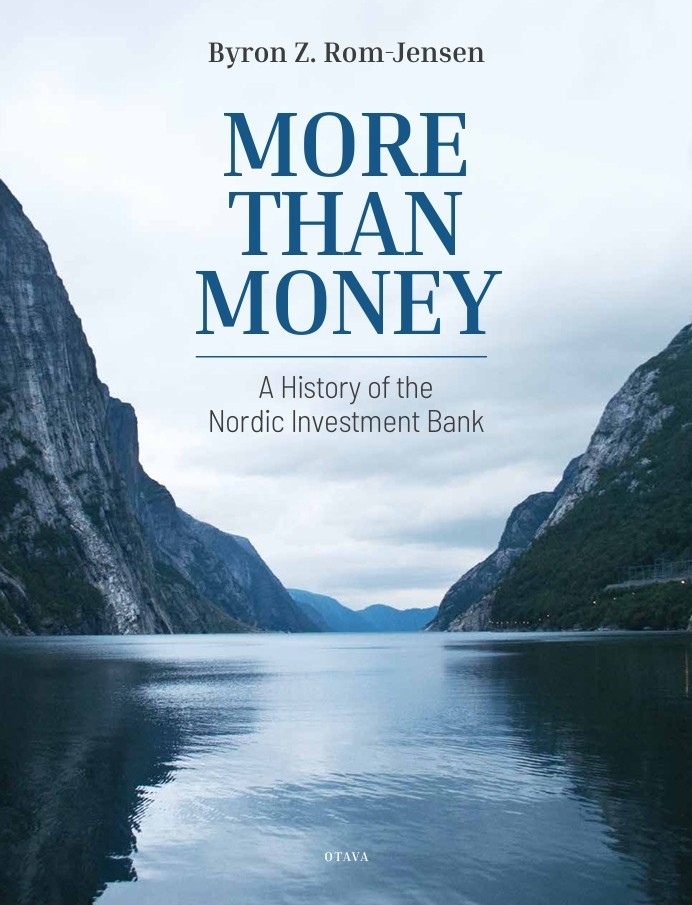
In it, he writes that NIB was founded at a time of growing uncertainty.
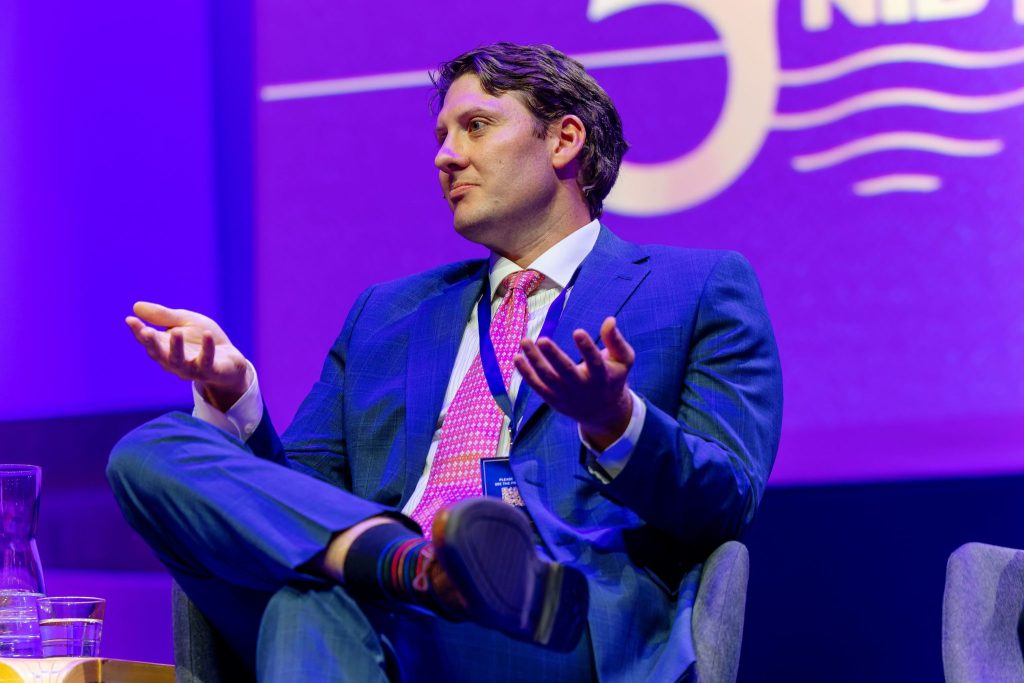
The failure of the proposed Nordic economic union Nordek in 1970 and Denmark’s entry into the European Community in 1973 created a sense that the air had gone out of the Nordic balloon, Rom-Jensen said when he presented the book at the anniversary event at Finlandia Hall.
While Norway saw potential revenues from oil and gas and was wondering what to do with them, other parts of the Nordic region, including Finland and Iceland, were really struggling to attract international capital.
“Keep Finland in the West”
It was not a given that the NIB headquarters would end up in Finland. The country was considered to be too geographically close to the Soviet Union and too far away from the financial markets to be able to attract international banking activity,
But there was also a desire to give Finland an important Nordic institution to link the country closer to the rest of the Nordic region and the West in general. And now, NIB is of course very centrally placed in its new role together with the Baltics, said Rom-Jensen.
Loans for survival
At NIB’s anniversary event, CEO André Küüsvek described the ideas behind the bank’s new strategy. He spoke of how the Nordic-Baltic region is increasingly worried about how to maintain our way of life.
There is intensified competition between economic blocs. This makes it more important for the Nordic and Baltic countries to stick together.
For decades, competitiveness and sustainability were considered separate issues. Countries could increase prosperity, deal with their environmental problems and outsource parts of their security. That world is gone, said Küüsvek.
“We cannot be prosperous if we don’t have security. We cannot remain secure if we are not prosperous. And none of this is possible on a damaged planet.”
“Relevant, resilient and ready”
NIB’s renewed strategy focuses on strengthening the region’s competitiveness, sustainability and resilience. It is not a revolution, but a very significant evolution, according to Küüsvek.
Going forward, he envisaged projects not only for the green transition but also in energy security and critical infrastructure, including defence, cyber and space.
The Icelandic keynote speaker, Finance Minister Daði Már Kristófersson, was particularly content about the fact that the bank had never stood still. His hope was that the Nordic Investment Bank would remain relevant, resilient and ready for new challenges and opportunities.