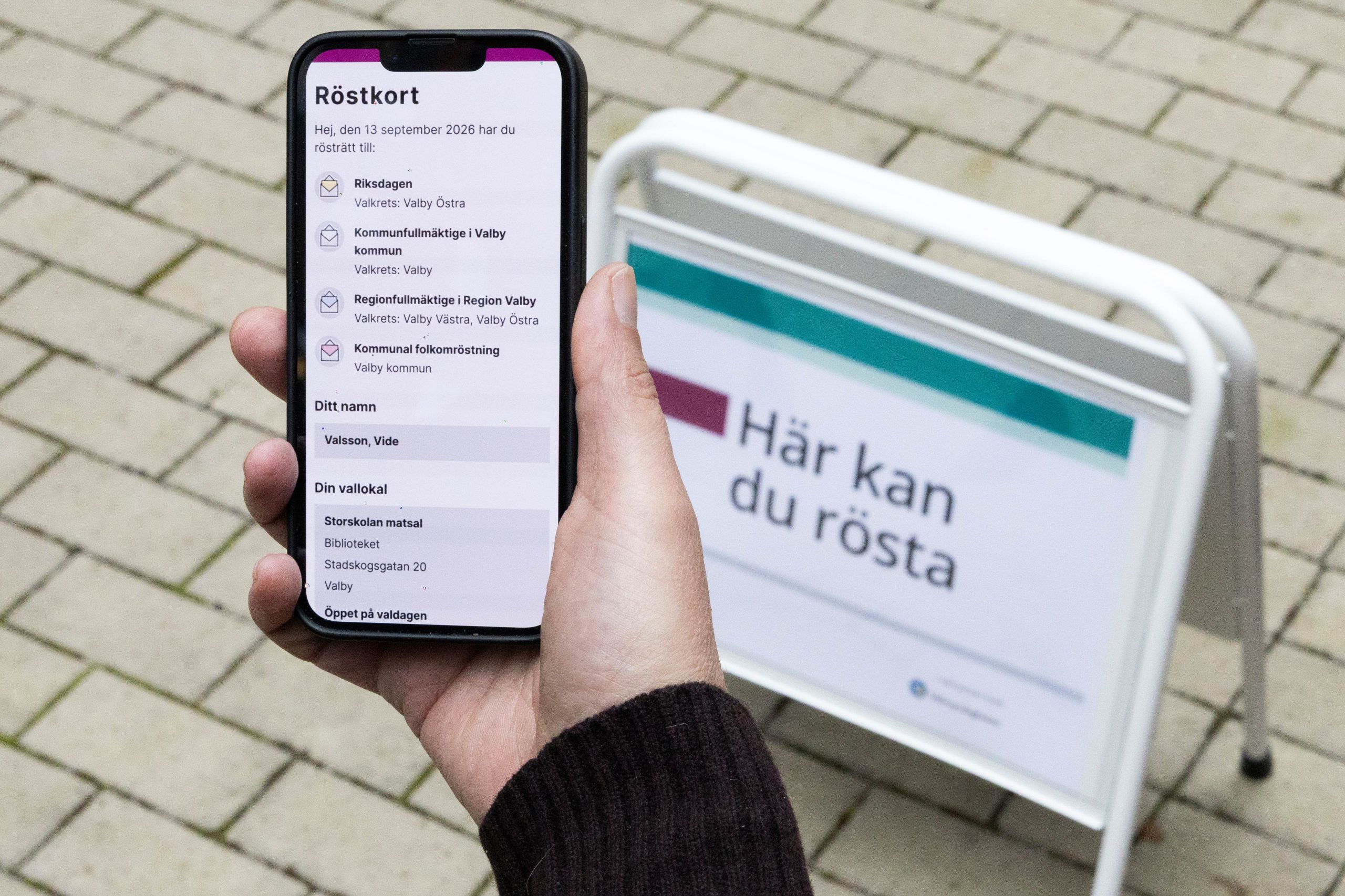
On Sunday 13 September, Sweden goes to the polls. With three weeks to go, the debate is hotting up. One election debate follows the other, with politicians arguing, making promises and trading accusations.
Read this article in Swedish on Arbeidsliv i Norden
There is also a lot of focus on how the different parties’ proposals will benefit “hard-working people” financially. It is the responsible and hard-working who are supposed to benefit from government policy, rather than those who, for various reasons, live on benefits.
2026 election results
Before the election, two political alliances were formed: the Tidö coalition, consisting of four right-wing parties, and a left-wing or centre-left alliance in which the Social Democrats were the dominant party.
It was a close run between the two political alliances, and it was not clear who would secure a majority until the end of the count on 17 September.
The opposition finished with a total of 176 seats in the Riksdag (49.5 per cent of the vote), while the centre-right block secured 173 seats (48.8 per cent).
The Social Democrats emerged as the largest party with 28 per cent of the vote, a loss of 2.3 percentage from the 2022 election.
The Moderates won 19.8 per cent, an increase of 0.7 percentage points. The Sweden Democrats received 17.5 per cent, down 3.1 percentage points. For the first time, the Sweden Democrats lost ground in an election, and went from being the second-largest to the third-largest party.
Social Democrats leader Magdalena Andersson has tried to form a government ever since the results became final. At a press conference on 28 September, she said she saw no possibility of forming a coalition.
The 2026 Swedish general election was held on 13 September 2026 to elect members of the Swedish Riksdag for the 2026–2030 term. Elections to municipal and regional councils were held at the same time.
A total of 165 parties registered to stand in the Riksdag election and 173 in local and regional elections, a new record.
Text: Line Scheistrøen/Sources: Swedish media/Wikipedia
But coalition parties and the red-green opposition disagree on just how to get approximately 500,000 unemployed people into work.
Is the answer primarily tougher requirements for individuals, with stronger incentives to take up work and more conditional benefits? Or is unemployment the result of structural factors in society, meaning that labour market measures are needed to get more people into work?
Crime and migration overshadowing labour market issues
The so-called Tidö coalition has governed Sweden since 2022. The name comes from the Tidö Castle, the venue for the government programme agreed on by the Moderate Party, the Liberals, the Christian Democrats and the Sweden Democrats – the Tidö agreement.
Elections in Sweden
Sweden holds parliamentary elections every four years and always on the second Sunday in September.
A party needs four per cent of the vote to enter parliament. Elections are held simultaneously for the Riksdag’s 349 seats, the 21 regions and Sweden’s 290 municipalities.
Eight parties are currently competing for the support of 7,996,396 voters in the parliamentary election. They are the Moderates (M), Liberals (L) and Christian Democrats (KD), which currently form the government with the support of the Sweden Democrats (SD). The opposition consists of the Social Democrats (S), Left Party (V), Green Party (MP) and Centre Party (C).
In the regional elections, 8,310,645 people are eligible to vote, while 8,360,031 are eligible to vote in the municipal elections.
To vote in the parliamentary election, you must be at least 18 years old, a Swedish citizen and either currently or previously registered as a resident in Sweden.
According to an opinion poll by Verian, published by SVT News and covering the period from 3 to 16 August, the election result would look like this:
L: 7.7 %
SD: 30.5 %
Moderates: 7.7 %
C: 8.0 %
L: 1.9%
CD: 6.2 %
M: 17,3%
SD: 18.5 %
Others: 2.3 %
It was reached on 14 October 2022 and is an agreement in which the Sweden Democrats give their support to the government in return for a commitment to give them influence over policy:
“As a cooperating party that is not part of the government, the Sweden Democrats have full and equal influence over matters covered by the cooperation projects, on the same terms as the parties in government.”
The agreement comprises just over 60 pages and the introduction says “the aim is to implement reforms that address the major challenges Sweden faces in areas including crime, migration, integration, the economy, schools, healthcare, energy and climate.”
The Social Democrats’ support for the new government coalition gave them significant influence over the reforms introduced during the parliamentary term, particularly on immigration and crime.
Sweden now has some of the strictest rules for asylum seekers and immigrants. The rules governing residence permits, citizenship and labour migration have also been tightened.
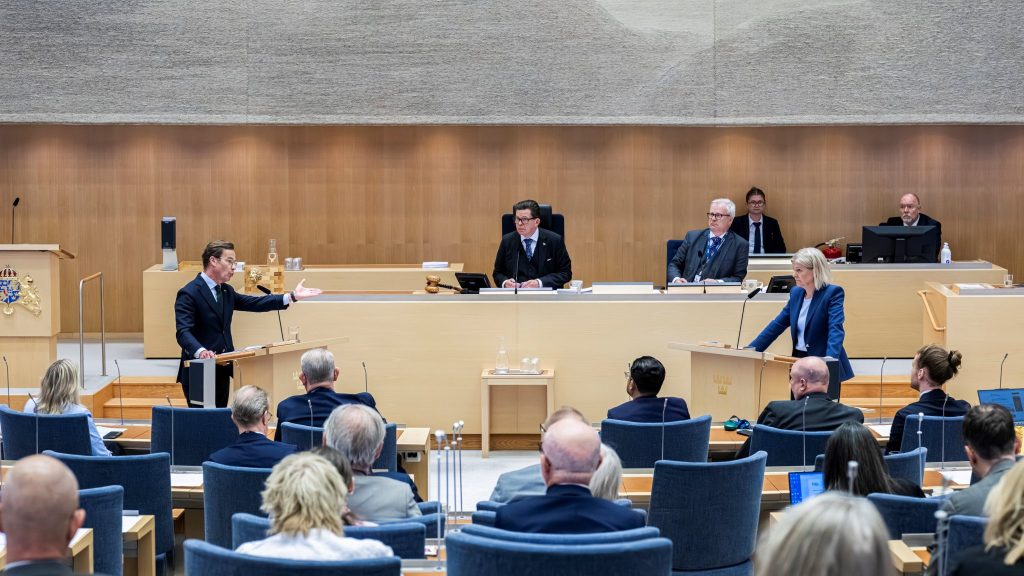
Labour market issues did not get a section of their own in the agreement, however, and were instead mentioned in the chapter on growth and the economy. The overarching goals set out in the agreement included putting productivity and entrepreneurship at the centre of economic policy.
Another goal was to create more jobs by removing the “benefit dependency” that “traps people”. A more effective employment policy and better matching between jobseekers and vacancies were also among the objectives.
Labour market issues have not been high on the Tidö government’s agenda. Labour market ministers have come and gone and John Britz from the Liberals is the third one since they came to power.
The current election debate has not had much space for labour market issues either, despite the fact that 467,000 people – 7.8 per cent – are unemployed, according to the latest Labour Force Survey (LFS), up from 7.1 per cent at the start of the government’s term.
Youth unemployment is among the highest in Europe, and even those with higher education are struggling to find work. At the same time as unemployment remains high, there is a shortage of skills, pointing to a major mismatch between available workers and jobs.
The labour market is also facing considerable changes, driven in part by AI and the green transition. There is also little debate around reducing working hours, despite the Swedish Trade Union Confederation (LO) having pushed the issue this spring.
A range of contested labour market issues
The journalist Mats Wingborg is among those who have been examining the parties’ labour market policies, both those in government and the opposition.
The think-tank Arena Idé published the report “Where do the parties stand on labour market issues? A review ahead of the 2026 election” in June 2026.
It looks at developments in labour market policy under the Tidö government and examines the opposition parties’ positions on a range of matters, including employment protection, unemployment insurance, the Swedish Public Employment Service, the qualifying deduction for sickness absence, labour market measures and the right to strike.

The review shows that the red-green opposition and the government differ on many different labour market issues.
The Centre Party often takes positions closer to those of the current government, yet it is also regarded as part of a possible alternative government led by the left-green parties.
Take unemployment insurance for example. New rules for unemployment insurance came into force on 1 October 2025, making it income-based rather than based on time worked, while the maximum income used to calculate the benefit was increased.
At the same time, a gradual benefits reduction was introduced. During the first 100 days, claimants receive 80 per cent of their previous income, up to 34,000 kronor (€3,075).
For the following 100 days, this falls to 70 per cent, and is then reduced by a further five percentage points every 100 days. This change affects the long-term unemployed in particular.
Trade unions that offer income insurance to supplement unemployment benefits were also affected by the decision and must introduce a similar tapering of payments. The Social Democrats, the Left Party and the Green Party opposed the proposed benefit cuts, while the Centre Party wanted the reduction to be even steeper.
The Sweden Democrats had promised not to cut unemployment benefits but voted with the government.
Sweden has 24 unemployment insurance funds. Many were originally established within the trade union movement but are now independent. Trade unions and unemployment insurance funds often work together and frequently have similar names.
The Liberals, Sweden Democrats and Christian Democrats want to introduce a compulsory unemployment insurance fund that is not linked to trade unions.
According to Mats Wingborg, this would mean that trade unions would have no influence over the unemployment insurance system, potentially affecting union membership rates.
The controversial Public Employment Service
The Public Employment Service is one of Sweden’s key labour market players. There are major differences between the government parties and the opposition over its role.
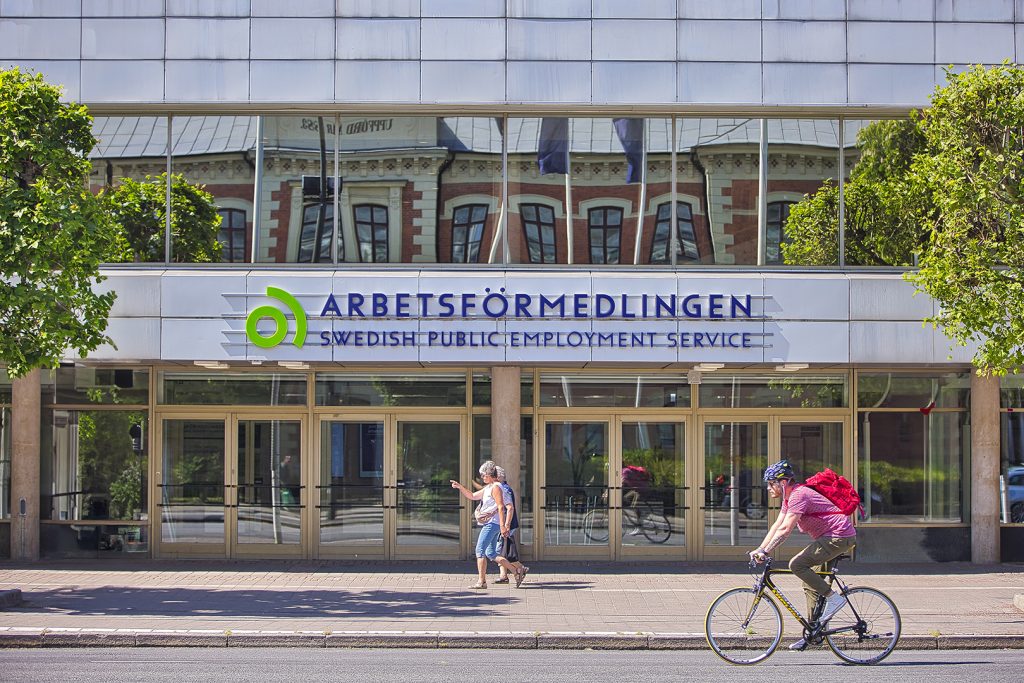
Few other government agencies have undergone such extensive changes.
In 2019, the Social Democrats, the Centre Party, the Green Party and the Liberals reached the so-called January Agreement. It called for the employment service to be fundamentally reformed.
Private providers would take responsibility for preparing and matching jobseekers with employers, while many of the employment service’s employees lost their jobs.
Between 2018 and 2023, the number of employees at the agency’s local offices was almost halved. Many local offices were closed. Since 2019, the number of municipalities with a permanently staffed employment service office has fallen from 170 to 81.
A further 83 municipalities have no employment service presence at all, with neither offices nor local partnership arrangements.
As a result, there are fewer in-person meetings, it has become harder to get personal support and to get matched with vacancies.
Several studies have also found that the Rusta och Matcha programme, under which jobseekers receive additional support from private providers to develop their skills and find suitable employers, has been largely unsuccessful.
It has not resulted in more people finding work, costs have increased, and the cost per participant has risen particularly sharply among those furthest from the labour market.
So what will happen to the Public Employment Service?
The Christian Democrats want to close it down and transfer its responsibilities to municipalities and private providers. The Sweden Democrats want to review the issue, and the Moderates and Liberals have not given any clear indication on their position.
Among the opposition parties, the Centre Party wants to abolish the employment service in its current form and outsource the services to private providers.
The Social Democrats, Green Party and Left Party, by contrast, want to strengthen the Public Employment Service and increase its presence across the country.
Carrot or stick?
All the political parties agree there is a need to reduce unemployment and benefit dependency and increase the labour force.
“Everyone who can work should work. We need to increase growth and reduce unemployment. That is why the Social Democrats are going into the election with a new employment policy,” said party leader Magdalena Andersson during a press conference on 17 August, announcing the party’s new approach to employment.
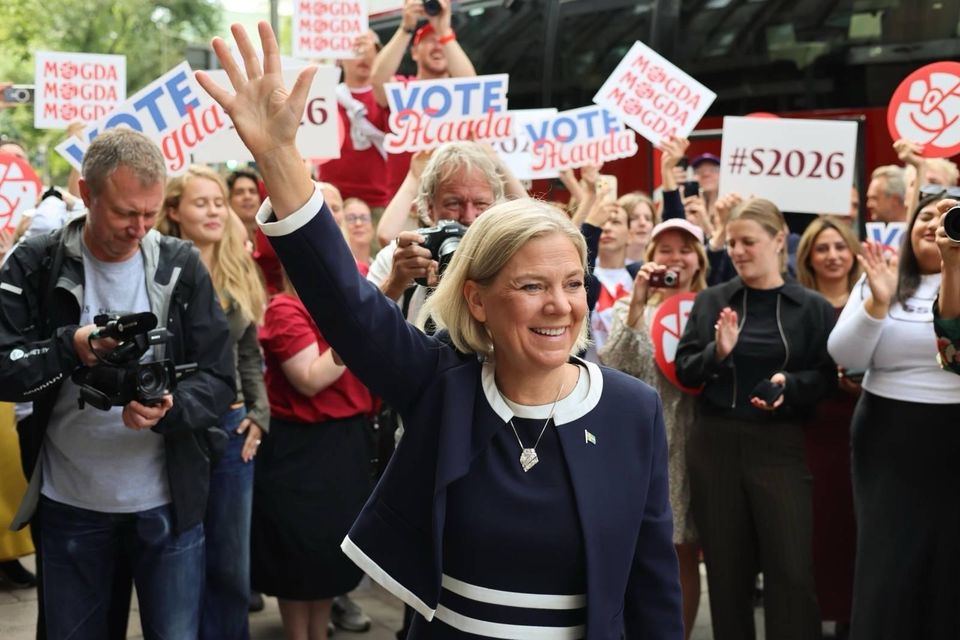
The Social Democrats point to the government’s economic policy as one explanation to the trend.
“When unemployment started climbing, the government cut back on labour market policy, while funding for the Public Employment Service and its local presence has been reduced,” the Social Democrats write.
Their new employment policy is built around five elements:
- an ambitious programme to tackle youth unemployment
- more training and education so that people can take up the jobs that are available
- a pathway into work combining clear requirements with good access to support
- a fresh start for the Swedish Public Employment Service and lifelong skills development
- a strong unemployment insurance system.
Labour market policy covers many different areas, including education and various forms of skills development.
While all parties agree that different forms of education and work placements are needed to help unemployed people into work and match jobseekers with vacancies, the differences become apparent in the detail, Mats Wingborg notes in his report:
“The parties on the left generally want to invest more in labour market policy than the parties on the right, and in this case the right also includes the Centre Party.”
There are also different views over whether collective agreements should apply to subsidised jobs.
The Social Democrats’ proposal illustrates the divide between the centre-right and the left-green parties when it comes to labour market policy.
The government has pushed through faster cuts to unemployment benefits and tougher requirements for activity for people receiving income support. The principle is that work should always pay more than receiving benefits, which is also being pursued through tax cuts for low- and middle-income earners.
The left-green parties focus more on society’s responsibility, proposing active labour market measures and a stronger local presence for the Swedish Public Employment Service.
As election day approaches
Right now, much of the conversation revolves around the election. Election posters across the country have probably prompted everything from mild shrugs to anger, and even sick leave.
The posters are often strategically placed. For example, the Centre Party’s promise of more buses appears right at a bus stop, while a leaflet from the Sweden Democrats lands in your letterbox warning how new construction in your own neighbourhood will supposedly damage quality of life.
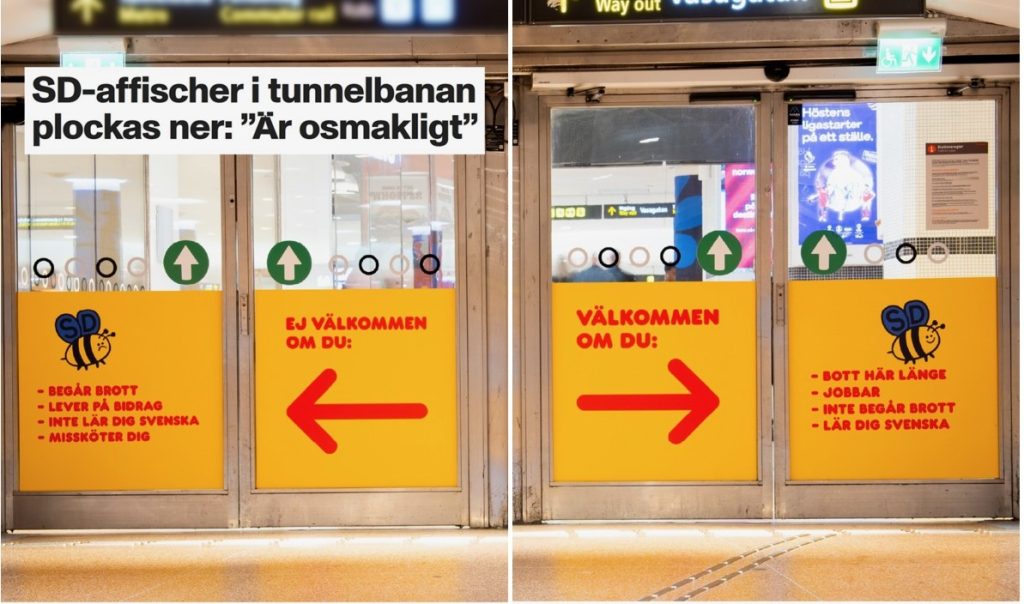
But not all election posters are entirely harmless. When the Sweden Democrats put up posters at Stockholm Central Station reading “Not welcome if you commit crimes, live on benefits, don’t learn Swedish or misbehave”, they were removed after it emerged that they had not been approved by property owner Jernhusen.
SD posters on Gothenburg trams were also removed after around 20 bus drivers of Somali background went on sick leave in protest against public transport advertising the message: “Do you miss Mogadishu? The repatriation grant will help you get home.”
Election day is 13 September, and on 14 September Swedes will wake up either to another four years of a Tidö government, this time with the Sweden Democrats in government, or to a left-green political landscape which might find it harder to form a government.
Labour market policy is likely to be one of the sticking points, not least because the Centre Party often favours a very different approach from the Social Democrats, Green Party and Left Party.